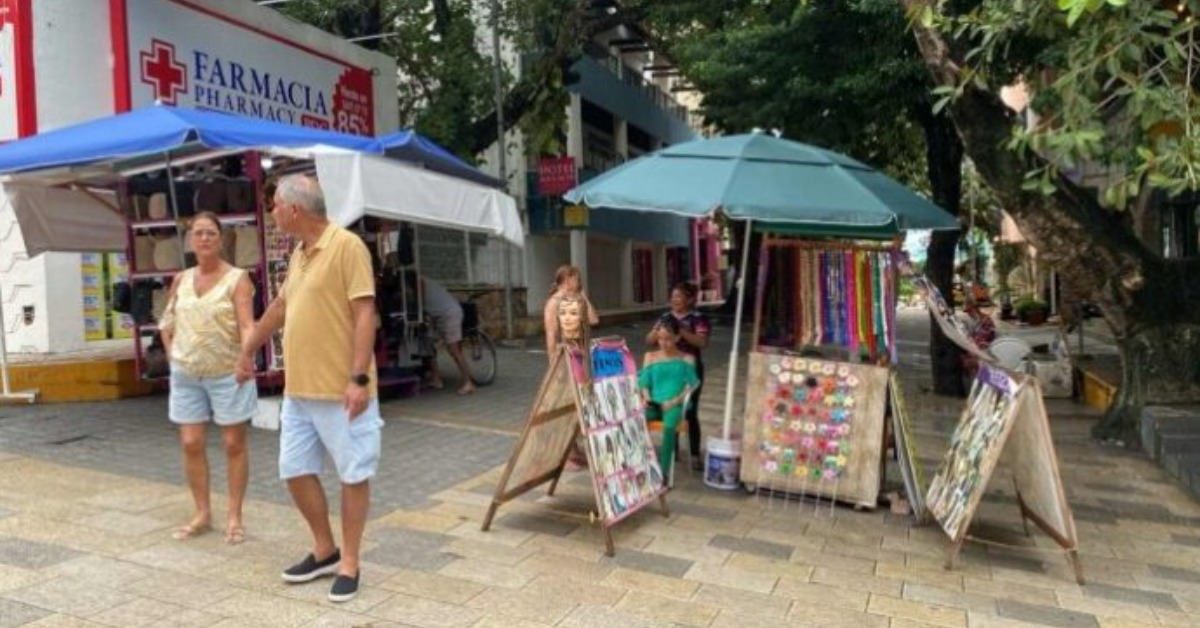
Playa del Carmen officials say between 1,500 and 1,800 street vendor permits could be canceled after vendors failed to complete a municipal regularization process.
The measure is part of a broader effort to organize street commerce, update vendor records, and reduce irregular sales in public areas. Officials said the program applies to a municipal registry of about 3,200 permits.
According to municipal figures, about 45 percent of the registry has been regularized. That means more than half of the registered vendors had not completed the process before the latest warning.
The city says vendors who have completed the process now have clearer documentation. That includes identification, assigned locations, defined business activity, and a formal card tied to their permit.
The possible cancellations could begin affecting vendors in May. Officials said enforcement will also become stricter for vendors who fail to stay current with monthly payments.
Why the city is targeting street vending now
The city says the goal is to create clearer rules for selling in public spaces. Officials also say the measure is intended to improve urban order and the image of tourist areas.
That matters in Playa del Carmen because street vending is not only a local labor issue. It also affects sidewalks, beach access routes, public plazas, pedestrian safety, and areas used heavily by visitors.
The pressure is especially visible near Fifth Avenue, the downtown core, and other busy corridors. These areas are central to the city’s tourism economy, but they also carry daily conflicts over space.
For residents and visitors, the issue often appears simple: crowded sidewalks, carts, tables, and sellers in high-traffic zones. For vendors, it is often about survival, family income, and access to work in a costly tourism city.
That tension explains why enforcement can become controversial. A city can say it is bringing order. Vendors can see the same action as a threat to their livelihood.
The regularization program and the 95 percent discount
Officials said the city offered a 95 percent discount on accumulated debts from previous years. The discount was meant to help vendors catch up and complete their permit process.
The regularization period lasted about eight months, according to local reports. Officials said vendors had time to approach the city, review their status, and resolve pending issues.
Municipal officials are now taking a harder line. Vendors who did not approach the city may lose their place in the registry.
The city also says monthly payments must be made within the first ten days of each month. Vendors who fail to comply may automatically lose authorization.
That is an important detail for vendors who still hold valid permits. This is not only about past debts. It is also about ongoing compliance.
What could happen starting in May
Starting in May, officials are expected to notify vendors of the new enforcement stage. They also plan to increase monitoring to prevent more irregular street sales.
For vendors without valid paperwork, the risk could include removal from the registry and possible seizure of merchandise.
Officials have said there may be exceptions for people in vulnerable situations. Earlier background on the program said the city had been reviewing whether vendors met vulnerability criteria under local rules.
That distinction matters. The city has framed the policy as a way to separate people who need social support from sellers operating as regular businesses in public space.
In practice, that can be difficult to apply. Street vending in Mexico often includes both. Some vendors are small entrepreneurs. Others are older adults, single parents, migrants, or people with limited formal job options.
Why this matters to expats and foreign residents
For foreigners living in Playa del Carmen, this story touches several everyday issues. It affects how public spaces look and function. It may also affect where people buy snacks, food, crafts, and basic goods.
Street vendors are part of daily life in many Mexican cities. They can make neighborhoods feel active and convenient. They can also create friction when public areas become congested or when rules are applied unevenly.
For residents in tourist zones, enforcement may change the feel of familiar streets. Some areas could become easier to walk. Other areas may lose vendors who have served local customers for years.
There may also be an economic ripple. If hundreds of vendors lose permits, some families could lose income. Others may try to move into informal selling without authorization, which could create more enforcement pressure.
The larger issue of informal work in Mexico
The debate also fits into Mexico’s larger labor picture. Informal work remains a major part of the national economy.
INEGI reported that Mexico’s informal labor rate was 54.8 percent in February 2026. That means more than half of working people were in informal employment or informal business activity.
Street vending is one visible part of that broader reality. It often grows where formal jobs are limited, wages are low, or tourism creates steady demand for quick sales.
Cities such as Playa del Carmen face a difficult balance. They rely on tourism, investment, and a clean public image. They also depend on workers who often live with high rents and seasonal income.
That is why street commerce policy can become a test of local governance. The issue is not only whether vendors have permits. It is whether rules are clear, fair, and applied consistently.
What to watch next
The next key period begins in May, when the city is expected to move from regularization to stricter enforcement.
The most important question is how many permits are actually canceled. Officials have given an estimated range, but the final number may depend on late compliance, notifications, and individual reviews.
Another question is whether vulnerable vendors are protected in practice. The city has said exceptions are being considered, but the details will matter.
Residents should also watch whether enforcement focuses on the busiest tourist corridors or expands citywide. That will determine how visible the changes become.
For now, Playa del Carmen is signaling that street vending rules are moving into a stricter phase. The outcome could reshape public commerce in one of Mexico’s most visited beach cities.