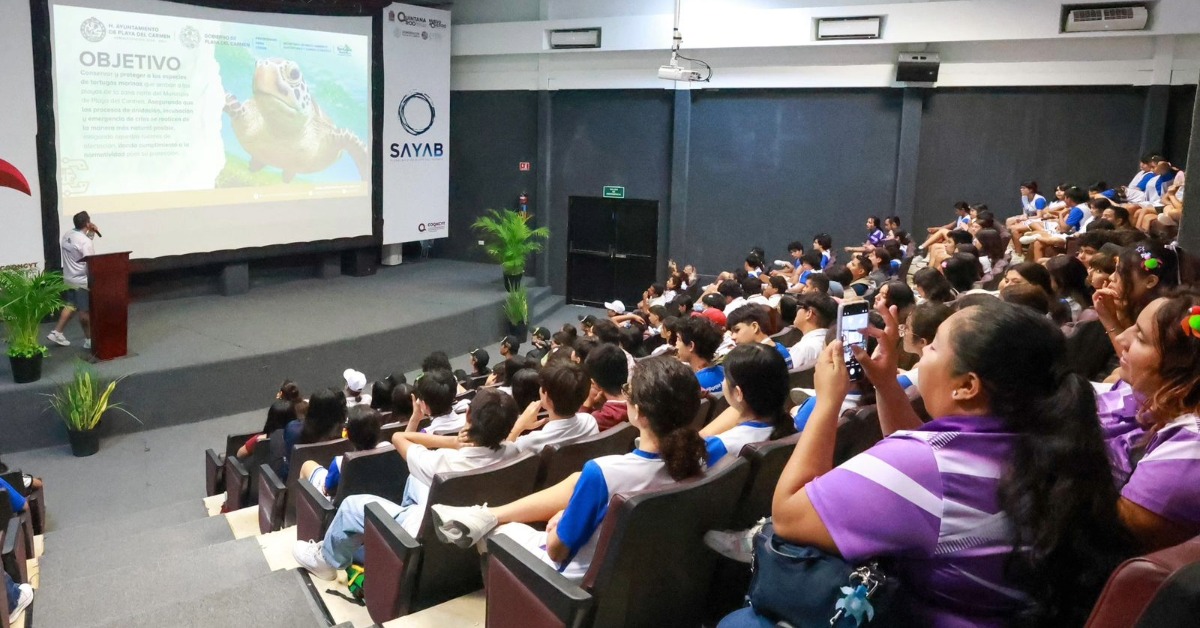
Sea turtle season is beginning again on Playa del Carmen’s beaches, and local authorities are expanding the work behind those quiet nighttime nest patrols. The 2026 program brings together municipal staff, hotels, educators, researchers, and volunteers to protect nests, guide hatchling releases, and reduce risks along one of Mexico’s busiest tourist coastlines. Last year’s numbers show how much is at stake, but officials say this season may follow a different natural pattern for local beaches.
Playa del Carmen begins the 2026 program
Playa del Carmen has formally opened its 2026 sea turtle protection season, marking the start of another round of nest monitoring, hatchling releases, hotel-sector training, and environmental education along the municipality’s coastline.
The program is led by the city’s Secretariat of Sustainable Environment and Climate Change. It is part of a municipal conservation effort that has operated since 2012, with support from a local turtle protection committee that has helped guide actions since 2014.
The work brings together municipal authorities, civil society, academic groups, businesses, and the hotel sector. That mix matters in a place where tourism, beachfront development, and wildlife habitat share the same narrow stretch of coast.
During the launch event at Sayab Planetarium, local officials said the program is aimed at protecting species that return each year to nest on Playa del Carmen’s beaches. The plan includes monitoring nesting areas, protecting eggs, supporting safe hatchling releases, and training people who work near the beach.
Last year showed the scale of the work
Municipal figures from the 2025 season show the size of the conservation effort. Playa del Carmen registered 1,796 nests, 199,242 eggs, and the release of 159,548 sea turtle hatchlings.
Most of the records were for the green sea turtle, also commonly called tortuga blanca in the region. It accounted for 80 percent of the total. Loggerhead turtles represented 19.7 percent, while hawksbill turtles made up 0.3 percent.
Authorities said the number of nests may decline in 2026 because of natural reproductive cycles. They also said that does not mean conservation work will be reduced.
Sea turtle nesting can vary from year to year. A lower nesting count does not always point to a local failure. It can reflect species biology, ocean conditions, beach conditions, and the natural rhythm of adult females returning to nest.
What beach visitors should know
For residents and visitors alike, the season is a reminder that sea turtle protection extends beyond government patrols. Beach behavior can affect whether turtles nest safely and whether hatchlings reach the water.
Bright lights, flash photography, loud disturbances, touching turtles, entering protected nest areas, or interfering with hatchlings can create problems. Even well-meaning visitors can cause harm if they crowd a nesting turtle or try to guide hatchlings by hand.
Mexico’s NOM-162-SEMARNAT-2012 sets national rules for the protection, recovery, and management of sea turtle populations in nesting habitats. The standard is part of the legal framework that guides monitoring, nest protection, and other actions on turtle beaches.
Sea turtles have also been under federal protection in Mexico for decades. Six of the world’s seven sea turtle species use Mexican waters or beaches, and federal authorities describe inspection and monitoring work as part of the country’s conservation strategy.
Hotels remain part of the front line
Hotels and beachfront businesses play a central role in Playa del Carmen because many nesting areas sit near tourism zones. Training for hotel staff can help workers recognize nests, report turtle activity, and avoid actions that disturb nesting females or hatchlings.
That work is especially important at night, when many turtles come ashore. Staff who understand the rules can alert the proper teams, reduce beach lighting when needed, and keep guests away from sensitive areas.
For expats and visitors, the practical advice is simple. Give turtles space, follow posted signs, avoid using bright lights on the beach, and report nesting activity to trained staff or authorities. Turtle releases should be handled only through authorized programs.
Playa del Carmen’s 2026 season will now test how well that coordination works across a busy tourism coastline. The program’s success will depend not only on official patrols, but also on hotels, residents, and visitors treating nesting beaches as active wildlife habitat.