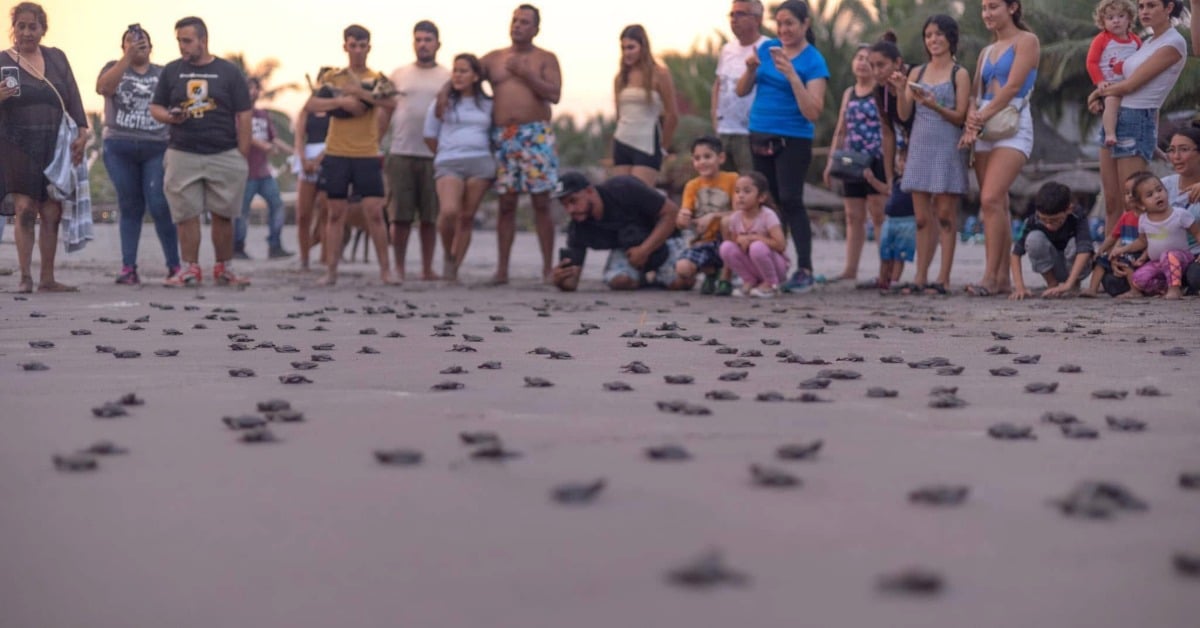
A quiet stretch of beach south of Puerto Vallarta has just posted its strongest turtle nesting season in more than two decades. Mayto Turtle Camp says it collected 1,575 nests between May 2025 and April 2026, a record that points to both progress and pressure. The numbers show strong nesting activity, but they also reveal the ongoing risks facing eggs, hatchlings, and protected species on Mexico’s Pacific coast.
Mayto turtle camp reports record nesting season
The Mayto Turtle Camp in Cabo Corrientes reported its highest nesting total in 21 years of work, after collecting 1,575 sea turtle nests during the 2025–2026 season.
The season ran from May 1, 2025, to April 30, 2026, on Playa Mayto, a Pacific coast beach south of Puerto Vallarta. The camp said the figure marks a record for the conservation project, which has operated in the area since 2005.
Most of the nests came from the olive ridley turtle, known in Spanish as tortuga golfina. The camp recorded 1,546 olive ridley nests, along with 20 black turtle nests and eight leatherback turtle nests.
The leatherback figure is notable because the species nests only occasionally at Mayto. The camp says it usually records one or two leatherback nests per season. Eight nests make this season unusual for one of the world’s most vulnerable sea turtle populations.
A record season with mixed signals
The record does not mean the work is simple or that the beach is free from pressure.
The camp reported 31 nests lost to animal predation and 246 nests looted by people. Another 134 nests remained in their original locations because natural conditions did not allow them to be safely moved to incubation pens.
Those numbers show the split reality of sea turtle conservation. More nests can be a positive sign, but every nest still faces risks before hatchlings reach the ocean.
Sea turtle eggs are vulnerable to animals, erosion, storms, illegal collection, beach activity, and artificial light. Hatchlings also face danger once they leave the nest. Many never survive the short trip from the sand to the water.
This is why turtle camps operate on beaches across Mexico. Their work is not only about counting nests. It includes night patrols, relocating eggs when needed, monitoring temperature and humidity, and releasing hatchlings under safer conditions.
What Mayto does on the beach
The Campamento Tortuguero Mayto is based on Playa Mayto in the municipality of Cabo Corrientes, Jalisco. The camp says its team patrols roughly 12 to 13 kilometers of beach, depending on the area covered during the season.
Its main work includes night patrols, nest collection, egg relocation, incubation monitoring, and hatchling releases. Nests are moved to protected corrals when conditions necessitate relocation.
The camp also runs environmental education programs, volunteer stays, and visits for school groups. In the latest season, more than 180 people joined turtle stays, while more than 600 students and company collaborators took part in environmental education activities.
That educational work is important in coastal communities. Turtle protection depends heavily on local awareness, public cooperation, and respect for nesting beaches.
The species found at Mayto
Mayto’s nesting work mainly protects three species: olive ridley, black turtle, and leatherback turtle. The camp also conducts research on the hawksbill turtle, which is found feeding and sheltering in the Mayto-Tehuamixtle region.
The olive ridley is the most common nesting turtle at Mayto. It is one of the smallest sea turtles and is known for mass nesting events in some parts of the world. On Mexico’s Pacific coast, olive ridley breeding populations remain protected, and conservation work continues.
The black turtle, a regional form of the green turtle, nests less often at Mayto. The camp says black turtles usually nest from October to March.
The leatherback turtle is the largest sea turtle in the world. It does not have the hard shell most people associate with turtles. Its Pacific populations have faced sharp declines, which makes each recorded nest important for monitoring and conservation.
The hawksbill turtle is not mainly protected at Mayto through nesting work. Instead, the camp has monitored hawksbills in collaboration with local fishing communities since 2012. That project records individual turtles and tracks their use of local habitat.
Mexico’s legal protection for sea turtles
Mexico has a long legal framework for sea turtle protection. All sea turtles in the country are protected, and turtle nesting beaches are covered by specific environmental rules.
One key rule is NOM-162-SEMARNAT-2012, which sets standards for protecting, recovering, and managing sea turtle populations in their nesting habitat. It applies to activities on nesting beaches and includes measures tied to egg handling, lighting, beach obstacles, monitoring, and habitat protection.
For people who live near the coast, this matters in practical ways. Bright lights, beach driving, loose dogs, blocked access routes, and disturbing nests can affect nesting females and hatchlings.
Visitors also play a role. Watching a turtle release can be memorable, but it should be done through authorized programs. Handling hatchlings, using flash photography, or approaching nesting turtles without guidance can cause harm.
A reminder for coastal communities
The Mayto record comes at a time when Mexico’s Pacific coast is under pressure from tourism, real estate, erosion, storms, and illegal wildlife use.
For residents in Puerto Vallarta, Riviera Nayarit, and nearby coastal towns, turtle season is part of local life. It is also part of the region’s environmental identity.
Turtle camps depend on volunteers, trained staff, public cooperation, and steady funding. A strong nesting season can bring attention, but long-term conservation depends on work that continues every night.
Mayto’s latest figures show progress after more than two decades of conservation. They also show that the threats have not disappeared.
The next nesting season will test whether the record marks a new high point or is part of a broader trend. For now, the camp’s 1,575 nests place Playa Mayto among the important turtle conservation sites on Jalisco’s coast.