A new tourism complex near Punta Venado has received federal environmental authorization, adding another major project to a sensitive stretch south of Playa del Carmen. The plan includes hotels, a beach club, commercial areas, and long-term operations. But the approval also comes with environmental conditions, a reduced project footprint, and questions about how new development will fit near protected areas, mangroves, dunes, and one of Quintana Roo’s most-watched coastal corridors.
Semarnat Clears Complejo Ecoturístico Riviera Maya
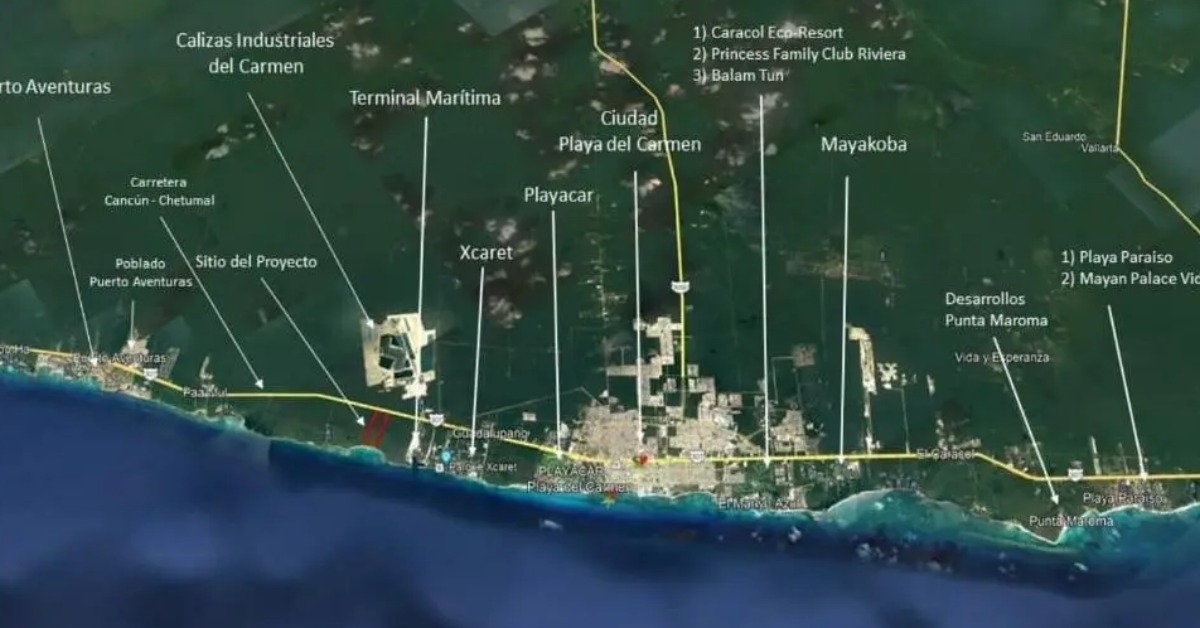
Federal environmental authorities have authorized the Complejo Ecoturístico Riviera Maya, a tourism project planned near Punta Venado, south of Playa del Carmen.
The project is promoted by Oleum Joint Venture, S. de R.L. de C.V. It includes two hotels, a beach club, commercial areas, internal roads, service areas, and wastewater treatment infrastructure.
The authorization marks a new step for a coastal proposal that has been under federal review since 2023. It also places another tourism project in a corridor already shaped by protected areas, land-use disputes, and growing pressure from Riviera Maya development.
Approval Covers a Long-Term Coastal Project
The environmental resolution was issued on April 28, 2026. It authorizes a construction phase of about five years and a projected 50-year operating period.
The authorized version of the project includes two hotels with a combined 429 rooms, according to details tied to the resolution. Earlier project descriptions listed a larger plan with 572 hotel keys, so the final authorized room count appears to reflect a reduced version of the proposal.
The project site covers about 72.8 hectares. Federal authorization allows land-use change on a little more than 25.5 hectares, mainly in areas described as secondary vegetation of medium semi-evergreen forest. A smaller portion involves coastal dune areas.
The complex is also expected to include three wastewater treatment plants. That detail matters in the Riviera Maya, where drainage, groundwater, and coastal water quality remain recurring public concerns.
Environmental Conditions Remain Central
The approval does not remove the project from environmental oversight. The developer must comply with the conditions, mitigation measures, and limits set by federal authorities.
The project area includes selva, coastal dune, and mangrove-related zones. The review also considered an indirect mangrove impact tied to a planned elevated bridge connecting parts of the complex.
During the evaluation process, the project design was adjusted to reduce the affected surface area and to concentrate connectivity through a single central bridge. That suggests federal reviewers required changes before issuing the final authorization.
The project also went through a public consultation process in 2024. That made technical information available and opened the door to public observations before the final decision.
A Sensitive Stretch of the Riviera Maya
The Punta Venado area sits near one of the Riviera Maya’s most sensitive development corridors. The zone is close to the Caribe Mexicano marine reserve and the Felipe Carrillo Puerto protected area.
The Felipe Carrillo Puerto protected area was declared in September 2024 and covers more than 53,000 hectares in Solidaridad, Cozumel, and Tulum. It was created as part of a federal conservation push that also touched land associated with the former Calica and Sac-Tun limestone operation.
That wider context makes this authorization more than a standard hotel approval. It comes in an area where tourism, conservation, infrastructure, and land-use decisions are tightly connected.
For residents and frequent visitors, the next questions will likely center on how the project handles wastewater, beach access, mangrove protection, construction impacts, and traffic near the coastal corridor.
Growth Pressure Continues Around Playa del Carmen
The Riviera Maya remains one of Mexico’s strongest tourism regions, but its rapid growth continues to test local infrastructure. Playa del Carmen has already faced pressure from hotel expansion, residential projects, sargassum management, wastewater concerns, and beach erosion.
The new authorization adds another long-term project to that mix. Supporters of tourism development often point to jobs, investment, and visitor demand. Environmental concerns usually center on whether growth can be managed without damaging the same natural systems that support the region’s tourism economy.
For now, the federal decision gives the project environmental clearance. The next stage will depend on compliance with the conditions attached to that approval and on any additional permits required before full construction can proceed.