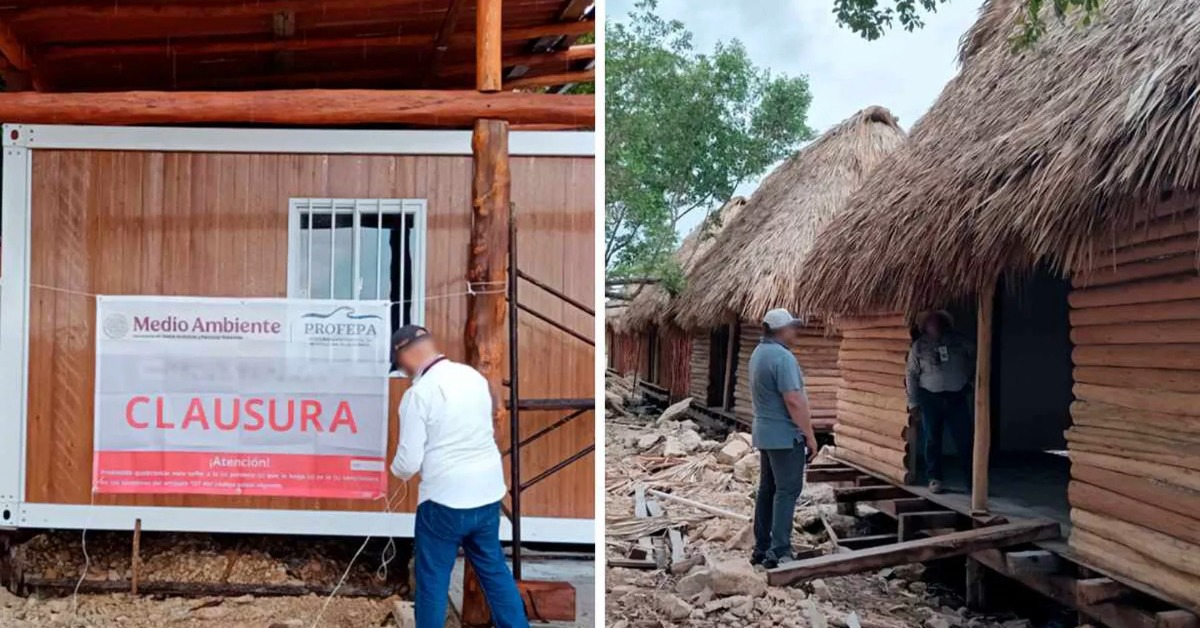
Chetumal, QR – Federal environmental authorities moved to halt illegal construction Estero de Chac in Chetumal after finding that a wetland had been filled with sascab and several structures had been erected without the required environmental impact authorization. The work, located on land within the Juan Sarabia ejido in the municipality of Othón P. Blanco, was temporarily closed following inspections by the Federal Attorney for Environmental Protection (Profepa).
Illegal construction Estero de Chac
The intervention began after a citizen complaint alerted Profepa to irregular activity in the area adjacent to the Estero de Chac. On July 11, inspectors visited the site and documented that part of the wetland had been filled with sascab. They also recorded the presence of three palapas, a cabin, bathroom facilities, and a wooden dock—all installed without authorization. No representative or responsible party was on-site during that initial visit.
Because the necessary environmental impact permit from the Ministry of Environment and Natural Resources (Semarnat) was not in place, Profepa returned for a follow-up inspection on July 29. During that second visit, the agency formally imposed a temporary closure on the construction activities as a precautionary environmental safety measure. Officials sealed the site and initiated an administrative proceeding to establish responsibility and evaluate the ecological damage inflicted on the sensitive wetland ecosystem.
Profepa stressed that all earthworks and structures were unauthorized under federal environmental law due to the lack of Semarnat clearance, and the administrative case will include an assessment of the extent of damage as well as possible sanctions.
Why protecting Estero de Chac matters
Estero de Chac is part of a network of coastal wetlands in southern Quintana Roo that provide crucial ecological services: filtering water, stabilizing soils, supporting wildlife, and buffering the coast against storms and erosion. Filling these wetlands with materials like sascab and building without oversight undermines those functions and risks long-term harm that is costly to reverse.
Profepa framed the closure as consistent with its wider effort to enforce environmental regulations in the region and protect vulnerable ecosystems. The agency reiterated its call for residents to report suspect activity so that early intervention can prevent further degradation.
Next steps and oversight
With the temporary shutdown in place, Profepa will monitor the site to ensure no additional work continues while the administrative review proceeds. The agency’s actions serve as a clear signal that unauthorized development in ecologically sensitive zones will be challenged and that compliance with permitting requirements is mandatory.
Local stakeholders, including ejidatarios, have expressed concern over the incident and are watching to see whether authorities will follow through with restoration demands or other penalties. The outcome of the administrative process will be closely observed as an indicator of how rigorously environmental law is applied in contested coastal areas.