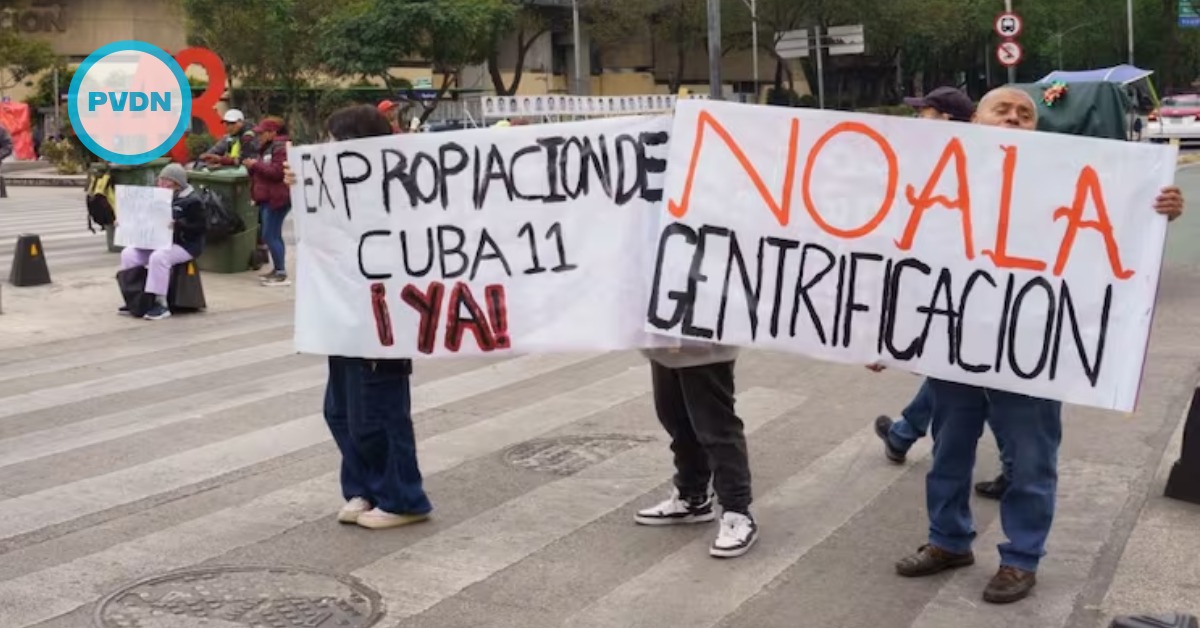
About 50 protesters blocked Reforma, demanding an end to evictions and pushing a citizen initiative as the 2026 World Cup nears.
Mexico City’s Paseo de la Reforma is built for big moments. Parades. Marathons. Political marches. On Monday, December 15, it became a stage for something more basic: the fight to stay housed.
Around 50 protesters blocked Reforma near Bucareli in both directions. Many said they had been evicted, including residents tied to an ongoing dispute involving a building at Cuba 11 in the Centro area. Others said they came from different properties across the city, drawn together by the same fear. They believe evictions are rising, and they believe the timing is not a coincidence.
Their argument is blunt. The 2026 FIFA World Cup is getting closer. Short-term rentals keep spreading. Land is becoming more valuable by the month. And when that pressure builds, tenants and long-term residents say they feel it first, often with little warning and fewer options.
The blockade also hit daily life fast. Metrobus Line 7 reported service impacts tied to the road closure. Drivers were forced into detours. Office workers and tourists watched the protest from the sidewalks as horns and sirens mixed with chants.
At the center of the demonstration was a demand aimed at the city government: stop evictions that residents say are pushing families out of the neighborhoods where they have lived for years.
One woman, Ana García, described the stakes in simple terms. She said she was evicted from Cuba 11 on August 27, along with 19 families and eight businesses. “We want to live,” she said. “We don’t want anything handed to us. Let us pay rent and stop the dispossessions.”
The protest was not only about one building. Participants also spoke about other camps and tenant groups, including one tied to Mar Blanco 112 in the Popotla neighborhood of Miguel Hidalgo. A man identified as Santiago said he joined the rally to demand housing rights and an end to removals he linked to developers and construction interests.
Reforma eviction protest and the fight to stay housed
The group’s message landed in a city already tense about housing. In recent months, Mexico City has seen repeated public anger over rent hikes, displacement, and the feeling that whole neighborhoods are being remade for higher incomes and short stays.
Protesters on Reforma pointed to a pattern they say is spreading: buildings that once housed long-term renters are pushed into legal battles, emptied, and then marketed toward more profitable uses. Some protesters tied that trend directly to the tourist economy and platform rentals. They argued that the World Cup’s countdown is adding urgency, because owners and investors see 2026 as a payday.
Mexico City is one of the tournament’s host cities. That means global attention, visitor surges, and pressure on hotel stock. It also means a fresh incentive to convert housing into temporary lodging, especially in central areas with easy access to major corridors.
City officials have said in past cases that not every eviction is a government decision. Some stem from disputes between private parties that end up in court, with police present to protect court officials during enforcement. That distinction matters legally, but it does not soothe families standing on the street with bags and furniture.
For many renters, the deeper issue is not one lawsuit. It is the system around it. Evictions are often fast, confusing, and intimidating, especially for older residents or people without legal help. Even when an order is valid, residents say the process can still feel like a blunt instrument that ignores the human fallout.
That is why the Reforma demonstrators aimed their pressure at lawmakers as much as at the executive branch. They said they would head to the Mexico City Congress to present a citizen initiative that would tighten eviction rules.
Their public focus was the restoration of Article 60 of Mexico City’s Constitutional Law of Human Rights and its Guarantees, a provision that has been debated for years. In plain terms, Article 60 lays out safeguards meant to prevent forced evictions from trampling the right to adequate housing and basic due process. Protesters want those protections strengthened and treated as real guardrails, not as aspirational language.
They also demanded movement from the housing authorities on unresolved cases, including Cuba 11. They said they have no clear timeline for when, or if, they will be able to return.
What the protest could change next
The citizen initiative route is not symbolic. It is a formal process with real hurdles. Mexico City’s electoral authority says residents can propose changes to local laws through an initiative, but they must meet strict requirements. That includes gathering signatures from a minimum percentage of the city’s registered voters, drafting a legally structured bill, and submitting a clear rationale. If the signatures are validated, the proposal is then handled like other legislation, through committees and a full vote.
Those steps take time and organization. They also test whether a protest movement can translate street momentum into a document that survives political negotiation.
The protesters’ strategy suggests they are thinking beyond a single blockade. They want rules that slow down removals, raise the standard for process, and force the city to treat evictions as a human rights issue, not just a civil dispute. They also want a clearer check on the market forces they believe are driving displacement.
At the same time, the pressure on housing is not going away before 2026. The city is trying to balance tourism, investment, and resident stability. It has also moved in recent years to regulate short-term tourist stays through registration and compliance requirements, signaling that the government recognizes the issue. Enforcement, though, is always the hard part. So is proving direct causation between platform rentals and a specific eviction case.
That tension is why this protest matters. It reflects a wider question Mexico City will keep facing as the World Cup approaches. Who gets to stay in the city’s core when global events and global money show up?
For the people on Reforma, the answer is personal. They are not asking for a souvenir from 2026. They are asking for the right to keep a key, keep a lease, and keep a life that does not vanish with a court notice.