Puerto Vallarta’s port authority is in court with Puerto Mágico over penalties totaling 58.7 million pesos. The dispute centers on a partial-rights concession that underpins the retail and arrivals area at the cruise terminal. Official filings show a minor penalty tied to contract breaches and a much larger one tied to a revocation process, both now in federal review. We break down what’s in the documents, what could happen next, and why the Puerto Mágico legal fight matters for a city that depends on cruise traffic.
Puerto Vallarta’s federal port authority, ASIPONA, is pressing two legal actions against Puerto Mágico that together seek 58.7 million pesos. The cases stem from alleged breaches of a partial-rights concession governing operations at the cruise terminal’s commercial complex. Filings reviewed by this newsroom show one penalty in the low millions and another above fifty million, both now moving through federal review. Puerto Mágico legal fight isn’t abstract; it touches the busiest maritime gateway in the bay.
What the court records show
In ASIPONA’s public management report, one proceeding targets a conventional penalty of $4,811,000 pesos tied to contract non-compliance. A nullity suit was filed; the case was later dismissed, and Puerto Mágico pursued a direct appeal that a collegiate court admitted in 2023. The same report lists a second, much larger penalty—$53,868,767 pesos—connected to a revocation process for the partial-rights contract. That matter was also dismissed at first instance, and Puerto Mágico’s review remains pending in a collegiate court. The procedural posture underscores that outcomes are not final.
According to those filings, the first penalty appears in case tracks labeled GC-156/2022 and Amparo 1672/2022; the second is linked to a 2023 file before the First District Court in Jalisco. Both entries show “sentencia / recurso de revisión,” meaning the federal review stage is active. In plain terms, ASIPONA’s claims and Puerto Mágico’s defenses are still being weighed. We will avoid calling winners until tribunals rule.
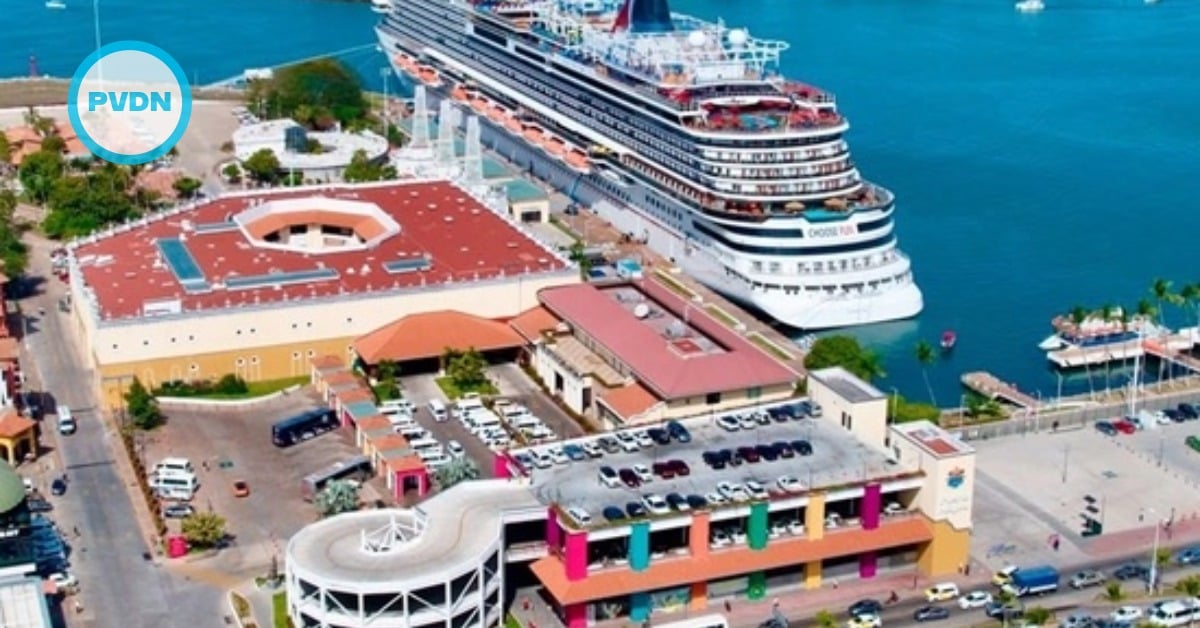
Puerto Mágico is the plaza and arrivals area that greets cruise passengers at the International Maritime Terminal. It houses shops, tour check-ins, and services adjacent to the piers. If contract terms are upheld and penalties executed, the operator’s obligations could change; if the amparos prevail, the status quo could hold. Day to day, the port authority remains responsible for navigational safety and ship handling, while the concessionaire manages the commercial footprint under its contract.
As for the stakes, they’re real. Puerto Vallarta received 548,146 cruise passengers in 2024, ASIPONA reported through the state press in January. That steady flow of visitors fuels jobs in transport, retail, and tourism clustered around the terminal. Any disruption to the concession would be felt first on the land-side experience—stores, staging, and access—rather than at the pier. But even land-side hiccups can ripple through a port day.
Puerto Mágico legal fight
At the core of this dispute is Mexico’s cesión parcial de derechos model—the partial assignment of rights that public ports use to allow private actors to invest in and operate specific assets. It’s a public-private setup with clear triggers for penalties and revocation when a party falls short. The federal projects platform describes this contract type and the public-private structure used in port concessions. It’s wonky, but it explains why the numbers are large and the rules are strict.
What happens next is procedural, not dramatic. Collegiate courts will decide whether the dismissals stand or whether parts of the cases return to lower courts. If ASIPONA ultimately wins and penalties are enforceable, it could collect and, depending on rulings, pursue revocation of the concession. If Puerto Mágico prevails, the penalties could be nullified, and operations could continue under the current terms. None of that changes ship schedules tomorrow morning; it does shape who runs key spaces at the terminal and under what conditions.
For a cruise city, certainty matters. Port governance sits with the Navy-led ASIPONA system; commercial activity depends on concession compliance; and the traveler’s first impression is made on that curb right outside the gangway. This is why a line in a court docket can become a long day for taxi stands, tour desks, and café owners. We’ll keep reading the filings, not tea leaves, and update as rulings land.