Puerto Vallarta says it has stepped up surveillance across 23 beaches as holiday traffic builds along the coast. The move includes lifeguard coverage, water patrols, and a rapid-response boat, but the bigger story is what this says about beach safety in one of Mexico’s busiest tourist periods. For residents and foreign visitors alike, the question is not only how many patrols are in place, but what the warning system is really telling people before they enter the water.
Puerto Vallarta expands beach watch for holiday rush
Puerto Vallarta authorities said they reinforced surveillance and preventive work across 23 beaches during the Semana Santa and Pascua holiday period, as visitor numbers continue to rise along the coast. The operation stretches from Boca de Tomatlán to Boca de Tomates, covering much of the city’s best-known beach corridor. Officials said the goal is straightforward: reduce preventable incidents during one of the busiest travel windows of the season.
That matters because beach safety in Puerto Vallarta is not only about crowd control. It is also about timing, sea conditions, language barriers, and how quickly a routine swim can become an emergency. Holiday periods bring more families, more day visitors, and more travelers who may not be familiar with local currents or the flag system. For a destination that depends heavily on tourism, public safety along the shoreline is both a practical and a reputational issue.
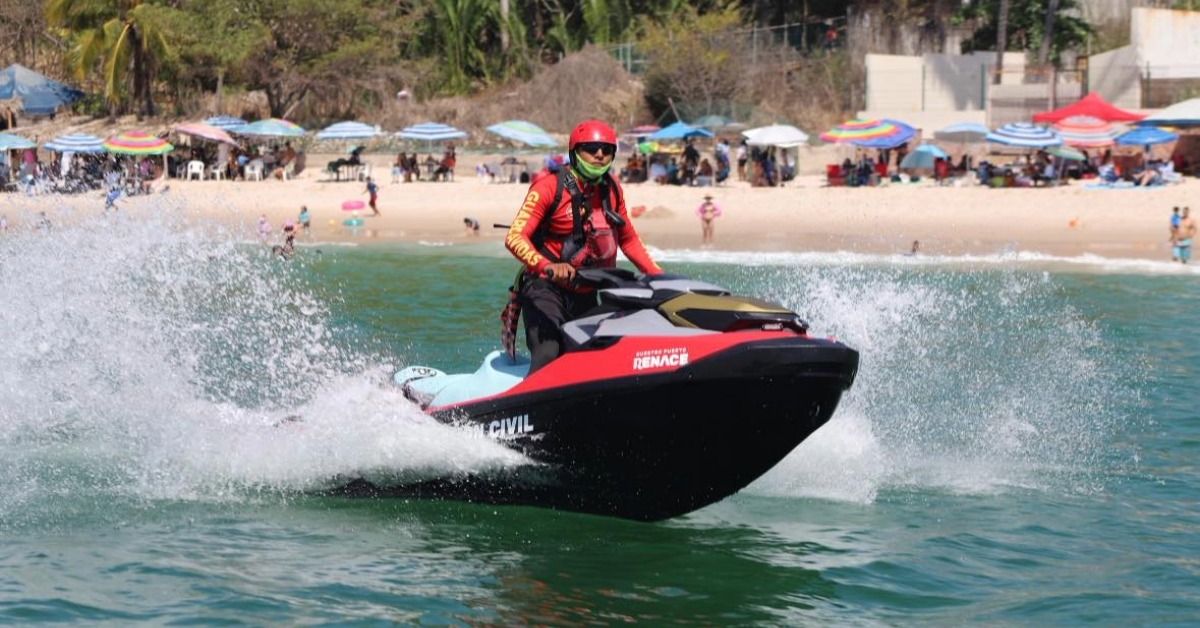
Authorities said the reinforced operation includes two jet skis assigned to patrol the coastal strip and a rapid-response vessel prepared for emergencies, including incidents involving boats. Local officials also said municipal lifeguards remain deployed across the 23-beach zone. The public message has been consistent. Visitors and residents are being urged to follow instructions from lifeguards and civil protection staff at all times.
On paper, that may sound like a routine seasonal deployment. In practice, it shows how Puerto Vallarta handles beach risk during a high-volume holiday stretch. The shoreline is open and active, but it is also being managed more closely. The city is not closing beaches. It is trying to keep them usable while reducing the chances of drownings, injuries, and other emergencies.
Why the extra patrols matter now
The timing is important. Puerto Vallarta entered the holiday season with expectations of heavy tourism, including strong hotel occupancy through the Easter period. That alone would justify extra staffing. But this is also a time of year when the sea can look calmer than it is. Visitors often read the beach visually. Authorities read it operationally. Those are not always the same thing.
That gap matters most for people unfamiliar with local conditions. Many foreign residents understand the rhythm of Vallarta’s beaches over time. Short-stay visitors often do not. They may not know which areas are affected by surf, runoff, river mouths, marine life, or changing wind conditions. They may also assume that a popular beach, especially one near the hotel zone or Malecón, is automatically safe for swimming. That assumption can fail quickly.
The expanded beach watch is therefore doing more than putting extra personnel on the sand. It is also a visible reminder that busy beaches are not risk-free. In tourism-heavy destinations, danger often rises at the same moment the atmosphere feels most relaxed. More people enter the water. More children are near the surf line. More boats and watercraft are active. More visitors are making decisions in unfamiliar settings.
The flag system is part of the story
The reinforced patrols were announced the same day authorities reported that many Puerto Vallarta beaches were flying yellow flags, which signal caution. Some beaches were reported under yellow and purple flags, indicating caution, along with the presence of marine fauna. At the river mouth in Playa Holly, authorities reported a red-and-purple flag, warning of danger and the presence of marine life in the area.
For many readers, especially international ones, this is the part of the beach safety system that deserves the most attention. Lifeguards and rescue equipment matter once something goes wrong. Flags matter before it does. A yellow flag is not a decoration. It means enter the water carefully, if at all, and only after checking conditions. A red flag means do not enter. A purple flag warns of harmful marine life or another biological hazard. In Puerto Vallarta, river mouths and transitional beach areas can become especially important in those decisions.
This is one reason the city’s holiday beach operation cannot be read as a simple tourism support story. It is also a risk-management story. The patrols are there because the water changes. The flags are there because surface appearances can mislead. The shoreline can look inviting and still demand restraint. That is true for residents, but especially for visitors arriving for only a few days.
Clean water is not the same as safe surf
Another point that often gets lost during holiday coverage is the difference between water quality and same-day swimming conditions. Before the holiday period, pre-vacation monitoring found beaches in the Puerto Vallarta area suitable for recreational use. That is useful public health information. But it does not mean every beach is safe to enter at every hour or under every flag.
Those are two separate questions. One asks whether the water meets sanitary standards. The other asks whether the surf, currents, marine conditions, or nearby geography create an immediate risk. A beach can pass health monitoring and still be unsafe to swim that day. That distinction matters because visitors often collapse all beach warnings into one category. They hear a beach is open or suitable and assume the rest of the decision has been made for them. It has not.
Puerto Vallarta’s latest surveillance push makes more sense when seen through that lens. Authorities are not only protecting access to beaches. They are trying to manage how people use them in real time. That includes watercraft patrols, lifeguard visibility, and repeated calls for people to pay attention to the signals already in front of them.
A broader holiday safety network is already in place
The municipal operation is also unfolding alongside the Navy’s Operación Salvavidas Semana Santa 2026, which began in Puerto Vallarta in late March. That broader deployment includes maritime rescue and permanent surveillance in high-traffic beach areas. In other words, the city’s reinforced beach monitoring is not happening in isolation. It sits inside a larger holiday safety framework that includes local and federal response capacity.
That layered approach matters in a coastal city where emergencies can move from minor to serious within minutes. A swimmer in trouble, a boat fire, a medical event on the sand, or a rescue call near a crowded beach can all demand different tools. Municipal lifeguards, civil protection crews, and naval personnel do not serve identical roles, but together they create a wider response net during the holiday period.
For Puerto Vallarta, that is the real significance of the announcement. Authorities are not describing a crisis. They are describing preparation. The city knows the beaches will stay busy. It knows the crowds are part of the local economy. It also knows that the margin for error shrinks when more people enter the water at once.
What foreign residents and visitors should take from this
For expats and foreign visitors, the lesson is less dramatic and more useful. Beach safety in Puerto Vallarta is an active system, not a passive backdrop. The patrols, flags, and warnings are meant to be read together. A lifeguard post, a yellow flag, and a visible patrol are not separate details. They are parts of the same message.
That message is simple. Enjoy the beach, but do not improvise your own safety standards. Watch the flags. Stay clear of red warnings. Be cautious near river mouths. Assume that holiday crowds increase risk, not safety. And understand that when authorities expand surveillance, they are responding to predictable pressure points, not creating alarm.
Puerto Vallarta’s coastline remains one of the city’s main attractions. That will not change during the holiday period. What changes is the level of attention required to use it safely. The extra patrols on 23 beaches are not the whole story. They are a sign that the city expects a busy coast and wants fewer preventable tragedies while it stays that way.
Deep Dive:
Puerto Vallarta tightens beach watch for Easter crowds
Jalisco tightens beach safety in Puerto Vallarta for Easter
Puerto Vallarta readies Semana Santa safety operation
With information from Contralinea, COFEPRIS