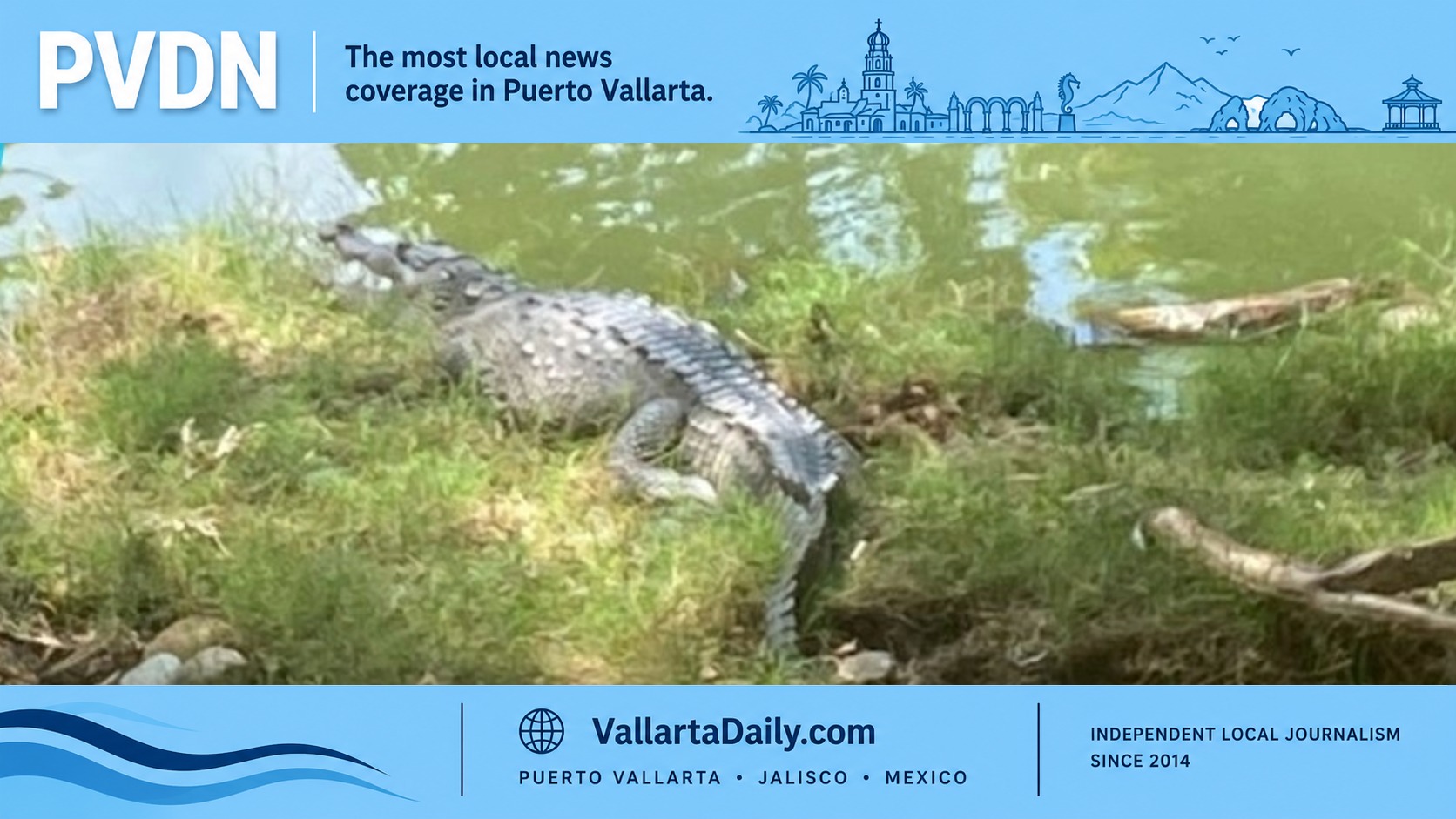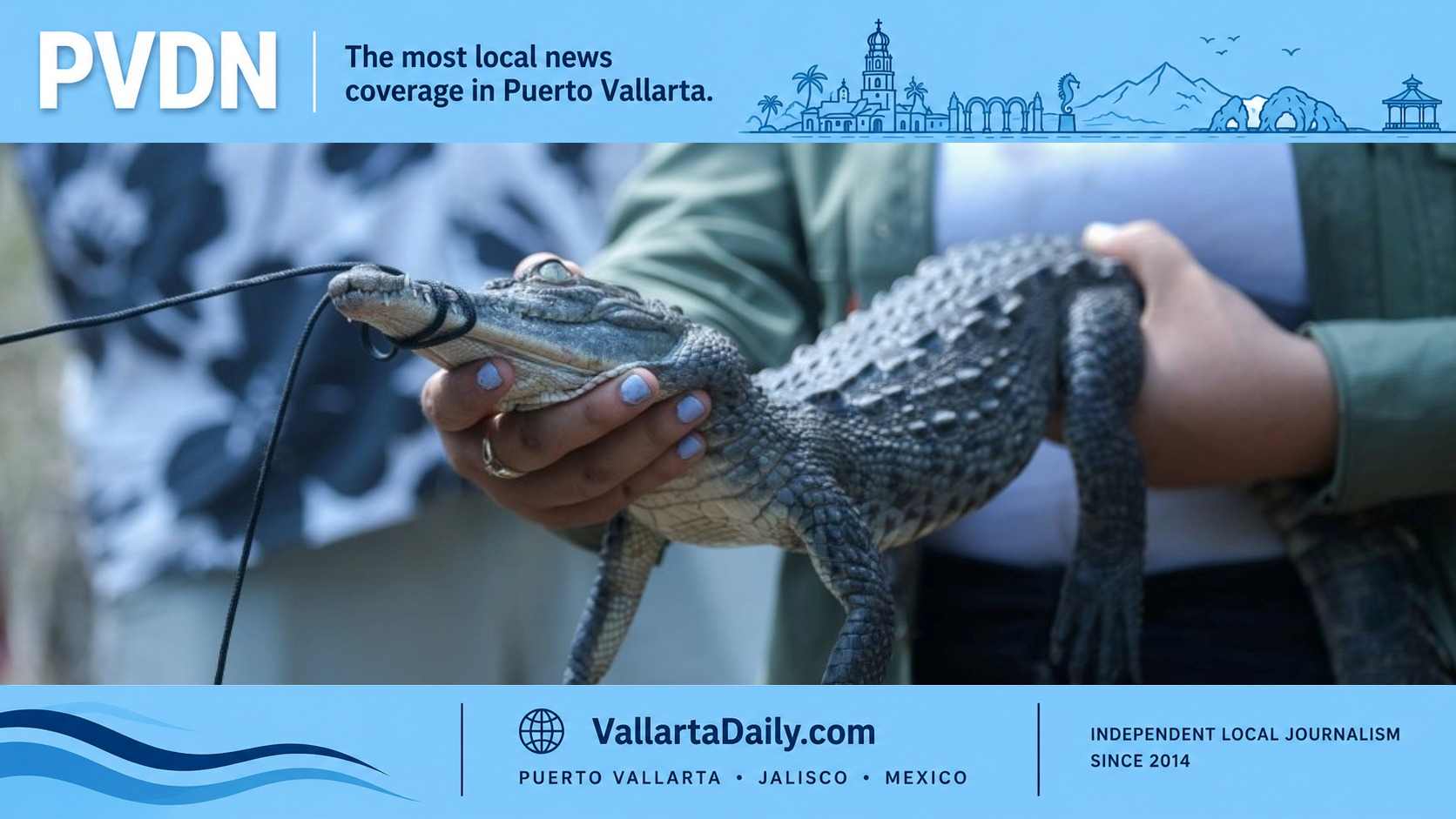
Puerto Vallarta, Jalisco, July 24, 2026 – Hotels along Puerto Vallarta’s coast are being told to maintain lifeguard coverage throughout beach operating hours, replace missing warning signs and establish a direct reporting line after a series of crocodile encounters placed renewed attention on safety near the city’s estuaries and shoreline.
Jalisco’s Secretariat of Environment and Territorial Development, the state Civil Protection and Fire Department and the Puerto Vallarta municipal government sent written instructions to hotel properties following the first working session of a tourism and wildlife safety commission.
The measures give hotels a more defined role in detecting and responding to crocodiles near beaches, canals and other bodies of water connected to the coast.
Each property has been asked to designate an operational contact who can communicate directly with Civil Protection and environmental authorities. Hotels also are expected to review preventive signs, distribute official safety information among guests and employees, and report any sighting or interaction immediately.
The requested beach coverage includes certified lifeguards throughout operating hours. Staff should assess risks when selecting the appropriate beach flag and increase surveillance early in the morning and near sunset, when wildlife activity may increase.
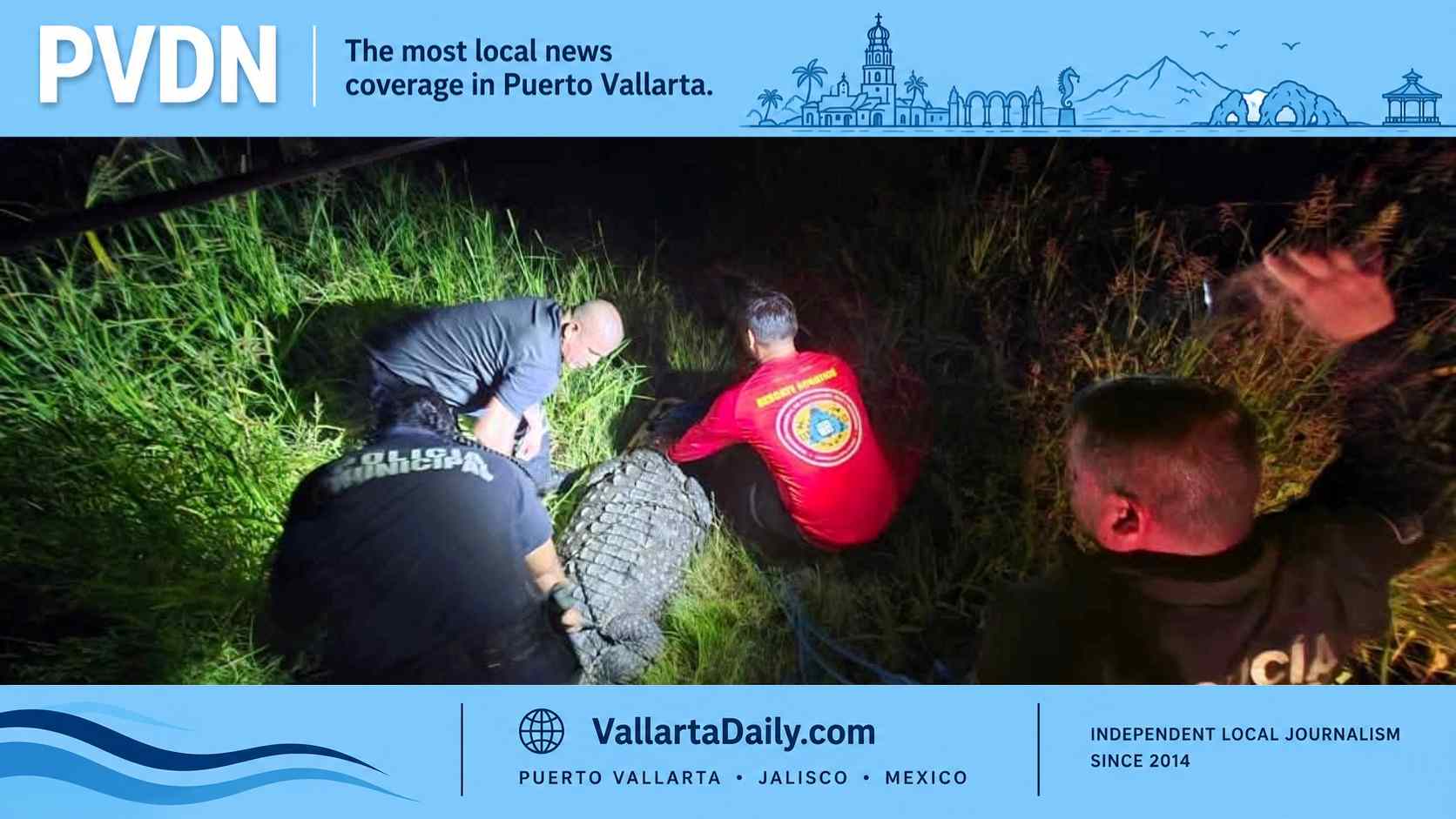
If a crocodile appears, hotel personnel should establish a safety perimeter and leave capture, handling, or attempts to move the animal to authorized wildlife teams. The state guidance does not ask hotel employees to confront the animal.
The instructions follow the June 26 death of a 28-year-old man who was attacked near the beach in front of the Marriott resort in the northern Hotel Zone. His body was recovered the next morning near Boca de Tomates. The death focused public attention on warning signs, patrol coverage and the speed at which beach users receive information after a confirmed sighting.
Marina Vallarta hotels later announced daytime patrols and stronger guest warnings. The new state checklist goes further by calling upon properties to maintain coverage throughout beach operating hours, name an emergency contact and concentrate surveillance around dawn and dusk.
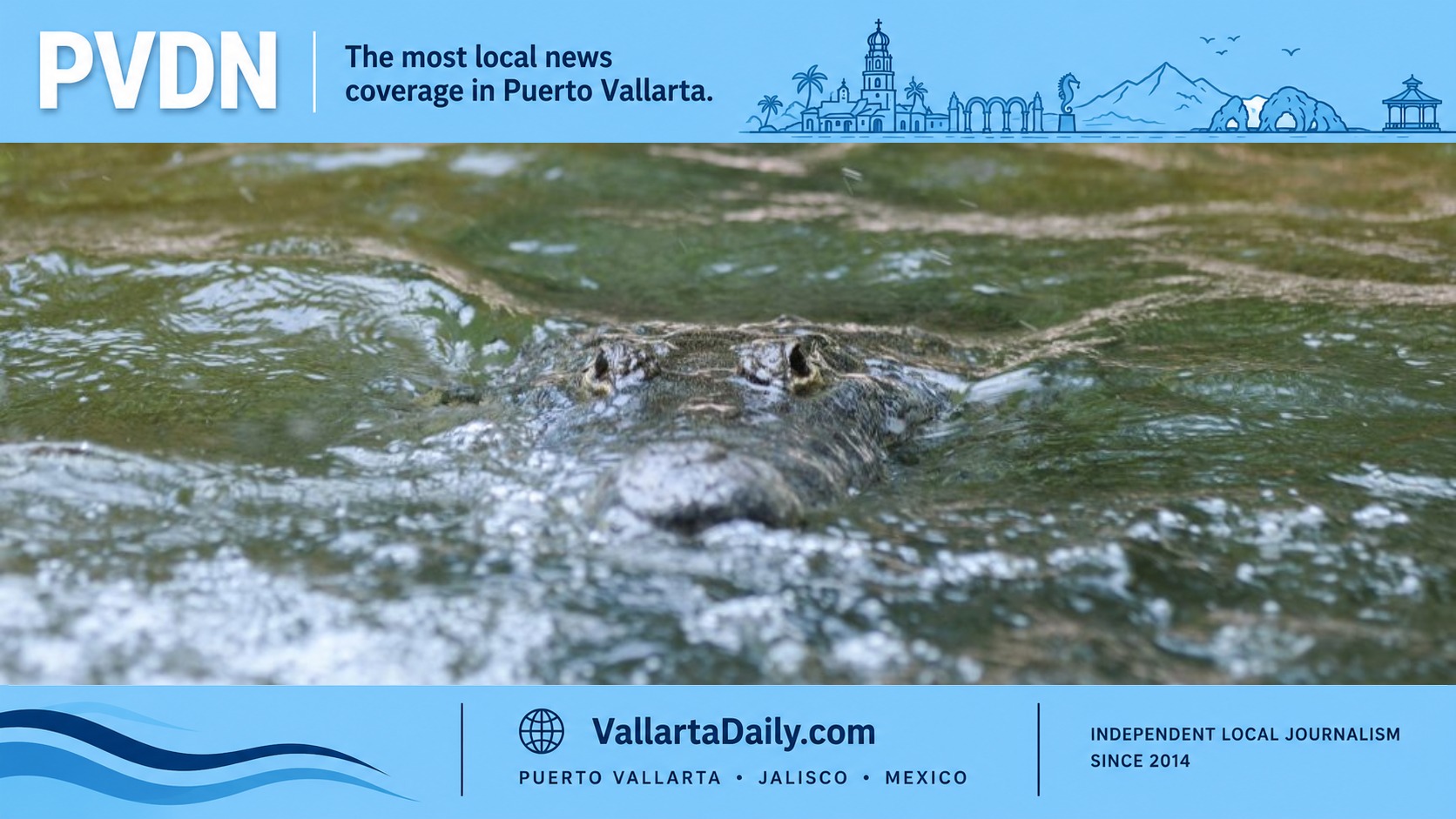
Puerto Vallarta’s beaches are connected to a network of estuaries, rivers and canals used by the American crocodile. Pablo Hernández Hurtado, technical director of the University of Guadalajara’s Cipactli reptile center, has said crocodiles may use the sea when moving between reduced wetland habitats. Sightings are more likely near river mouths and estuaries, including Boca Negra, Boca de Tomates and areas connected to El Salado.
University of Guadalajara researchers also note that rainy-season flows make it easier for crocodiles to move between wetlands and other bodies of water. Their presence in the surf does not necessarily mean the animal will remain on that beach, but people should leave the water and create distance rather than wait to see where it moves.
State officials say real-time sighting notices will also be incorporated into the Jalisco Alerta platform, although a public launch date has not been announced.
Anyone who sees a crocodile should leave the water, keep children and pets away, avoid touching or provoking the animal, and call 911. Swimming should stop immediately near any marked safety perimeter, regardless of general conditions elsewhere along the beach.