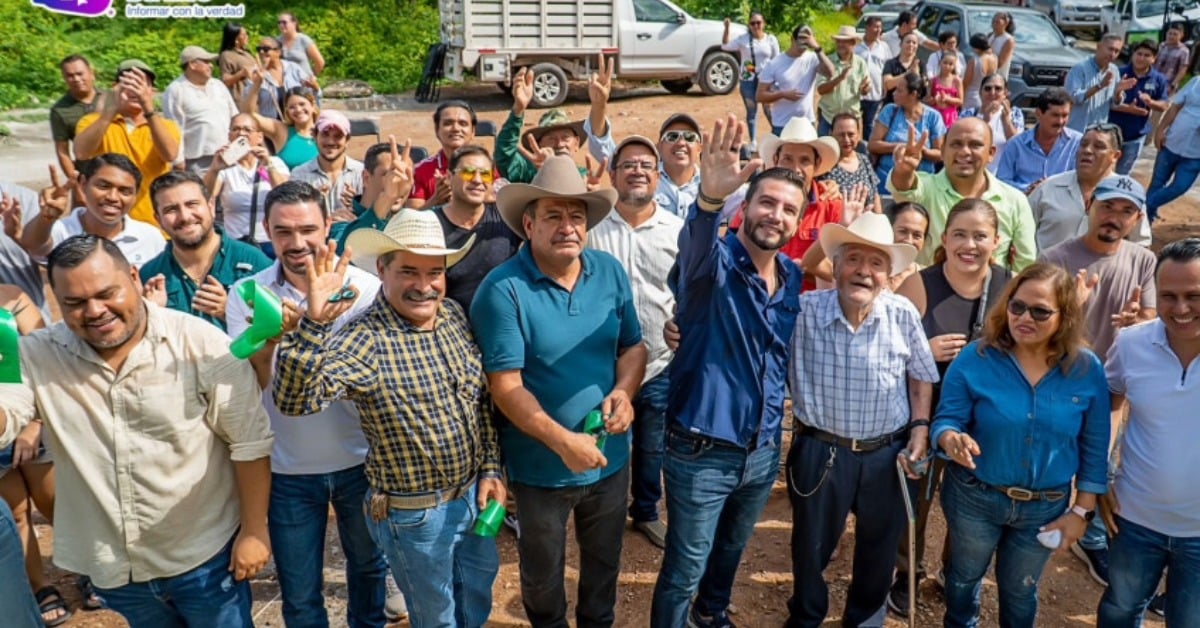
Puerto Vallarta, Jalisco – For decades, the mountain ejido of El Jorullo lived with limited access to the city below, leaving residents isolated and their economic options constrained. That changed this weekend when local officials inaugurated a newly completed 4-kilometer access road that finally ties the remote community into Puerto Vallarta’s municipal network. The project, celebrated in a ribbon-cutting ceremony, promises to improve daily life for residents and unlock low-impact eco-tourism in the surrounding canyons and waterfalls.
Mayor Luis Alberto Michel Rodríguez joined ejido leaders and villagers to mark the completion, cutting the ribbon amid cheers and a communal meal of homemade birria. The road was built using traditional stone paving and textured concrete designed to endure the region’s heavy seasonal rains, a technical choice intended to ensure year-round reliability for people, agricultural products, and emergency services. “Improving connectivity for places like El Jorullo strengthens the entire Puerto Vallarta region,” Michel said, framing the project as part of a broader rural development push.
El Jorullo access road eco tourism is now more than a slogan; it is a tangible shift in what the isolated community can offer and receive. El Jorullo sits in the Sierra Madre foothills and has historically been a small agricultural settlement, founded in 1940 and sustained by ejidatarios who adapted planting techniques to the steep terrain. The improved road reduces travel time and risk, making the area’s natural draws—scenic canyons, waterfalls, and the existing canopy and suspension bridge attractions—accessible to responsible visitors and guides.
Local officials say the road was intentionally designed to serve dual purposes: first, to integrate El Jorullo into the municipal grid so ambulances, school buses, and farmers can move goods and people safely; second, to position the community as a gateway for eco-tourism that emphasizes low-impact outdoor experiences. Tour operators already running hiking and ATV excursions to the nearby Jorullo suspension bridge and viewpoints stand to benefit, while residents could gain new income streams in guiding, food services, and small-scale hospitality.
Ejido commissioner Miguel Pulido highlighted the long struggle behind the project. Construction began just six months ago, following years of petitions from villagers who felt left behind by development concentrated along the coast. “This project shows what we can achieve when government and community work hand-in-hand,” Pulido said, underlining the participatory nature of the push to get the road built. The celebratory convoy of vehicles traveling the new route during the inauguration served as a visible sign of that partnership.
Beyond tourism, residents expect immediate benefits in safety and service delivery. The previously rough and unreliable path made it difficult to move produce, access health care quickly, or ensure regular education access. With the new road, schoolchildren will have safer transport, local farmers can bring harvests to market without the risk of spoilage or delays, and emergency responders can reach the community with far less friction.
City planners have woven the El Jorullo road into a broader strategy of supporting peripheral communities with infrastructure that carries economic opportunity without eroding local identity. Officials framed the work as an investment in regional resilience—linking the highland ejido more directly to the coastal urban economy while preserving the rural ecological character that attracts visitors in the first place.
Residents marked the occasion not just with speeches but with shared food. Villagers hosted the construction crew and officials, serving birria stew made from family recipes—a symbolic gesture of hospitality and ownership over the new chapter. The mood at the inauguration was forward-looking but rooted in place: rural development that aims to keep youth and families invested in their home community, even as it opens new doors.
Analysts of regional tourism say such connectivity improvements can tilt the balance for mountain communities that have natural assets but lacked access. If managed carefully, the influx of visitors seeking authentic nature experiences can bring revenue without the overtourism pitfalls seen in coastal zones. The challenge ahead will be ensuring that eco-tourism stays community-led, with environmental safeguards and equitable benefit sharing.
The new access road to El Jorullo represents more than asphalt and stone; it is a physical and symbolic link between the city’s growth and its hinterland. For the residents who once had to rely on arduous footpaths or unreliable tracks, the ribbon-cutting was a moment of arrival—both of improved services and of a more visible place in Puerto Vallarta’s future.
Background on El Jorullo and regional context
El Jorullo is part of a network of mountain communities in the Sierra Madre that have historically balanced subsistence agriculture with nascent tourism offerings. Its proximity to Puerto Vallarta and existing attractions—like suspension bridges and scenic lookouts—has long suggested potential, but infrastructure gaps kept most opportunities out of reach. The new road shifts that dynamic, giving the community a platform to define how it wants to participate in the region’s broader economic flows.