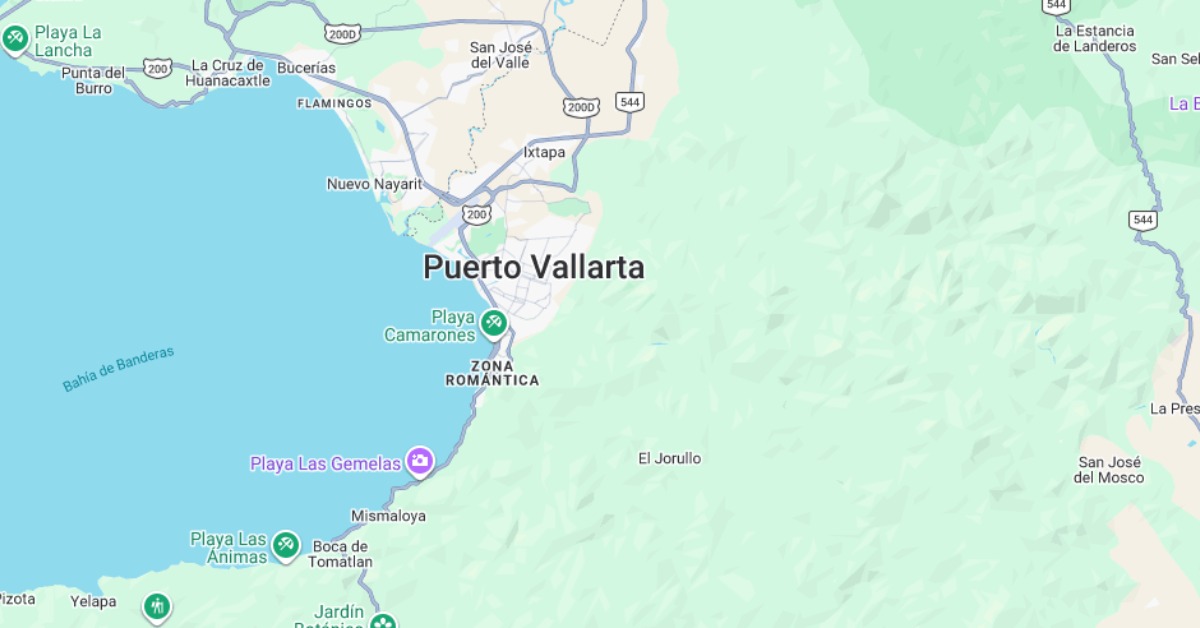
El Jorullo has long been known as one of Puerto Vallarta’s mountain communities, tied to rural life, the Sierra Madre, and a growing ecotourism economy. Now, the area has a new place in the city’s local government structure. The City Council’s approval gives the El Jorullo delegation status after years of requests from residents and ejido leaders, raising questions about services, planning, and what comes next for nearby communities.
El Jorullo Joins Puerto Vallarta
Puerto Vallarta’s City Council approved El Jorullo as the municipality’s eighth municipal delegation, giving the mountain community a larger role in the city’s administrative structure.
The decision changes El Jorullo from an agency municipal to a delegación municipal, a local government designation used in Jalisco municipalities to improve representation and public-service coordination outside the main urban center.
For residents, the change is mainly administrative. El Jorullo remains part of Puerto Vallarta, but it will now have a higher local status within the municipality. That can make it easier for residents to manage local requests involving services, infrastructure, planning, and coordination with City Hall.
A long-running request from residents
The approval followed years of requests from residents and ejido authorities in El Jorullo. Local leaders had argued that the community’s growth required stronger municipal representation.
El Jorullo sits in Puerto Vallarta’s rural and mountain zone, where tourism activity has expanded in recent years. The area is associated with ecotourism, outdoor recreation, and ejido-led projects that have helped bring more visitors into communities outside the traditional beach corridor.
City officials said the elevation responds to population growth, tourism development, and the need for more direct attention to communities in the area. The measure also forms part of a broader reorganization of Puerto Vallarta’s municipal territory.
What the new delegation includes
The new El Jorullo delegation is expected to cover several nearby communities and neighborhoods, including Agua Zarca, Las Guásimas, El Hundido, Los Almacenes, Los Llanitos, Paso del Guayabo, La Arenita, Paso del Molino, and Los Robles.
That matters because many of these areas are outside the daily view of visitors and many foreign residents. Still, they are part of the broader Puerto Vallarta municipality and often depend on municipal decisions involving roads, public works, land-use planning, and emergency access.
Reports on the approved proposal also noted that some communities along the Río Cuale corridor, including Paso Ancho, Buenos Aires, and Remance, were not included in the final delegation area.
Puerto Vallarta now has eight delegations
With the approval, El Jorullo joins Las Juntas, Las Palmas, Las Mojoneras, Ixtapa, El Pitillal, El Colorado, and Mismaloya as Puerto Vallarta’s municipal delegations.
The move follows recent changes that expanded the number of delegations in the municipality. Mismaloya was previously elevated to delegation status, and El Jorullo now becomes the next rural and tourism-linked area to receive that designation.
For Puerto Vallarta, the change reflects how growth is no longer limited to the hotel zone, downtown, or the main urban neighborhoods. Rural communities are also being pulled into the city’s development map, especially where tourism, road access, and land use are changing.
Services and planning are the next test
Delegation status does not automatically solve local service problems. It does, however, create a clearer administrative channel between residents and the municipal government.
For El Jorullo and its surrounding communities, the practical test will be whether the new status leads to better attention on roads, waste collection, public works, local procedures, and future planning.
The area’s growth also brings a familiar challenge for Puerto Vallarta: how to support tourism and investment without losing the rural character that made these communities distinct. El Jorullo’s economy is tied to nature-based tourism, but the same growth can increase pressure on infrastructure and land-use decisions.
The change is worth watching because it shows how Puerto Vallarta is adjusting its local government structure as development spreads beyond the traditional tourist and residential zones. The decision is not just about a name change. It is part of the city’s ongoing effort to manage growth in communities that were once considered more remote.