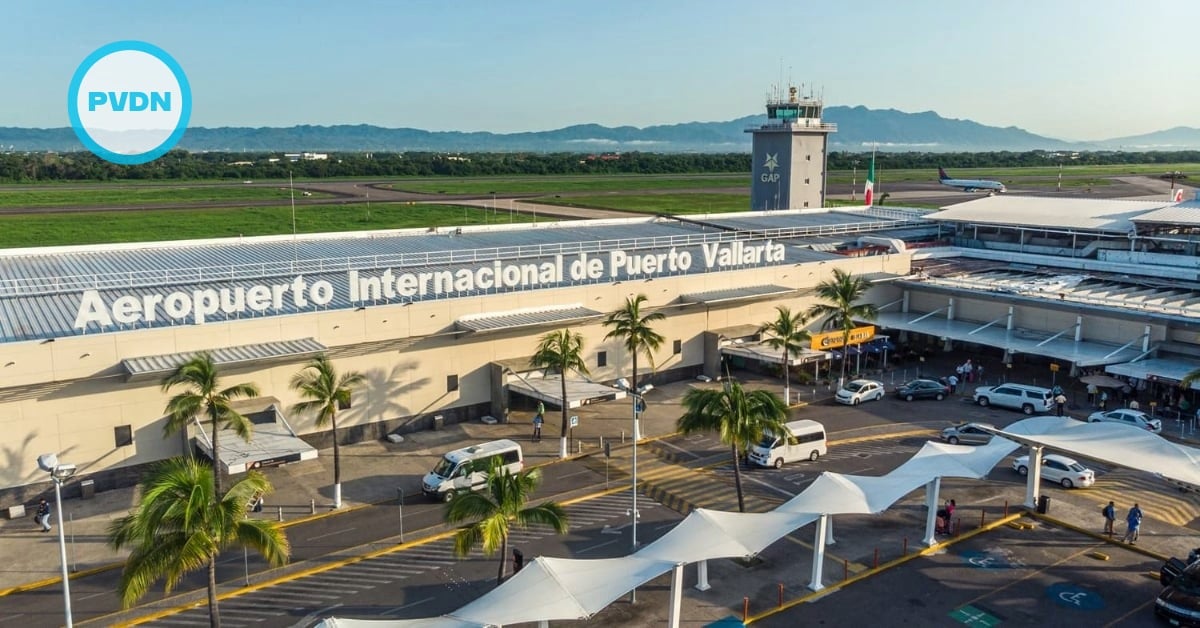
Puerto Vallarta’s airport had a rough March, with passenger traffic falling more than 24 percent from a year earlier. The drop was steep, but the full picture is more complicated than a single headline suggests. International travel weakened the most, domestic traffic also slipped, and the airport still moved more than half a million travelers in one month. For a city that depends heavily on tourism, the numbers raise a broader question about what this slowdown means for the rest of 2026.
A steep decline after a strong recent run
Puerto Vallarta International Airport handled 576,600 passengers in March 2026, a drop of 24.4 percent from the 762,900 travelers recorded in March 2025. The fall was large enough to stand out even in a softer month for the wider airport group that operates the terminal. For Puerto Vallarta, it was one of the sharpest year-over-year pullbacks in the system.
That headline number matters because the airport is one of the clearest monthly signals for the local economy. Air traffic does not measure tourism on its own, but it gives a fast read on how many people are actually arriving or departing by plane. In a beach destination where hotels, restaurants, tours, transportation, and short-term rentals all depend on traveler volume, airport numbers are watched closely by businesses and officials alike.
The March decline also followed a mixed start to the year. January opened with growth, but February turned negative, and March posted a much deeper setback. That does not automatically mean Puerto Vallarta has entered a lasting downturn. It does mean the market lost momentum quickly after a record-setting 2025.
International passengers took the biggest hit
The main driver of the March drop was international traffic. The airport reported 360,800 international passengers, down 32.1 percent from 531,400 a year earlier. That was a much steeper fall than the one seen in domestic travel, suggesting the weakness stemmed mainly from foreign demand, fewer seats, lower aircraft occupancy, or some mix of all three.
Domestic traffic also moved lower, though the drop was more moderate. The airport handled 215,800 domestic passengers, down 6.8 percent from 231,500 in March 2025. That matters because Puerto Vallarta depends on both markets. International travelers often attract the most attention, especially during high season, but domestic travelers help fill flights and rooms on weekends, holidays, and during shoulder periods.
The broader GAP report adds more context. Across its Mexican airports, total March passenger traffic fell 7.6 percent, and the group said available seats were down 4.5 percent while load factors fell from 81.5 percent to 75.5 percent. Puerto Vallarta’s decline was much deeper than the overall group result, which shows the city was hit harder than many other airports in the network.
Why these numbers matter beyond the airport
For many readers, airport traffic can sound like an industry metric that matters only to airlines and investors. In Puerto Vallarta, that is not the case. Passenger counts feed into a wider chain of local activity. Fewer arriving travelers can mean softer demand for airport transfers, lower tour bookings, lighter restaurant traffic, and more caution among businesses that rely on seasonal peaks.
That is one reason this story deserves more than a brief market update. Puerto Vallarta is not just an airport with a beach attached. It is a tourism economy with an airport at its center. When traffic rises, the effect often spreads quickly across the city. When traffic falls, the concern is not limited to aviation. It touches jobs, business revenue, and expectations for the rest of the season.
At the same time, one bad month should be read with care. The airport still processed well over half a million travelers in March. That is not a collapse in absolute terms. It is a sharp drop from a very high comparison point. Puerto Vallarta remains one of Mexico’s busiest leisure gateways, and the airport is still moving volumes that many destinations would consider strong.
The first quarter shows the slowdown is not only one month
The March result was severe, but the quarter as a whole also moved lower. From January through March 2026, Puerto Vallarta airport handled 1,923,700 passengers, down from 2,126,100 in the same period of 2025. That is a decline of roughly 10 percent over the first three months of the year.
That quarterly view is important because it helps separate a one-off monthly swing from a broader pattern. On the one hand, the airport began the year with growth in January. On the other hand, the quarter ended below last year’s pace, with weakness concentrated in the international segment. That makes the next few monthly reports worth watching closely.
The trend is also notable because it comes after the airport closed in 2025 at a record level, with nearly 6.95 million passengers for the year. In other words, the March decline is hitting after a period of strength, not after a weak year. That can cut both ways. It may mean the market is cooling from a high base. It may also mean Puerto Vallarta has underlying resilience if demand stabilizes later in the year.
A slowdown now does not cancel long-term expansion
Another reason the March numbers need context is that the airport is in the middle of a major expansion. Terminal 2 remains under construction and is designed to increase capacity and improve the passenger experience. The long-term planning behind that project reflects confidence in Puerto Vallarta’s role as a major Pacific destination.
That does not erase the current decline. It does, however, show that the broader market view remains growth-oriented. Airports do not expand on this scale for a short seasonal bump. They expand because traffic has grown over time and because operators expect demand to remain strong in the long term, even if individual months are uneven.
For residents, business owners, and foreign readers who follow Puerto Vallarta closely, the practical takeaway is simple. March was weak, especially for international traffic. The first quarter also ended below last year’s. But the airport is still handling heavy volume, and the city is still building for future growth. The real question now is whether the March drop proves temporary or becomes the start of a longer slowdown through the rest of 2026.