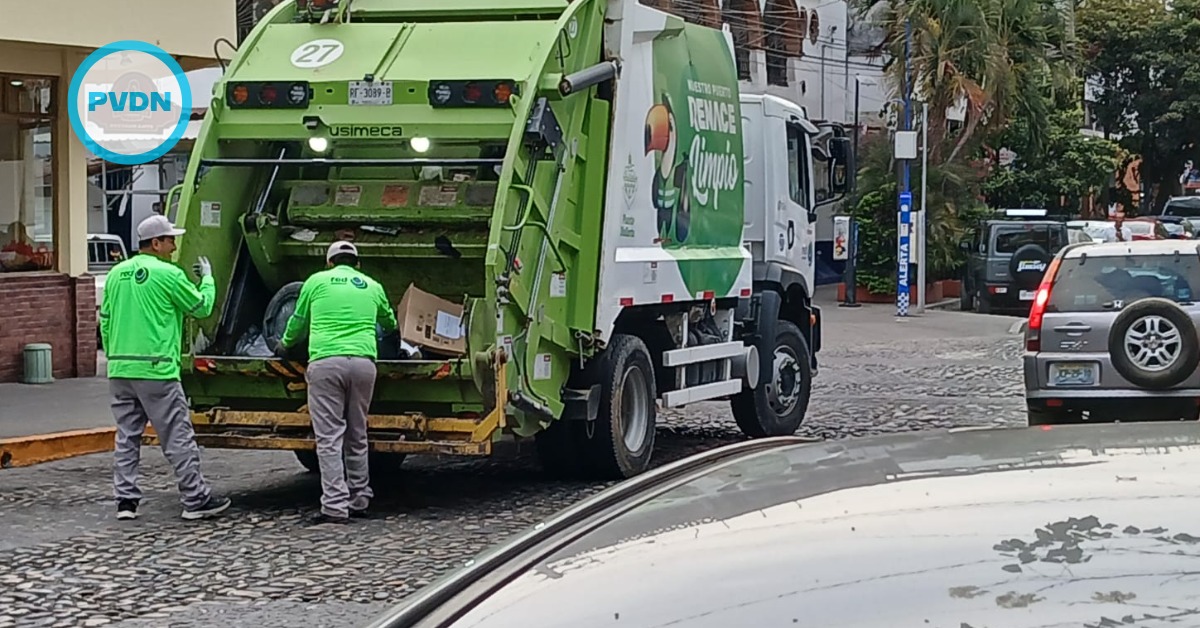
Puerto Vallarta’s garbage trucks are still moving, but fewer of them are coming to your street—and the cuts are growing. The private company hired to handle the city’s trash says it can’t keep absorbing months of unpaid invoices, and it has begun pulling routes in stages. City officials insist talks are underway and say emergency crews can fill gaps. Residents, meanwhile, are left guessing when to take bags outside, and how long the “temporary” disruption will last.
Routes cut again as Red Ambiental tightens service
Puerto Vallarta’s trash collection is being throttled again. Red Ambiental says it will cut service on about 30% of routes starting Tuesday, January 27. That doubles the initial reduction announced four days earlier. The company blames a growing municipal debt and a cash squeeze. Company spokespeople put the unpaid balance above 110 million pesos. Municipal officials have pointed to a higher figure. Either way, the gap covers about seven months of bills. It says money is short for fuel, maintenance, and payroll. The cut is designed as a rolling adjustment. Routes can change from one day to the next. That makes it harder to predict when your street will be served. Red Ambiental says it cannot pull cash from other cities to subsidize Vallarta. It argues that it would punish places that are paying on time. The timing is ugly. Vallarta is in peak season, with hotels packed and streets busy. Trash left out too long becomes a health issue fast. It also hits the city’s postcard image. Red Ambiental warns the reductions could deepen without payments. A total shutdown remains on the table if talks fail.
A debt measured in months
Red Ambiental says the debt has been building since June 2025. It says a payment plan was discussed, but it was missed. The company stresses it is not just hauling trash. It also handles transfer, final disposal, and landfill remediation. That work requires steady spending every week. City Hall has not disputed that invoices are overdue. On Saturday, a municipal spokesperson said the contractor was still covering every route. That statement now sits uneasily beside the new 30% cut. The debt figure is also contested in public comments. Some officials cite more than 160 million pesos for the past 7 months. The company has repeatedly stated that the balance is above 110 million. The mayor says the city is in talks with the contractor and making financial adjustments. He also points to recent changes inside the municipal finance office. Officials insist collection is still happening, even if some routes need backup. In a few neighborhoods, residents have watched municipal trucks step in after missed pickups. That emergency coverage, however, has limits. Vallarta’s daily waste stream does not pause for negotiations. Each missed run adds pressure to the next. The backlog can snowball quickly.
Why this matters in a tourist city
Trash disputes can feel abstract until the bags start piling up. Vallarta produces a heavy volume of waste even on a quiet day. Estimates put the daily average around 444 tons. In high season, it can climb toward 600 tons. That surge comes from visitors, short-term rentals, and full restaurants. It also comes from the same neighborhoods that market Vallarta’s lifestyle. When pickups slip, the first damage is local. Heat and humidity speed up the growth of odors, insects, and stray animals. The second damage is reputational. A destination built on beaches and walkable streets cannot afford dirty corners. Local business leaders have warned about sanitary risks and the fallout for tourism. They have urged City Hall to restore a viable payment plan and keep the concession running. Some are pushing for a monitoring council with government, business, and civil groups. The goal is simple: no surprises and a system that does not collapse mid-season.
What to do while the schedule shifts
For residents, the most frustrating part is the uncertainty. The company says the cuts can rotate, which means yesterday’s schedule may not hold. In practical terms, leaving trash out “just in case” can backfire. Bags tear, animals scatter them, and sidewalks become the problem. The safest move is to wait until you hear the truck, then take the waste out quickly. If you live in a condo, ask the administrator about storage and pickup timing. Many buildings can hold bags in a sealed area until collection arrives. Small steps also help the city’s crews. Break down boxes so they take up less space. Keep food waste sealed to reduce smells. If you run a rental, set clear house rules for guests. A missed pickup is annoying, but scattered waste creates a bigger headache for everyone. The city is also urging people to respect collection hours, especially in dense areas. That discipline matters more when capacity is reduced.
The standoff is also a stress test for the concession model itself. The city approved a 15-year deal in late 2024 to improve collection and disposal. That decision moved a basic public service into a contract that depends on regular payments. When the payments stall, the service becomes a leverage point. Red Ambiental says it prefers dialogue and has not pushed the dispute into court. It also says it will continue to adjust routes based on cash flow. City officials say they are working to stabilize finances and avoid politicizing the issue. The next few days will show which side has room to move. A partial fix could come in the form of a first payment, even if the full debt remains. A failure could look like deeper cuts or a full halt if the company’s warning turns real. Either way, residents should plan for a bumpy stretch. Garbage is a daily system, and even a short disruption leaves a long tail.
With information from Contralinea, La Jornada, NoticiasPV, AZNoticias, Tribuna de la Bahía, Quadratín Jalisco