The Centro Universitario de la Costa, or CUCosta, says its conservation work for the Vallarta mud turtle remains active despite the theft of specimens that disrupted the program over recent months. According to the latest update, the university is still operating the project and working under federal oversight while it reviews stronger security measures for the facilities that house the species.
That matters because the program is not a short-term rescue effort. It is part of a longer scientific and conservation project that university researchers say has been underway since 2019. The goal has been to study the turtle, protect surviving populations, and maintain controlled care for specimens that can support long-term conservation. In practical terms, the university is trying to keep the species alive in both the wild and managed conditions while its habitat faces growing pressure.
The latest update also points to a shift in emphasis. The story is no longer only about the thefts themselves. It is now about whether CUCosta, federal environmental authorities, and local partners can build a system strong enough to prevent a repeat and keep the program moving forward.
Why this turtle matters
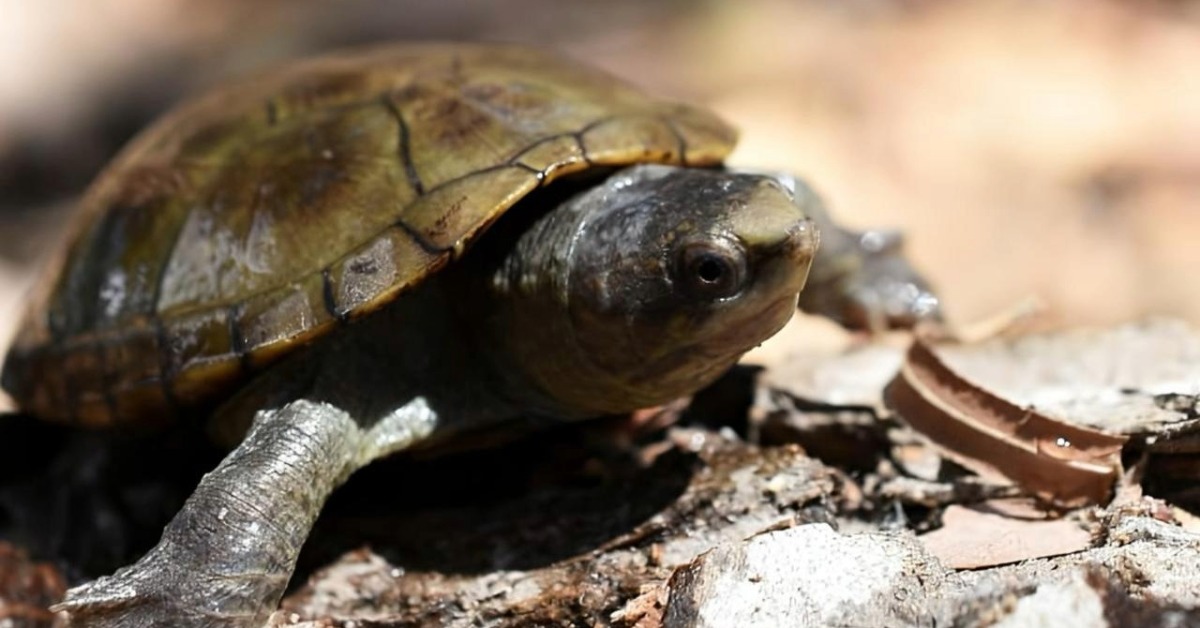
The casquito de Vallarta, known scientifically as Kinosternon vogti, is not just another turtle in a region known for wildlife. It is a species with an unusually small range and a direct connection to Puerto Vallarta. University researchers have described it as endemic to this area and tied to small freshwater habitats, including temporary streams and wet zones around the university’s broader environment.
That limited range is what makes the turtle so vulnerable. A species spread across a large territory can sometimes absorb local damage. A species found in only a narrow area has far less room for error. If wetlands are filled, burned, polluted, or cut off by urban growth, the loss hits the whole population much harder.
Researchers have also warned for years that the threats are not limited to habitat change. The turtle’s rarity has made it attractive to traffickers. That turns a conservation issue into a law enforcement issue. Once illegal extraction enters the picture, even a small number of stolen animals can carry outsized damage for a population already under pressure.
For readers in Puerto Vallarta, this is one of those stories that explains the environmental cost hidden behind everyday growth. A new subdivision, a road project, or drainage changes may look unrelated to conservation. For a species that depends on fragile urban wetlands, those changes can decide whether it survives.
What changed after the thefts
The university previously said two break-ins, on December 9, 2024 and again in January 2025, resulted in the theft of 55 turtles from the conservation site. After those incidents, CUCosta said it filed complaints and reinforced security measures, including installing cameras and coordinating with authorities at different levels of government.
Federal attention followed. In January 2025, environmental authorities said they were working with other institutions to protect the remaining animals and pursue those responsible. Measures reported at the time included tighter protection for held specimens, alerts to wildlife management units, and warnings to customs authorities because of the risk that stolen turtles could be moved out of the country.
By February 2026, the issue had expanded beyond immediate security. A meeting that included PROFEPA head Mariana Boy Tamborrell and university officials focused on a broader strategy to protect the turtle’s habitat. That is an important change. It suggests authorities are treating the problem not only as a theft case but also as part of a broader conservation challenge tied to land use, enforcement, and ecosystem protection.
The newest local report says the university is now considering even stronger safeguards, including the possible relocation of the specialized lab to a more controlled area. It also says there are efforts with the federal government to recover and return specimens. If that happens, the next phase of the program could be defined less by emergency response and more by long-term institutional control.
This is bigger than one campus facility
It would be easy to read this as a story about university operations. It is more than that. The Vallarta mud turtle sits at the intersection of three forces shaping Puerto Vallarta: urban growth, environmental management, and illegal wildlife trade.
The university has already warned that the species faces pressure from expanding development, land burning for real estate, road mortality during the rainy season, and illegal capture for sale. Those are not isolated threats. They reflect how quickly land use can change in and around a city that keeps growing.
That is why the federal inspection matters. A stronger gate, more cameras, or a better lab can reduce the risk of another theft. But that alone will not secure the future of the species. Real protection depends on preserving habitat, improving surveillance, discouraging the illegal wildlife trade, and maintaining scientific monitoring over time.
For international readers, the story offers a useful reminder about Puerto Vallarta. The city is often understood through tourism, real estate, and beach life. But it is also home to species found almost nowhere else. Protecting them requires attention to what happens away from the hotel zone, in creeks, wetland edges, and overlooked urban spaces that rarely make tourism campaigns.
What comes next
The most important signal in the current update is that CUCosta has not stepped back. The project remains active, federal authorities are still engaged, and stronger safeguards are under review. That does not erase the damage caused by the thefts. It does show that the conservation effort has moved into a more serious stage.
The next test will be whether institutions can convert that attention into durable protection. That means not only securing facilities, but also defending the habitat that made the species possible in the first place. If that broader effort holds, Puerto Vallarta may still have a path to protect one of its smallest and most distinctive native animals.