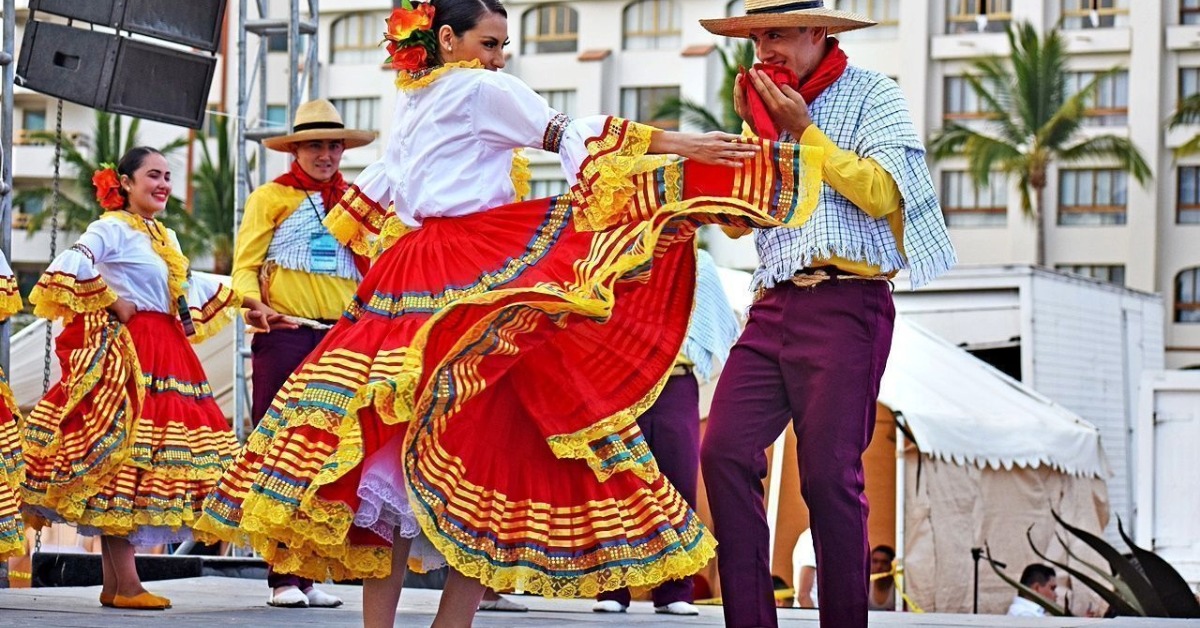
Puerto Vallarta will host the 20th Festival Vallarta Azteca del Folclor Internacional, known as FESTVA, from May 1 to 9, bringing together traditional dance groups from Mexico and several other countries.
The festival is expected to feature about 1,200 dancers, with 21 national groups and five international delegations. Participating countries include Bolivia, Bulgaria, Colombia, Costa Rica, and Latvia, as well as groups from several Mexican states.
Most performances will be free to the public. Two scheduled functions at Teatro Vallarta on May 3 will incur a 200-peso recovery fee.
A major cultural event for Puerto Vallarta
FESTVA has become one of Puerto Vallarta’s regular cultural events and a visible part of the city’s early May calendar. The festival centers on folkloric dance, a form of performance that uses music, costume, choreography, and regional traditions to represent local identity.
For many foreign residents, these events offer more than entertainment. They provide a clear view into how Mexico presents its regional cultures in public spaces. Each state has its own music, clothing, steps, and symbols. A dance from Veracruz does not look like one from Jalisco, Yucatán, Sinaloa, or Michoacán. That difference is part of the point.
FESTVA also brings international groups into the same setting. This gives the festival a broader cultural exchange role, with visiting performers sharing traditions from their own countries while local audiences see how dance carries history and identity across borders.
Parade and public performances
One of the main public events will be the inaugural parade on the Malecón, scheduled for Monday, May 4, at 6 p.m. The route is expected to begin near the Sheraton area and continue toward Los Arcos del Malecón, where performances will follow.
The Malecón setting matters because it places the festival in one of the city’s most public and accessible spaces. It also makes the event easy for residents and visitors to attend without needing a formal ticket or reservation.
Other venues listed for festival activities include Los Arcos del Malecón, Teatro Vallarta, Puerto Mágico, Centro Comercial La Isla, Plaza de Armas, Mercado Emiliano Zapata, Mercado del Río Cuale, and Centro Cultural La Lija.
Some performances will also take place outside the main tourist corridors. That wider distribution helps bring the festival into daily city life, rather than limiting it to hotel zones or formal stages.
Sabores del Mundo adds food to the program
A related event, “Sabores del Mundo,” is scheduled for May 8 at Mercado Emiliano Zapata. The gathering is expected to include representatives from five countries.
The food component gives the festival a more direct connection to local markets and neighborhood spaces. It also makes the event more approachable for residents who may not attend a formal performance but want to experience part of the cultural exchange.
For international residents, this is the kind of event that can make Puerto Vallarta feel less like a resort city and more like a working Mexican community with layered cultural life. It brings together public markets, visiting performers, local organizers, and residents in a shared space.
Why folkloric dance matters in Mexico
Baile folklórico is often one of the easiest entry points into Mexican culture for newcomers. It is visual, public, and rooted in regional identity. The costumes, music, and choreography often point to local history, rural traditions, religious celebrations, courtship customs, or community rituals.
In Jalisco, many people associate traditional performance with mariachi music, charro clothing, and regional dances. But Mexico’s folkloric traditions are far broader. States such as Veracruz, Yucatán, Oaxaca, Michoacán, Sinaloa, and Hidalgo each carry distinct styles.
That diversity is important for foreign residents to understand. Mexico is not one cultural block. Public festivals like FESTVA show how local and regional identities remain active, not just preserved for tourism.
What residents should know before attending
Most FESTVA events are expected to be free, but the May 3 Teatro Vallarta performances will require a 200-peso contribution. Residents planning to attend the theater shows should confirm ticket availability directly with the organizers or the venue.
Outdoor events may draw crowds, especially the Malecón parade and performances at Los Arcos. People who want a good viewing spot should arrive early, use public parking with caution, and expect traffic delays around Centro.
Schedules for public cultural events in Mexico can change. Attendees should confirm times through the festival’s official social media pages or the Instituto Vallartense de Cultura before making firm plans.
A cultural week beyond the beach
Puerto Vallarta’s identity is often framed through tourism, beaches, restaurants, and nightlife. FESTVA adds another layer. It presents the city as a meeting point for traditional dance, music, public culture, and international exchange.
For long-term foreign residents, events like this can be a useful reminder that integration is not only about learning Spanish or knowing where to shop. It also means showing up for the place’s cultural life.
FESTVA gives residents a low-cost way to do that. It also gives visitors a chance to see Puerto Vallarta beyond the usual vacation image.