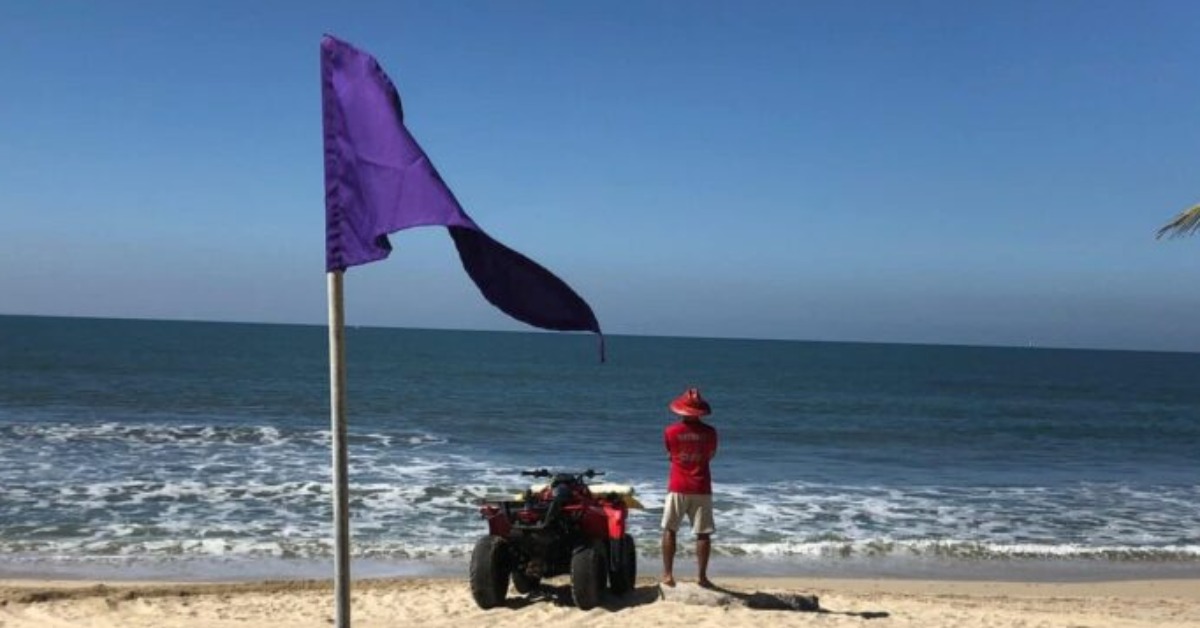
Puerto Vallarta’s beaches entered another holiday day under close watch, but the message was more nuanced than a simple go-or-don’t-go warning. Purple flags went up where authorities detected harmful marine life, while much of the rest of the coast stayed under yellow caution. For visitors, especially those unfamiliar with Mexico’s beach flag system, the update matters because a beach can be open, busy, and even officially clean for recreation, yet still carry real same-day hazards in the water.
Why purple flags went up on Vallarta beaches
Puerto Vallarta authorities raised purple warning flags on some beaches on Tuesday after reporting the presence of harmful marine life during ongoing holiday monitoring. At the same time, many other beaches remained under yellow flags, which signal caution rather than a full no-swim order.
The update forms part of the city’s beach surveillance during Semana Santa and Pascua, when local beaches draw larger crowds and daily conditions can change quickly. The areas identified with combined yellow and purple warnings included beaches such as Conchas Chinas, Holly, Velas, and Boca de Tomates. Reports also continued to point to the river mouth at Playa Holly as the most restricted area, where stronger danger warnings had been posted due to risky water conditions and harmful fauna.
For many readers, the color change may sound minor. On a beach, it is not. The system is designed to provide people with a quick visual signal before they enter the water. A purple flag does not automatically mean every beach in the city is closed. It does mean authorities want swimmers to understand that the risk is not limited to waves or currents. It can also come from wildlife or marine organisms in the water.
What the flag colors actually mean
For international residents and visitors, the beach flag system in Mexico can be easy to misunderstand. A yellow flag means conditions call for caution. People may still enter the water, but they should stay close to shore, avoid overconfidence, and pay attention to lifeguards. A red flag means people should not enter the sea. A purple flag warns of harmful marine life. In practice, that can include situations linked to “agua mala,” crocodile sighting zones near river mouths, or other fauna considered dangerous.
That distinction matters because beach risk is not always about dramatic surf. A shoreline can look calm yet harbor hazards that are hard to see from the sand. Families with children, older swimmers, and visitors who are unfamiliar with local conditions are often the most vulnerable in such situations. Many accidents begin with a seemingly small decision. Someone walks farther down the beach, assumes one flag applies everywhere, or enters near a river mouth without realizing conditions change there first.
In Vallarta, authorities have been repeating a simple message through the holiday period: follow lifeguard instructions, respect the flags, and do not treat warnings as optional. That advice may sound basic, but it becomes more important during vacation weeks, when beaches are fuller, and many people are swimming in unfamiliar waters.
Why clean water and warning flags are not the same thing
One point that often causes confusion is the difference between water quality and same-day beach safety. Before the holiday period, federal and state monitoring found Puerto Vallarta’s main recreational beaches fit for recreational use. That means the water met health standards tied to laboratory testing. It does not mean the sea is free of currents, wildlife, or sudden hazards on any given day.
That is why beachgoers can hear two things at once that sound contradictory but are not. A beach can be considered sanitary for recreation based on testing and still fly a warning flag because lifeguards are responding to current conditions on the ground. For readers from outside Mexico, this is one of the most useful parts of the story. Officially, clean water is not the same as an all-clear for swimming.
During heavy vacation periods, local authorities rely on this layered system. Laboratory testing addresses broader public health. Lifeguards and civil protection personnel address the immediate risk at hand. The most practical reading for residents and visitors is simple: trust the flag you see at the beach more than the assumption you brought with you.
Why this matters during the Easter holiday rush
Puerto Vallarta is now in one of its busiest beach periods of the year. That brings more lifeguard patrols, more warnings, and more people in the water at the same time. It also raises the stakes when people ignore local guidance. Holiday crowds include children, occasional swimmers, day-trippers, and travelers who may not recognize the difference between a manageable beach and a risky one.
The latest flag update does not suggest a citywide shutdown of beach activity. It suggests something more common, and more important for daily decision-making: conditions vary by beach, and sometimes by section of the same beach. That is especially true near river mouths, rocky areas, and zones where wildlife sightings are more likely.
For expats and regular visitors, the larger takeaway is not just about one day’s purple flags. It is about understanding how Puerto Vallarta manages beach risk in real time. The safest habit is to check the flag at the exact beach you plan to use, ask a lifeguard if you are unsure, and assume that yesterday’s safe swim says little about today’s conditions. In a busy holiday week, that habit can matter more than the weather forecast.
Deep Dive:
Puerto Vallarta expands beach watch for holiday rush
Puerto Vallarta tightens beach watch for Easter crowds
Puerto Vallarta area beaches cleared for Easter break