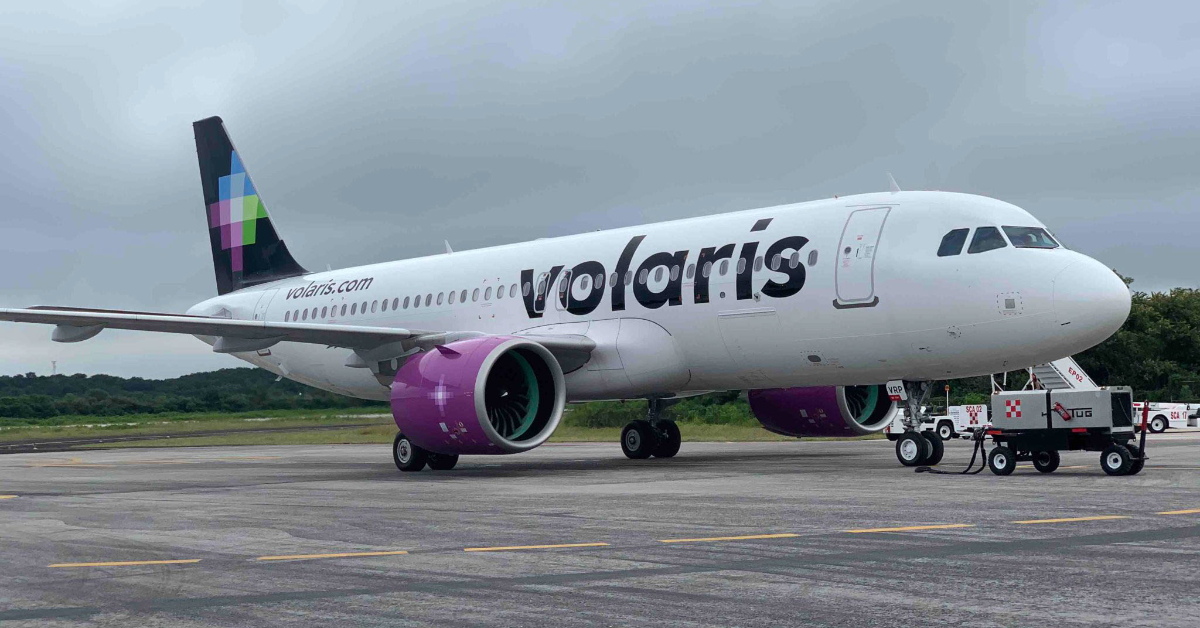
Puerto Vallarta, Jalisco, June 16, 2026 – Volaris has added direct flights from Aguascalientes, Puebla, and San Luis Potosí to Puerto Vallarta, expanding the airport’s domestic network as summer travel begins.
The new routes give Puerto Vallarta more direct access to central Mexico without a connection through Mexico City, Guadalajara, or another hub. Aguascalientes and Puebla operate three times a week, while San Luis Potosí operates four times a week, according to aviation schedule data and route launch details reviewed by PVDN.
It gives travelers from those cities a simpler path to Puerto Vallarta, while residents here gain more nonstop options for family, work, and short trips inland.
The new flight schedule
The Aguascalientes route runs on Tuesday, Thursday, and Sunday. Launch information from the state listed flight Y4651 leaving Aguascalientes at 8:13 a.m. and arriving in Puerto Vallarta at 9:09 a.m. The return flight, Y4650, leaves PVR at 9:50 a.m. and arrives at 10:47 a.m., according to the Aguascalientes government announcement.
The Puebla route also runs on Tuesday, Thursday, and Sunday. The Puerto Vallarta arrival was listed at 3:04 p.m., with the return at 3:38 p.m.
San Luis Potosí is scheduled on Tuesday, Thursday, Saturday, and Sunday. The route arrives in Puerto Vallarta at 10:53 a.m. and departs at 11:25 a.m., according to the route inauguration details.
Schedules can change after a route launch. Travelers should confirm times directly with Volaris before booking airport transfers or same-day connections.
A domestic push during a softer spring
The new routes come after a slower month at Puerto Vallarta International Airport. PVR handled 440,200 terminal passengers in May 2026, down 14.4 percent from May 2025. International traffic fell 26.5 percent, according to GAP data cited in PVDN’s recent airport traffic reporting.
These Volaris flights started in June, so they were not part of May’s passenger totals. Still, the additional domestic seats are worth watching as the airport tries to balance weaker international demand with more travel within Mexico.
Jalisco’s tourism office had listed the three routes earlier this year as part of Volaris’ broader expansion in the state. The routes were Puerto Vallarta-Puebla, Puerto Vallarta-Aguascalientes, and Puerto Vallarta-San Luis Potosí, according to Visit Jalisco.
At the inauguration, airport administrator Omar Gildardo Torres Grajeda said, “At the Puerto Vallarta airport, connectivity is the engine of our growth,” according to published remarks from the event. He said the routes reactivate three destinations with important domestic travel flow.
How this fits into PVR’s expansion
The route additions arrive while Grupo Aeroportuario del Pacífico continues its larger investment plan. Reuters reported in 2025 that GAP’s 52-billion-peso program through 2029 includes the completion of a new Puerto Vallarta terminal designed to double airport capacity.
At this week’s route event, local airport representatives described the Puerto Vallarta terminal project as an investment of more than 9 billion pesos, with completion estimated for next year.
For Puerto Vallarta hotels, restaurants, and service businesses, the value of the new flights will depend on whether the routes remain in place beyond the launch period. Aguascalientes and San Luis Potosí are important industrial markets. Puebla adds another large central Mexico market with limited nonstop beach access.
More direct domestic service can also help midweek travel. That’s good news for hotels, conferences, and local businesses that depend on visitors outside peak holiday periods.
What to watch next
The next test is not the inauguration. It is whether Volaris keeps the schedules after promotional launch demand fades.
New routes often begin with low fares and public events. Their staying power depends on passenger loads, aircraft availability, and whether travelers use the service outside holiday weeks.
The airport’s next traffic reports will show whether domestic passenger numbers improve after the new routes begin operating. They will also show whether Puerto Vallarta’s air market is gaining support from inside Mexico while international traffic remains uneven.