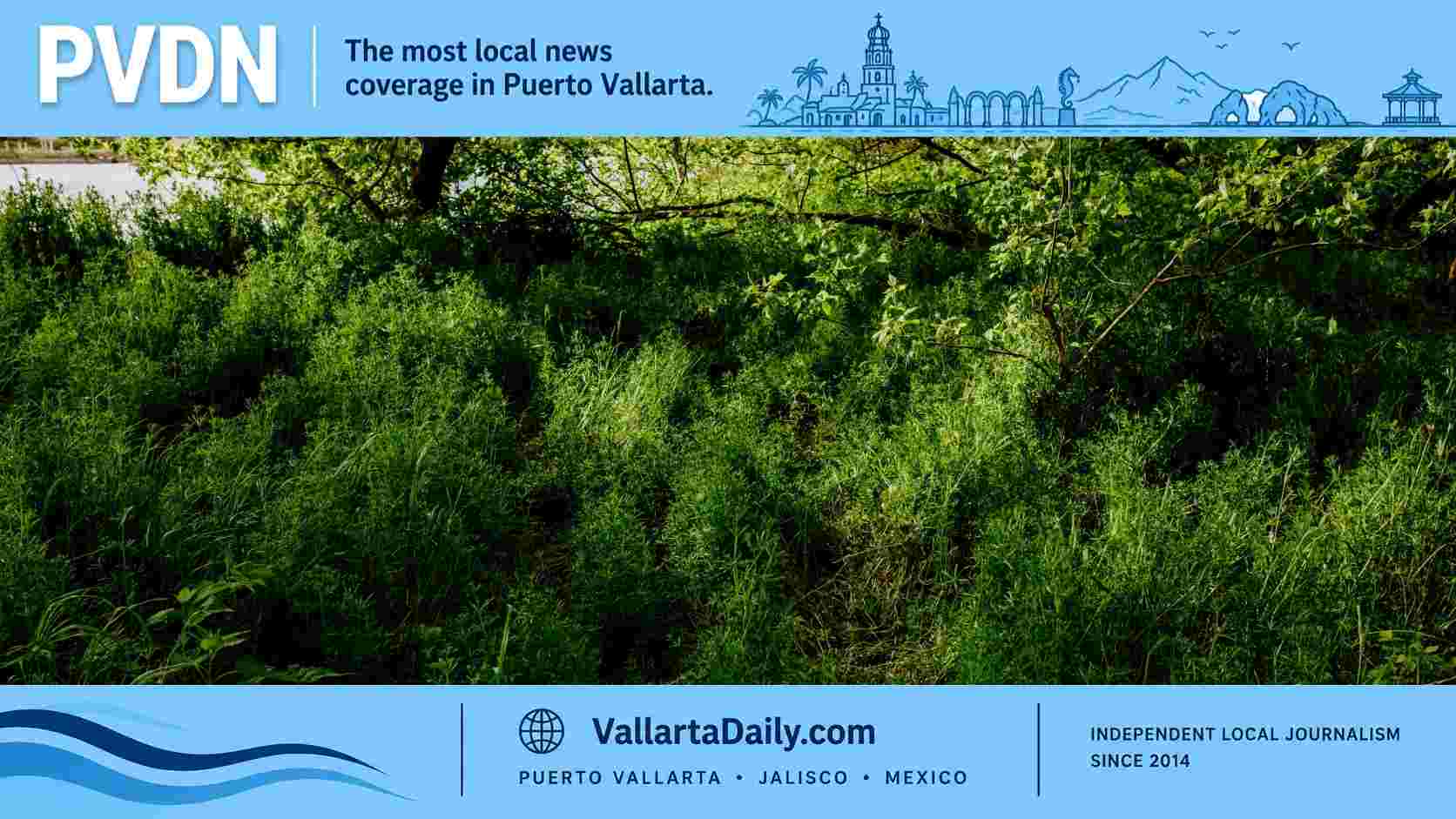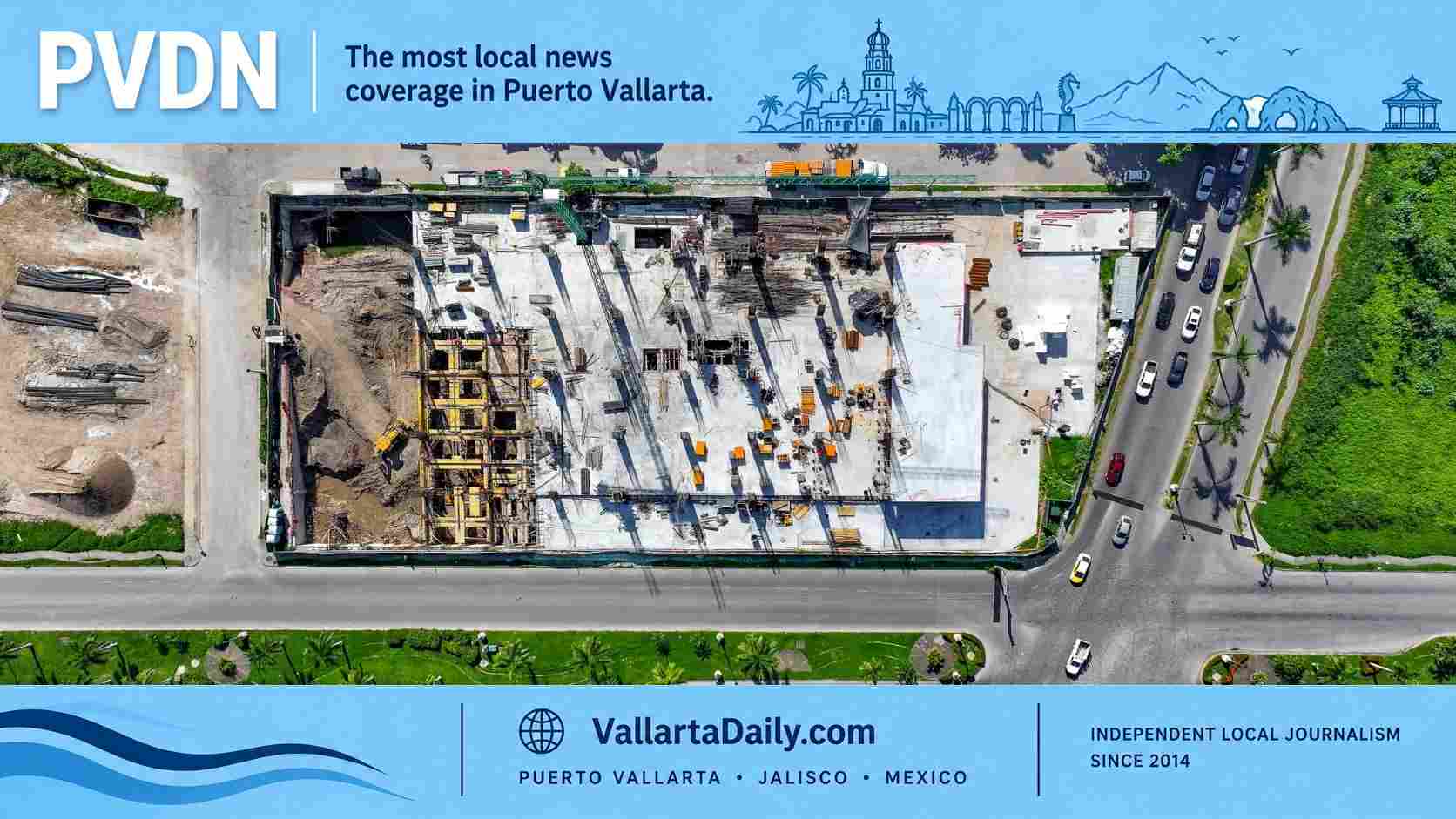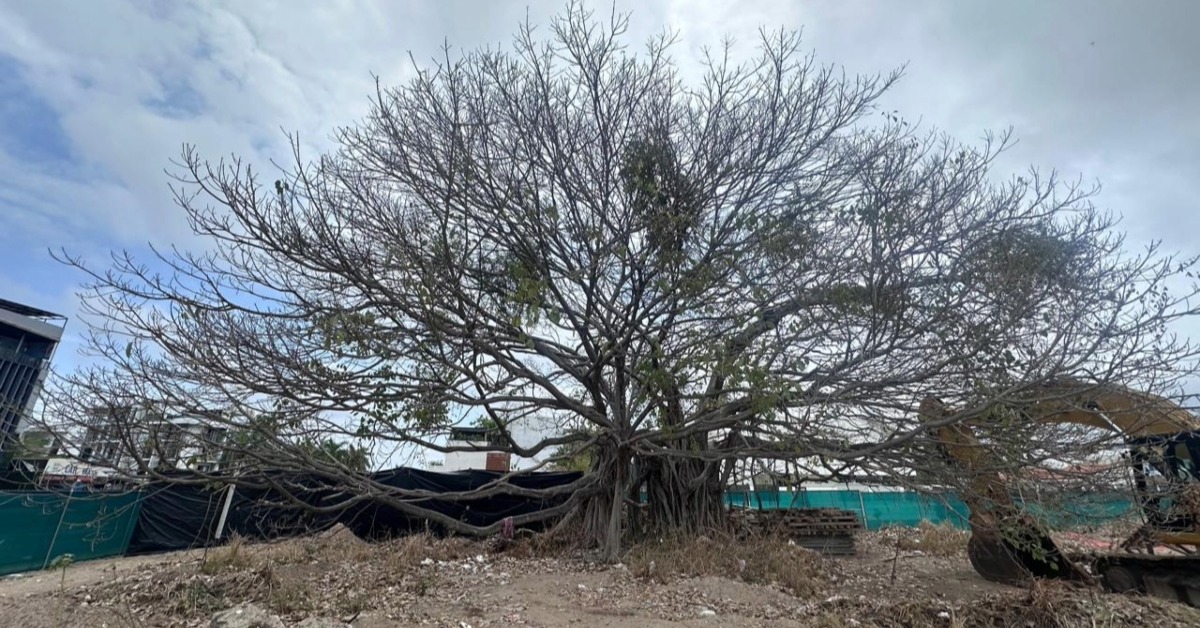
Puerto Vallarta, Jalisco, June 24, 2026 — Puerto Vallarta officials authorized a large ficus removal in Fluvial Vallarta for a proposed shopping center on Avenida Grandes Lagos.
The tree was estimated to be 60 to 80 years old. Neighbors and environmental advocates have criticized the decision, saying it exposes a weak point in the city’s tree protections.
The permit may have been issued based on the required paperwork. The larger question is whether Puerto Vallarta’s rules can protect significant trees before a project reaches final design.
A permit can be legal and still leave doubts
The authorization followed a months-long process tied to the proposed plaza. The developer submitted an architectural plan, a construction permit, photographs, and a health diagnosis. The details were first reported in the original local account of the Fluvial ficus removal.
The tree reportedly showed cracking, rot, mistletoe, and pest damage. That was not presented as the deciding factor. The key issue was that the plaza design could not be adapted around the tree.
Fluvial’s growth is changing the shade map
Fluvial Vallarta was planned as a modern residential area with wide avenues and commercial services. Avenida Grandes Lagos has since been filled with offices, clinics, shops, restaurants, and small plazas.
That growth has made Fluvial convenient. It has also brought more pavement, traffic, parking pressure, and construction fatigue. Similar pressure is evident across Puerto Vallarta’s real estate and housing markets.
A mature ficus is not just a decorative tree in that setting. It provides shade, absorbs heat, slows stormwater runoff, provides habitat, and softens a street.
Puerto Vallarta’s development debate often focuses on height, parking, traffic, and drainage. The Fluvial case adds another layer. Canopy loss can change how a street feels before a building even opens.
The missing layer is patrimonial protection
Jalisco law gives municipalities authority to declare “árboles patrimoniales,” or heritage trees. The state definition includes trees with “relevancia histórica,” “valor paisajístico,” or “valor como monumento natural.”
That legal tool is the most important piece of context here. If a tree has possible heritage value, the city should not discover that only after a removal request is made.
The state tree and urban green-space law also requires municipalities to update urban green-space inventories. It also calls for arborization programs and protection measures in public works.
Puerto Vallarta already has a municipal department that handles planning, zoning, land-use control, ecological review, and construction permits. Those duties sit under the Dirección de Desarrollo Urbano y Medio Ambiente.
The Fluvial case suggests those duties need to connect earlier. Once a project design is approved without a tree-preservation alternative, the public sees the permit as a mere formality.
Young trees do not replace an old canopy
The developer is expected to pay the required fee and replace the felled tree with a new tropical species. That is standard mitigation, but it is not an equal trade yet.
A young tree may take years to provide the shade, cooling, and stormwater benefits of a large older tree. Even several replacements may not match the immediate canopy lost from one mature specimen.
Local science supports a more careful approach. A 2021 study of urban trees in Puerto Vallarta looked at 1,228 trees and palms in public parks and plazas. Most showed no visible pavement damage. Some species, including ficus species, were associated with moderate or severe damage when planted in the wrong location.
That finding does not decide the Grandes Lagos case. It does show why trees and construction should be planned together. The goal should not be to save every tree at any cost or cut every difficult tree. The goal should be to choose the right design before the chainsaws come out.
A Tree City label now faces a local test
Puerto Vallarta’s participation in Tree Cities of the World has given the city a public green identity. The program promotes urban tree care and recognizes cities with formal commitments to their canopy.
That recognition can help Puerto Vallarta build better policy. It can also raise expectations.
A city cannot avoid every hard call on urban trees. Some trees become risky. Some are planted in poor locations. Some require pruning, treatment, or removal.
The frustration is not only about one lost tree. It is about whether Puerto Vallarta’s growth is being designed with shade and climate in mind.
The questions City Hall can still answer
The city can reduce confusion by publishing the permit conditions tied to the Fluvial removal. That should include the health diagnosis, mitigation fee, replacement species, planting locations, and care obligations.
It should also explain whether transplanting, redesign, or on-site preservation was considered before felling was approved.
Most importantly, Puerto Vallarta needs a clear process for identifying heritage trees before a developer applies for their removal. A public inventory would not stop construction. It would make the rules public before the land is cleared.