Puerto Vallarta, Jalisco, June 23, 2026 – Real estate fraud complaints in Puerto Vallarta and Bahía de Banderas are no longer limited to fake online listings or bad rental deposits. Local buyers are now describing a broader pattern that extends to pre-sale housing, title records, unfinished towers, alleged document manipulation, and cartel-linked timeshare schemes.
The cases are not all the same. Some involve buyers who say they paid for homes that were never built. Others involve owners fighting over deeds, mortgages, or properties they believed were already protected. The most documented organized crime link remains the timeshare fraud network centered around Puerto Vallarta, which U.S. authorities have tied to the Jalisco New Generation Cartel.
“Real estate cartel” is a phrase victims and advocates now use locally, but not every complaint has been proven as cartel activity. In many cases, the phrase describes something more practical and painful. A network of people, paperwork, delays, and institutions that can leave buyers fighting for years.
A market where trust moved faster than safeguards
Puerto Vallarta’s real estate boom changed the rhythm of the market. Condos sold from renderings. Buyers wired large deposits before permits, construction, or delivery dates were fully visible. Foreign demand, short-term rental income, and rising land prices made early purchases feel urgent.
That urgency created room for abuse.
A recent UDGTV report on real estate and patrimonial fraud described cases affecting Mexican and foreign buyers in Puerto Vallarta and Bahía de Banderas. The complaints ranged from failed pre-sales to alleged dispossession of properties already under deed.
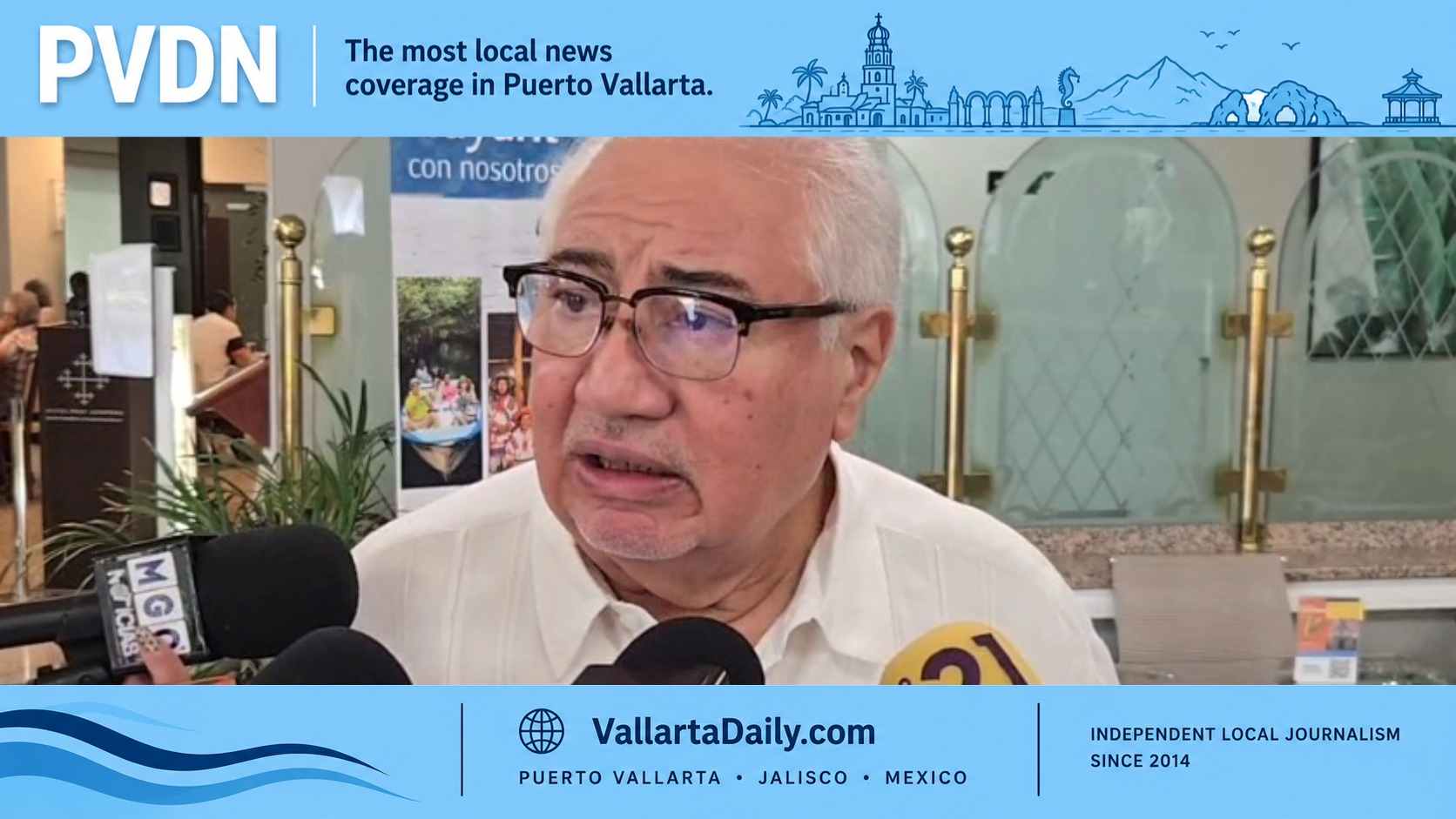
One of the people interviewed, painter and cultural promoter Federico León de la Vega, said his case involved falsified documents, notarial irregularities, and a banking institution. He said the hardest part was not only the alleged fraud, but the years spent fighting it.
“Part of the tactic of the real estate cartels is the delaying tactic,” he said. “They know we all have a lifespan, and they are counting on our death.”
Failed pre-sales and buyers stuck in limbo
Pre-sale complaints are among the most visible problems in the bay. Buyers pay deposits or large advances based on plans, promises, and delivery dates. Then construction stalls, permits are blamed, or the project never moves beyond a sales pitch.
Local reporting has identified projects, including Rojo Carmín, Trilium, Espacio Mérida, Sojo 360, Sojo Zen, Media Luna, and others, in connection with buyer complaints. A UDGTV report on the real estate sector described buyers who had paid most of a property’s value, only to wait years without delivery or refund.
In Bahía de Banderas, buyers have publicly accused municipal tourism director Claudia Díaz de Sandi Neuman in connection with alleged losses tied to Trilium, in Versalles, and Rojo Carmín Residencias, in San Vicente. Those allegations remain unresolved publicly, and Díaz de Sandi has not been convicted.
The claims are serious. A group of affected buyers confronted local officials during a public event in May 2025, demanding the return of money they said was paid for homes and condos. Local reports said advances ranged from 500,000 pesos to 4 million pesos.
For many buyers, the deposit was retirement savings, proceeds from a home sale in another country, or years of savings.
When title records become part of the problem
The most alarming cases are not always the flashiest. Some involve the paperwork that is supposed to protect buyers.
In Bahía de Banderas, the Nayarit government acknowledged the alleged involvement of the Public Registry in Bucerías in a major bank-fraud case tied to the BNayar development in La Cruz de Huanacaxtle. The case involved alleged false deeds, duplicate mortgages, and property records cleared of liens, allowing properties to be used again for bank loans.
The case was serious enough to be sent to the federal Attorney General’s Office. A local report on the Registro Público megafraud case said arrest warrants had been obtained and that the former registry official was being sought.
This is the part of real estate fraud that most buyers never see coming. A buyer may think a notary, deed, or registry search is enough. But when the allegation involves the registry itself, the buyer’s normal safety net becomes part of the risk.
The timeshare fraud track is different
The strongest cartel-linked evidence is in timeshares, not ordinary condo pre-sales.
The U.S. Treasury has repeatedly sanctioned companies and individuals it says are tied to CJNG timeshare fraud in Puerto Vallarta and nearby Nayarit. In August 2025, Treasury said CJNG began taking control of timeshare fraud schemes in Puerto Vallarta and the surrounding area around 2012. The agency described call centers staffed by English-speaking scammers posing as brokers, lawyers, sales agents, or officials.
The model often starts with a promise to resell, rent, exit, or invest in a timeshare. Victims are asked to pay taxes, legal fees, closing costs, or other charges in advance. The promised sale never closes. Many victims are later contacted again by fake recovery companies.
In February 2026, Treasury sanctioned Kovay Gardens, a resort in La Cruz de Huanacaxtle, saying CJNG could defraud timeshare owners “from the moment they sign a contract and for years to come.” The Treasury action against Kovay Gardens described deceptive sales practices, credit card overcharging, and the passing of customer data to cartel-controlled call centers.
This is where the word “cartel” should be used directly. U.S. sanctions describe a specific organized-crime revenue stream. That is different from local buyers using “cartel” to describe alleged collusion, delay, or impunity in civil and criminal real estate cases.
The same warning signs keep appearing
Buyers are pushed to move fast. Sellers promise rental income before legal review. Projects advertise lifestyle and appreciation before proving permits, land use, financing, or construction capacity. Contracts are signed before an independent lawyer reviews the developer, property, and corporate structure.
In more serious cases, victims describe altered documents, missing permits, unclear liens, shifting company names, and years-long delays in court or Fiscalía files.
A buyer should verify title history, liens, land use, construction permits, condominium regime status, water and utility feasibility, developer ownership, and the seller’s legal right to sell. Foreign buyers also need independent advice on fideicomiso structure when buying restricted-zone property.
A notary is necessary in Mexico, but a notary is not the buyer’s private lawyer. Buyers should have their own legal adviser, not one recommended only by the seller, developer, or agent.
PVDN has also published a practical guide on protecting a Mexico home purchase with legal due diligence and a separate warning on common rental scams in Puerto Vallarta. The same principle applies across the market. If the deal depends on speed, pressure, or trust without documents, slow down.
Why buyers in Vallarta are especially exposed
Puerto Vallarta attracts buyers who often make decisions from another country. Many do not speak Spanish fluently. Some rely on agents, friends, Facebook groups, or a developer’s sales team to interpret the process.
That creates a dangerous imbalance. Local professionals know the system. The buyer often knows only the dream.
There is also a cultural misunderstanding around “paperwork.” In Mexico, a property deal is only as strong as the documents behind it. A sales contract, deposit receipt, model unit, or glossy rendering is not the same as a clean title, valid permits, and a legally deliverable unit.
The risk is even higher in pre-sale projects. Buyers may be purchasing a promise, not a finished home. That can be legitimate when done correctly. It can also become the easiest way to move large amounts of buyer money before the buyer has much control.
A local problem with regional consequences
Real estate fraud damages more than individual buyers. It weakens confidence in Puerto Vallarta and Bahía de Banderas at a time when both markets depend heavily on foreign residents, retirees, investors, and repeat visitors.
It also hurts honest agents, developers, notaries, and lawyers. The region has serious professionals who work carefully. Their work becomes harder when buyers begin to assume every sale is suspicious.
When a buyer is told that a discount expires today, that permits are “almost ready,” that a lawyer is unnecessary, or that everyone buys this way, those are red flags.
The dream of owning in Puerto Vallarta is still real for many people. But in the current market, the dream needs documents, independent advice, and time.