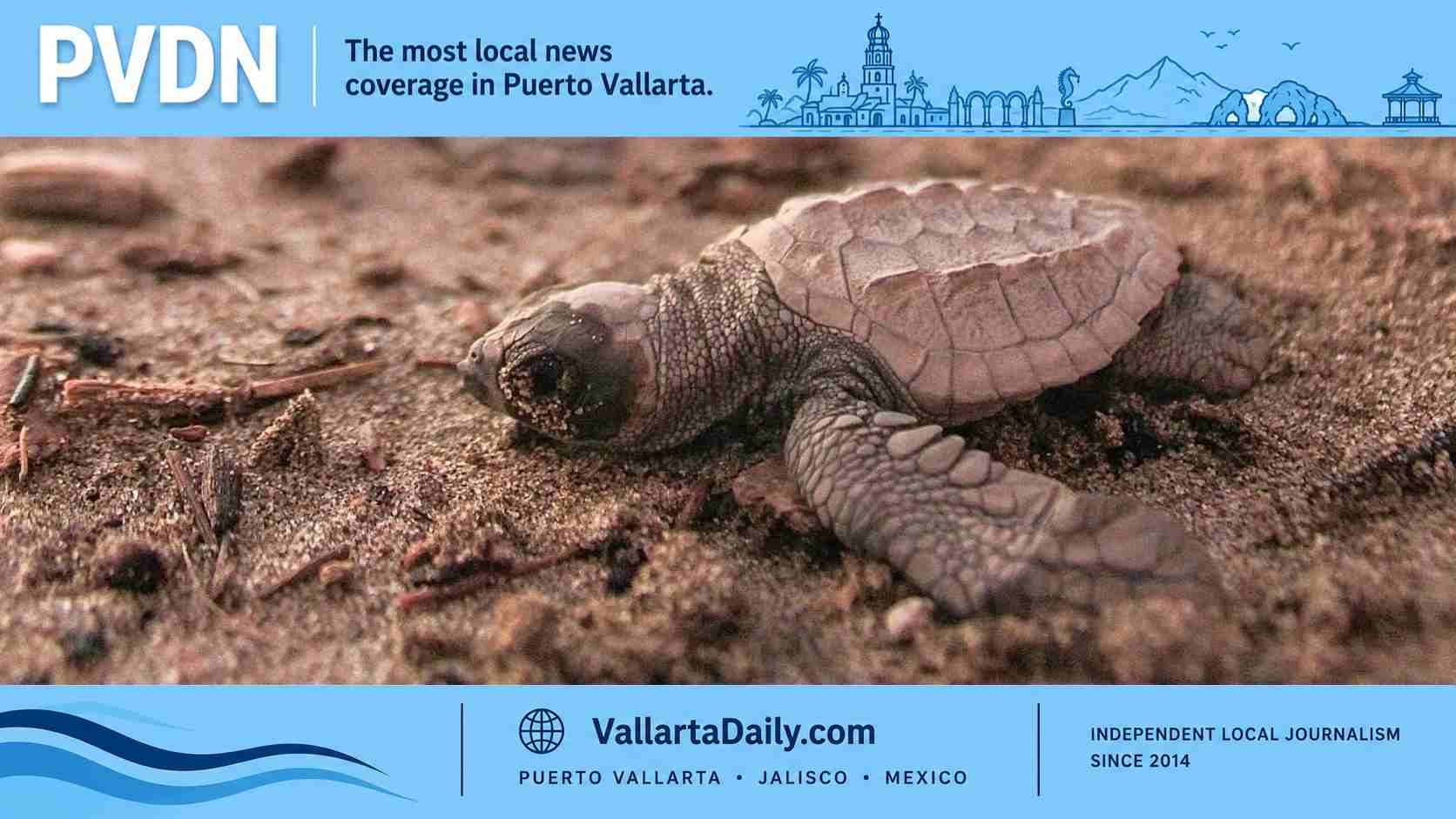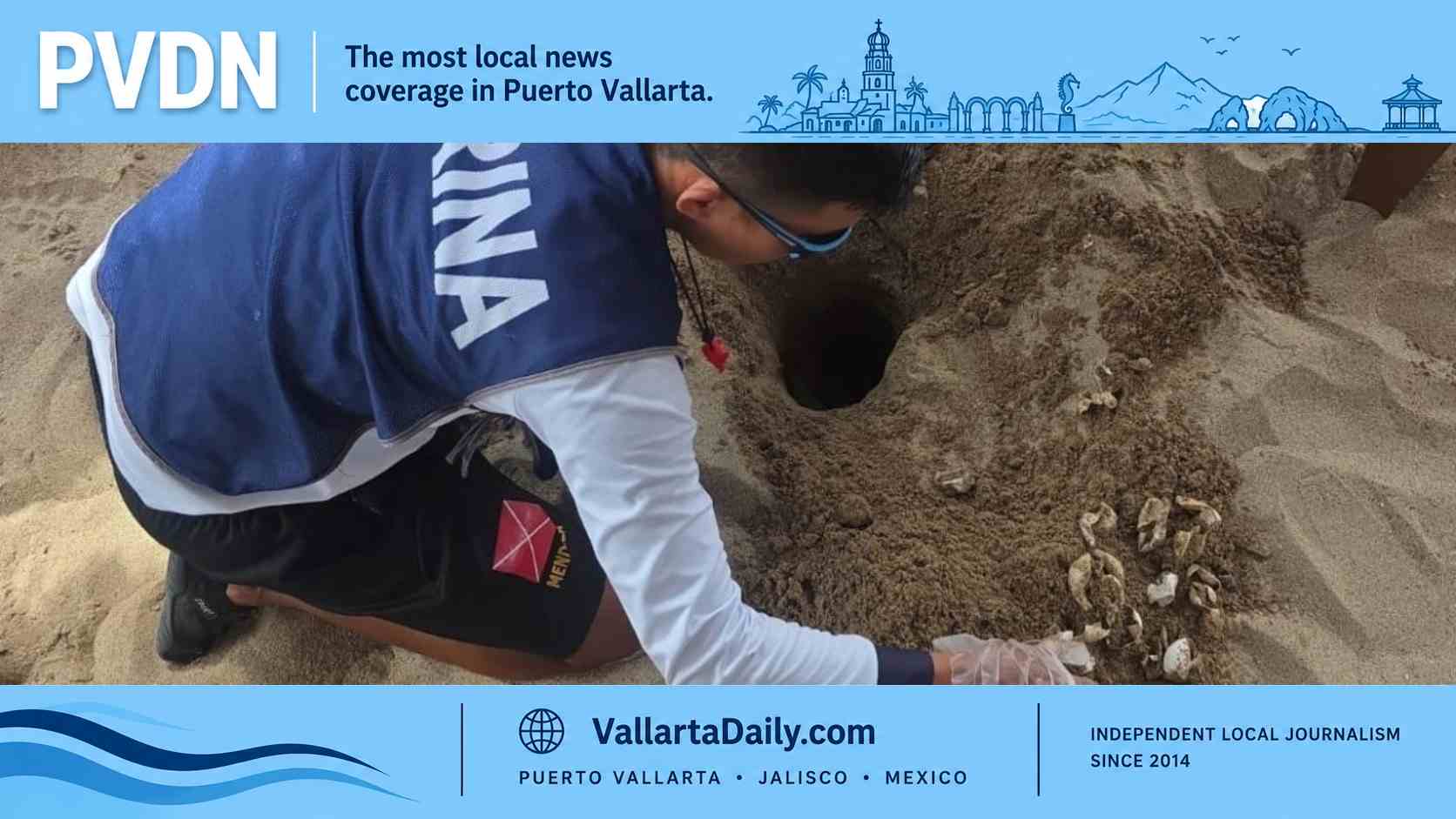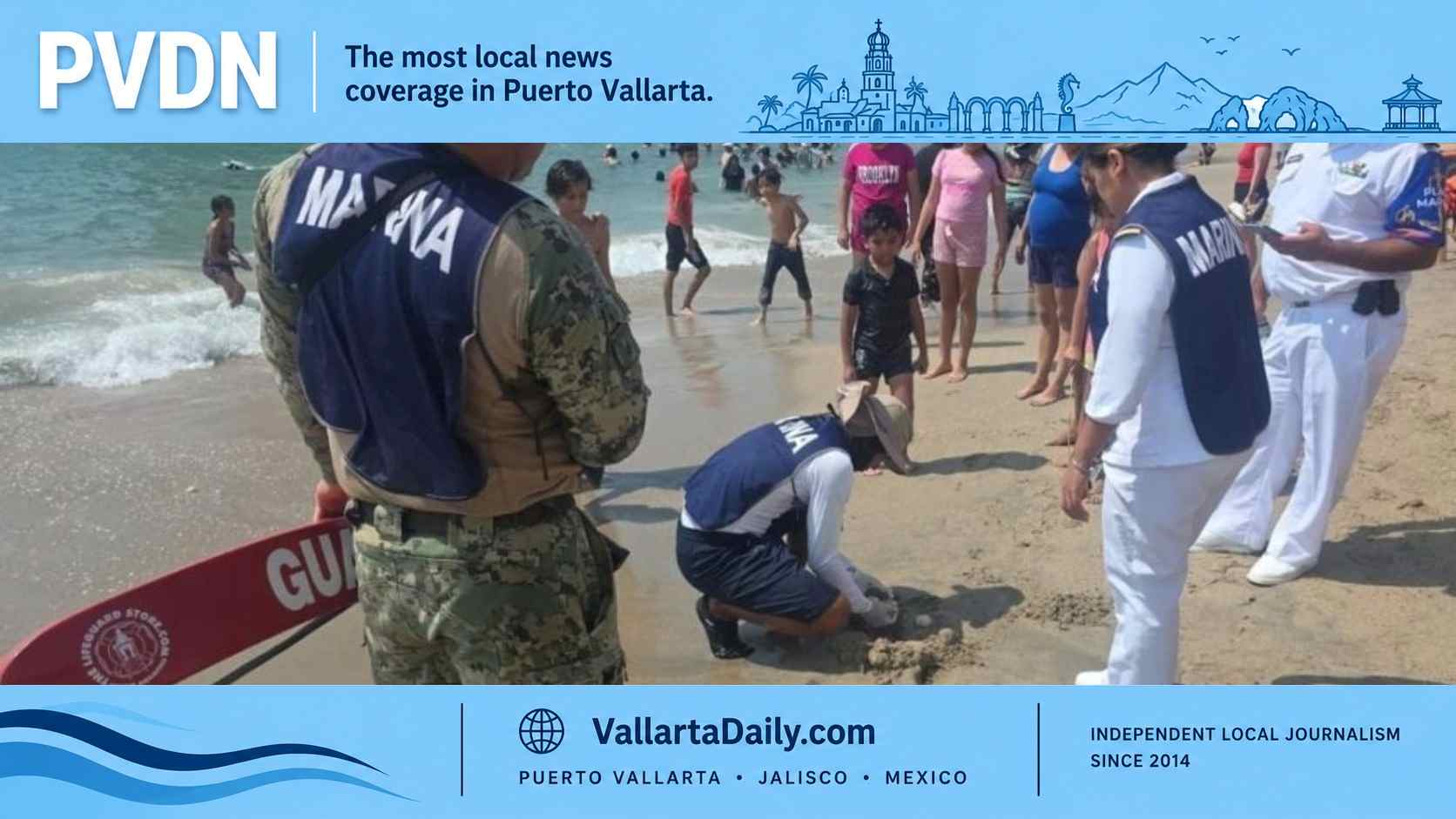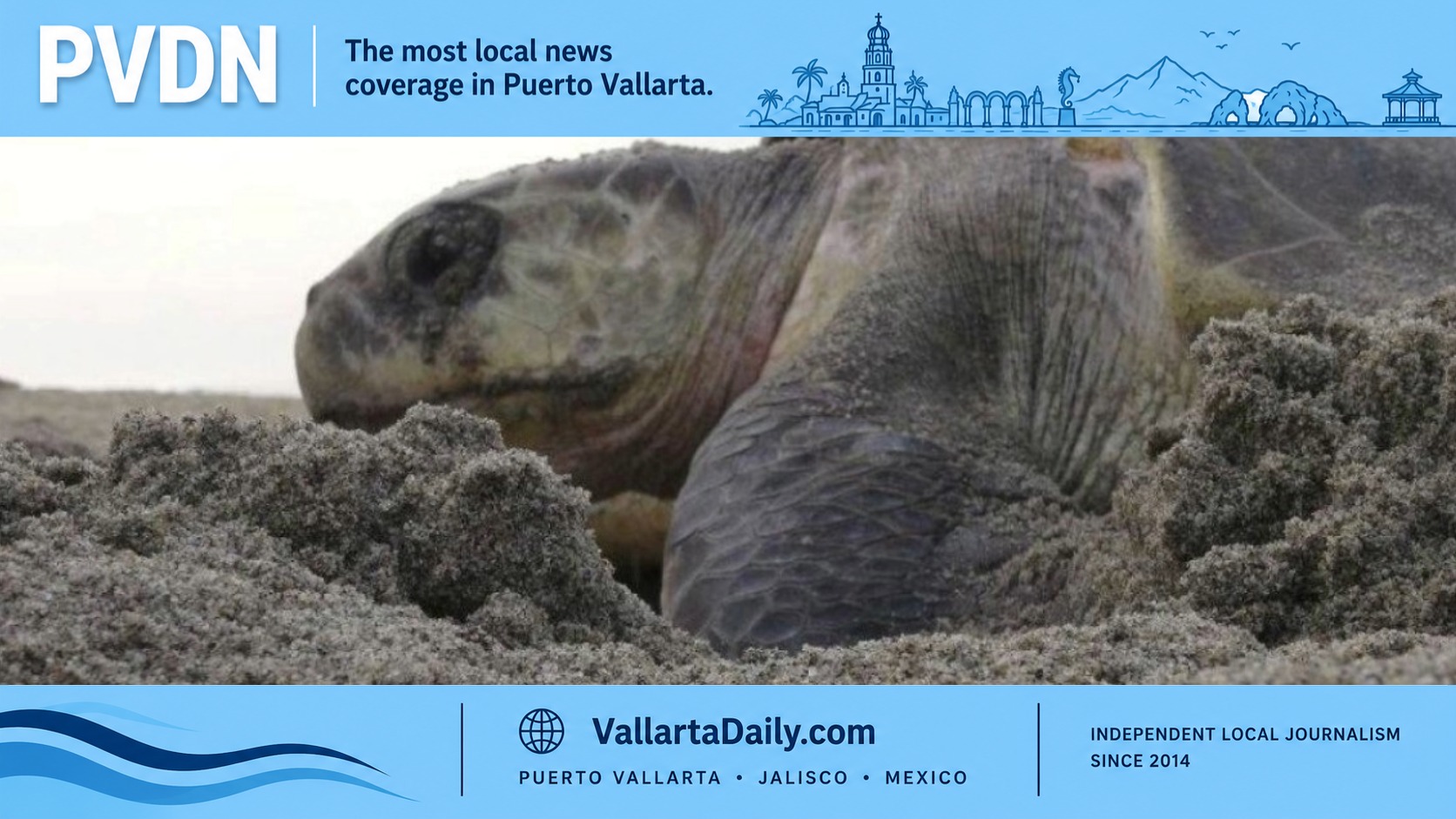
Puerto Vallarta, Jalisco, Sept. 13, 2026 – The Boca de Tomates turtle camp recorded 210 nests through Sept. 11 as theft, erosion, artificial light and habitat loss continued to threaten sea turtles.
Camp personnel supplied the count for a Sept. 12 account of the nesting season. Staff also reported seeing people enter the beach at night to remove eggs. The underlying nest registry was not published.
Separate reporting on Nakawe A.C.’s annual figures said the camp protected 36,762 eggs during the 2025-26 season. It released 30,864 hatchlings, showing the scale of the work behind the current count.
We reviewed federal regulations, municipal files and local university research to determine whether the reported threats extend beyond one camp. The records document risks along Puerto Vallarta’s urban shoreline, from Marina Vallarta to Playa Los Muertos.
Residents and beachfront businesses can reduce risks
Mexico’s federal standard for sea turtle nesting habitat requires nighttime lights to be directed downward and away from nesting beaches. Yellow or red lighting is recommended near the sand.
The same standard calls for vehicles and animals to remain outside nesting areas. Beach furniture and other movable objects that can trap or obstruct turtles must also be removed.
Authorized observation groups may have no more than 10 visitors. Participants must remain at least 10 meters from a turtle until she begins laying eggs.
Flash photography and personal lights are prohibited. Only the authorized guide may use a red light during the observation.
José Antonio Ramírez Guillén, technical director of the Boca de Tomates camp, identified several preventable hazards during a July interview about the camp’s work.
“Humans, feral and domestic animals, predators such as raccoons, motorized vehicles on the beach and bonfires,” Ramírez said in Spanish. PVDN translated his remarks.
For residents and beach businesses, the guidance is immediate. Shield shore-facing lights, keep pets and vehicles off nesting sand, and leave turtles, eggs and hatchlings untouched.
Municipal records document urban beach hazards
A PVDN review of Puerto Vallarta’s environmental response records found turtle activity across the city during late 2025.
Municipal personnel reported collecting 100 nests and releasing about 10,000 hatchlings during November. Security workers at the Península and Icon properties also reported newly emerged turtles.
Other municipal responses involved nests or hatchlings at Playa Los Muertos and Playa Camarones.
On Nov. 25, city personnel documented a 3-ton machine operating at the edge of a nesting beach. The municipal report said an unnamed hotel was leveling sand deposited by Hurricane Priscilla without a permit.
The machine placed nests at risk, according to the report. Municipal workers assisted Semarnat personnel, and the case was referred for an environmental complaint.
Egg theft remains a local enforcement problem
The latest account of people entering Boca de Tomates at night follows previous cases along the same northern beach corridor.
In August 2025, PVDN reported poaching pressure at Boca de Tomates after police detained a man near Velas Vallarta. Authorities said he carried 62 turtle eggs and a machete.
Camp workers in Boca de Tomates and Marina Vallarta alerted police after a person was reportedly seen removing eggs from a nest. The suspect was referred to federal authorities.
Mexico classifies every sea turtle species found in the country as endangered. Federal law also prohibits the extractive use of sea turtles, including their eggs, parts, and derivatives.
Storms can damage protected nests
Nakawe’s report for the previous season said Hurricane Priscilla affected 126 nests at Boca de Tomates. Ramírez separately said the storm destroyed both incubation corrals and trapped hatchlings in camp debris.
Volunteers repaired the corrals so protection work could continue. PVDN previously covered the camp’s rebuilding effort after Priscilla.
Federal regulations generally favor leaving nests where turtles deposit them. Relocation to a protected corral is allowed as an exception when theft, predators, uncontrolled flooding, or other imminent hazards threaten the eggs.
Habitat loss changes predator behavior
A 2025 paper published through the University of Guadalajara’s CUCosta connected raccoon predation with changes beyond the beach.
CUCosta and Nakawe researchers linked coastal development with the loss of wetlands, mangroves and estuaries used by raccoons. The animals have adapted to garbage areas, canals and hotel zones, according to the authors.
The paper identified Boca Negra, Marina Vallarta and Boca de Tomates as beaches where raccoons excavate turtle nests. The authors described that predation as part of a broader conflict between urban growth and wildlife habitat.
How to report a turtle or nest
Ramírez advised the public not to touch turtles, eggs, or hatchlings. People should avoid flash photography, turn off direct lights, and maintain their distance.
Sightings and nests can be reported through 911. Puerto Vallarta’s Civil Protection and Fire Department also lists 322-178-8000 for local assistance.