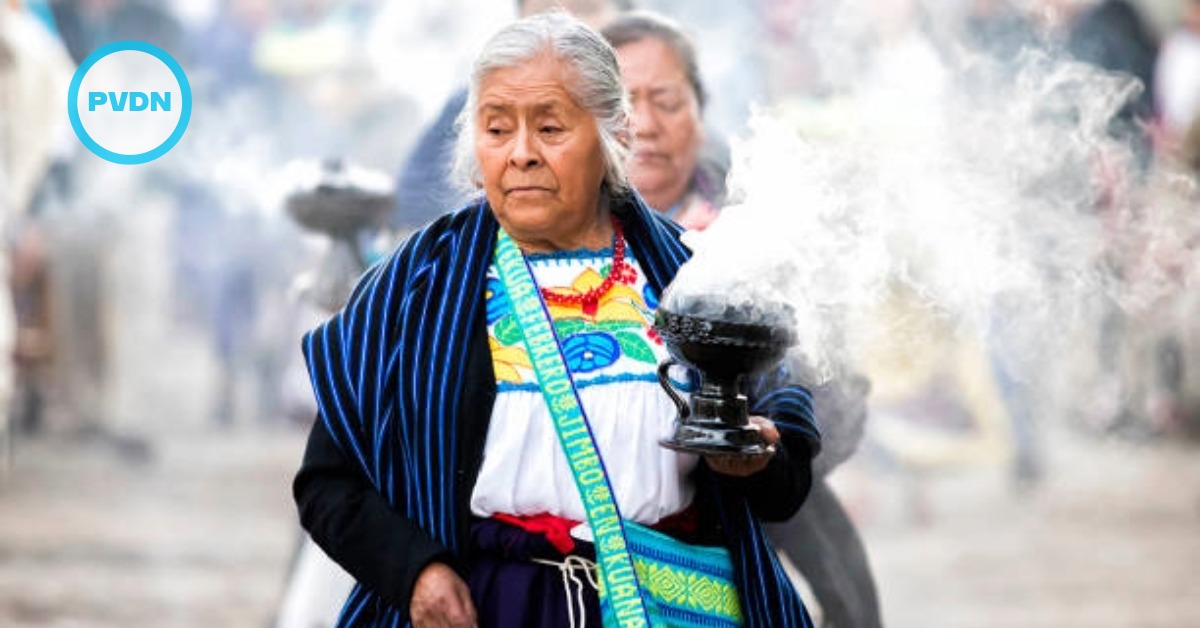
Near midnight in a Purépecha village on the Meseta, a line of pick-up trucks rolled up to the community checkpoint. A handful of volunteer watchmen, the kuaris, stood there unarmed. Men with rifles climbed down from the trucks, greeted them politely, and introduced themselves as members of a powerful cartel. They asked what the town “needed” and offered to fix the church and fund small public works if residents allowed them to operate freely on community land.
The conversation, captured in a short video, ended without a deal. The armed group now passes regularly through that territory anyway. For local leaders, the scene has become a symbol of how their towns are being pushed into a dangerous coexistence with criminal groups while the state remains largely absent.
Across Michoacán’s Purépecha region, community authorities describe a similar pattern. Cartels competing for routes, forests, and farmland move deeper into indigenous territory, while most villages remain effectively unarmed. Recent community tallies count 35 Purépecha residents who have disappeared and 33 who have been killed in the “recent past” as a direct result of local resistance to organized crime. The numbers are small compared with statewide homicide figures, but in towns of a few thousand people, each case is felt as a collective loss.
Michoacán has around 500 recognized indigenous communities. About 48 of them have achieved formal self-government, handling their own budgets through communal councils and, on paper, gaining more control over local security. State figures estimate that roughly 160,000 people now live under these autonomous systems. Yet community authorities say this autonomy has not come with the tools to protect themselves.
Around six in ten community security forces in these self-governing towns still patrol without firearms. Councils say they cannot afford proper weapons and training, and they struggle to meet the strict legal requirements needed for community guards to obtain licenses from federal authorities. In practice, that leaves many patrols armed with radios, flashlights, wooden barriers, and, at most, improvised defensive tools.
Jarácuaro, a Purépecha town of about 3,500 people on the shores of Lake Pátzcuaro, illustrates both the promise and limits of this model. After a bitter internal debate, the community won autonomy in 2021 and redirected part of its new budget to security. Residents built two checkpoints at the entrances to town, bought vehicles, and set up a small force of kuaris. But the guards are still unarmed. The local coordinator sums up their position in one phrase: their “maximum defense” is dialogue.
That choice is not only moral, but practical. Community leaders say open confrontation with heavily armed groups would be suicidal for untrained villagers. Instead, they try to contain the damage. Youth programs and constant outreach to teenagers are seen as a first line of defense against recruitment. The priority, one security coordinator explains, is to keep criminal groups from turning local boys into lookouts, drivers, or gunmen, even if the town cannot stop those groups from driving through.
At the same time, elders and council presidents insist they will not become clients of the cartels. Several describe private meetings where armed men offered to pay for local works, build new barricades, or even supply weapons to community guards. The answer, they say, has been a firm refusal. Accepting those offers would tie the town’s survival to criminal money and cede moral control of the territory, even if the roads are already under cartel watch.
Between cartel fire and a distant state
The siege of Purépecha territory is unfolding against a wider security crisis in Michoacán. In the last month alone, the state has seen the assassination of Uruapan’s mayor during a public event and the killing of a leading citrus grower in the Tierra Caliente region. In response, federal and state authorities announced a new Plan Michoacán for Peace and Justice, built around the deployment of roughly 5,000 additional soldiers and National Guard troops and tens of billions of pesos in promised investment.
Security maps now used by authorities identify around a dozen major criminal organizations operating in Michoacán, from the Jalisco New Generation Cartel to local offshoots that grew out of earlier self-defense movements. Independent investigations suggest there may be closer to 14 or even more armed groups, many of them fighting over ports, highways, mining zones, and the state’s lucrative avocado and lemon belt. For indigenous communities in the middle of these routes, that competition translates into extortion, roadblocks, logging of communal forests, and threats aimed at community authorities.
Purépecha councils say they were invited into the new security strategy late and on unequal terms. In a recent meeting with federal and state officials, only the 48 self-governing communities were called, leaving out more than 400 other indigenous towns. Those who did attend describe being given two minutes each to describe years of violence, displacement, and unfulfilled promises. There were no written commitments on long-standing demands such as permanent security bases in key indigenous regions, a dedicated mechanism to investigate past killings and disappearances, or a clear path for community guards to legally arm themselves.
For leaders like Pavel Guzmán, who heads a regional council that brings together dozens of Purépecha communities, the message is clear. In their view, the new plan was designed in response to high-profile political murders, not to the slow grind of daily violence that their towns have been documenting for years. They argue that the cartels already hold deep influence in municipal governments and are now pressing into community assemblies, where decisions over land, water, and forestry are made.
Forced displacement has become another face of that pressure. Academic work tracking Purépecha communities between 2020 and 2025 describes waves of families leaving their homes in the Meseta as criminal groups dispute control of roads and forests. Human rights monitoring identifies the region as one of several “red zones” for internal displacement in Michoacán, alongside parts of the coastal Sierra and Tierra Caliente. Women, children, and older adults are often the ones who end up in makeshift shelters or crowded relatives’ homes when fighting flares or threats become unbearable.
This is not the first time communities in the state have responded by organizing outside traditional party structures. More than a decade ago, residents in towns like La Ruana and Tepalcatepec armed themselves against a dominant cartel, giving rise to the self-defense movement that later morphed into rural police units and, in some cases, new criminal groups. National human rights bodies documented serious abuses during that period, both by organized crime and by some of the armed civilian groups that emerged to fight it.
Purépecha communities have also experimented with other paths. Cherán, another town in the highlands, famously expelled both cartels and political parties after years of illegal logging and violence, building a communal government system that has become a reference point for indigenous autonomy in Mexico. Today’s local authorities on the Meseta Purépecha see that example as proof that communities can defend themselves without copying the methods of the groups that threaten them.
Still, they say the space for peaceful resistance is narrowing. Requests for a permanent inter-institutional operations base in key Purépecha towns have gone unanswered for at least two years. Calls for a truth and justice commission focused on indigenous victims have not advanced beyond the proposal stage. Federal deployments arrive in bursts after major incidents, then withdraw, leaving communities to manage the long tail of fear, extortion, and possible reprisals.
On the ground, the result is a fragile coexistence. Armed convoys enter and leave communal lands under watchful eyes at barricades made of sandbags and stacked tires. Assemblies debate budgets and public works in the same halls where families share information about the latest disappearances or threats. Community guards walk night patrols with radios and flashlights, knowing that if something goes wrong, they may have only their words to keep violence from escalating.
For now, the bet in towns like Jarácuaro, Sevina, Nahuatzén, and others is that organized, uncorrupted community government can still hold a line. Leaders say they will keep insisting on a permanent, civilian-respecting security presence and stronger protection for forests and communal lands. They are equally clear that they do not want to trade one form of fear for another by turning into a new armed group.
Whether the new Plan Michoacán reaches these villages in a meaningful way, instead of stopping at city halls and press conferences, may determine if that bet holds. If it does not, Purépecha communities under siege risk seeing their autonomy reduced to managing scarcity and mourning, while the real decisions over their territory continue to be made at gunpoint.