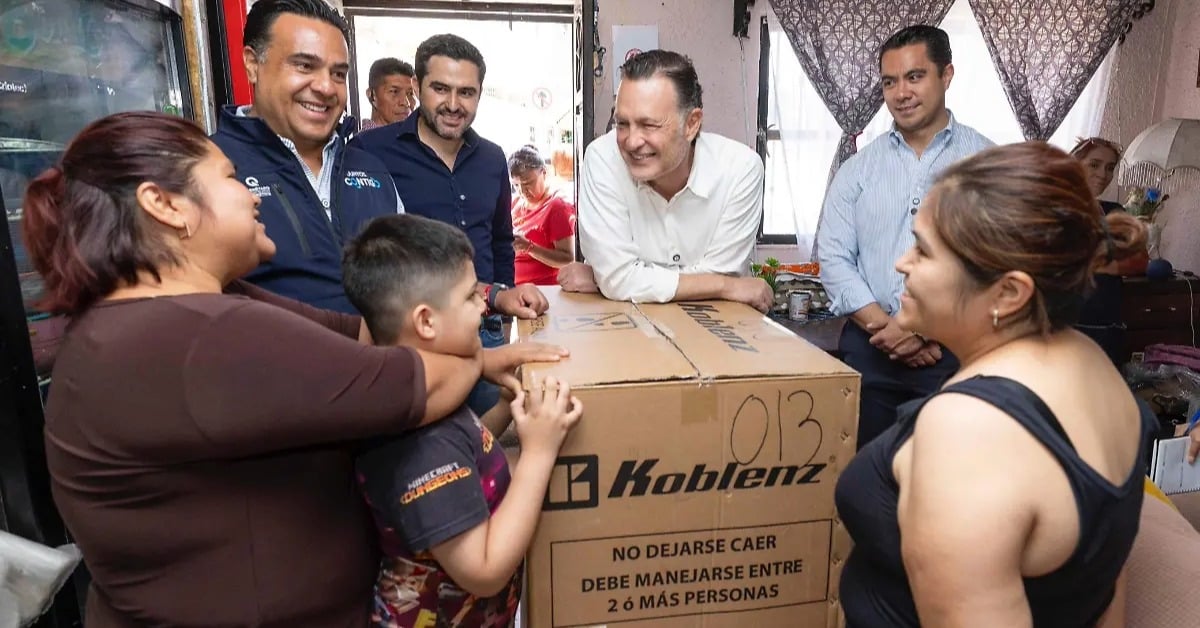
Hundreds of families in metro Querétaro are getting refrigerators, stoves, washing machines, mattresses, and food after last week’s floods. The state set up a distribution center and says cash help and repairs are coming next. On Saturday and Sunday, Governor Mauricio Kuri and Querétaro Mayor Felifer Macías visited La Piedad and its surrounding areas to inspect deliveries and speak with residents. Officials also pointed to insured payouts and a one-time water bill credit planned for October. The full scale of damage is now clearer—and so is the government’s roadmap for recovery.
Querétaro flood aid
State and city officials say appliance and food deliveries are underway from a centralized warehouse created after the cloudbursts that swamped parts of the capital and suburbs. From that hub, crews are moving refrigerators, stoves, washing machines, bases, and mattresses, as well as pantry boxes, to the hardest-hit blocks.
Governor Mauricio Kuri spent the weekend supervising the operation in La Piedad alongside Mayor Felifer Macías and other officials. Local and national outlets documented the walk-throughs and their conversations with residents about what was still missing in each home.
What’s being delivered and who gets it
Authorities report that more than 260 household appliances have been delivered so far across several neighborhoods, with additional rounds scheduled as damage verifications continue. The focus is on families whose kitchens, bedding, or laundry rooms were ruined by floodwater.
The appliance push is only one lane of the plan. The city announced direct checks for affected households—up to 25,000 pesos in immediate support—to help close gaps that a new fridge or bed can’t cover. In parallel, the municipality outlined street repairs and house-level fixes designed to get people back to normal.
Insurance linked to on-time property tax payments is also paying out. By the end of the week, officials said 402 homes had already received compensation totaling 6.7 million pesos, with more claims in process. For October, the state will offer a one-time 500-peso credit on water bills to verified flood victims, once the census is closed.
The scale of damage
The late-August storms were exceptional for Querétaro. Over a few hours, rainfall approached a quarter of the city’s annual average, overwhelming drainage and flooding homes, hotels, and shops. Initial counts indicate that more than 2,200 homes are affected in the metro area, with roughly 280 experiencing significant damage. The state set an initial 80-million-peso response budget and requested federal support as emergency declarations opened access to relief funds.
Those figures track with what the state shared in the first 48 hours: hundreds of severe cases, thousands of residents assisted, shelters opened, and a multi-agency response that included Protección Civil, the Army, and local brigades.
How policy translates at street level
Querétaro’s “Seguro Predial” can provide up to 50,000 pesos for homes with qualifying damage—coverage that matters when floodwater destroys wiring, cabinets, and flooring. Residents who weren’t covered through that program can still access the city’s direct-support checks, appliance replacements, and public-works fixes. In the capital alone, a running census has logged 1,433 affected homes.
At the Centro de Distribución de Enseres, the hand-off is simple: field teams confirm the household’s status and needs, then schedule drop-offs so people aren’t left waiting all day. When deliveries arrive, staff and volunteers transport the items to the first-floor units and take photos for the file. The process is not perfect—some families still report gaps—but the pipeline that didn’t exist a week ago is now moving.
What comes next
Officials say deliveries will continue throughout the week while inspectors complete block-by-block verifications and contractors prepare for street and drainage repairs. Residents are being urged to keep receipts, photo evidence, and contact information readily available to expedite insurance and city payments. The city and state promise more communication as October’s water-bill credit window opens and additional payouts clear.
Extreme rain is no longer rare in central Mexico. Insurers and urban planners warn that coverage, mitigation works, and maintenance must catch up. For families in La Piedad, that’s abstract. Today’s measure of progress is whether the fridge hums again, the mattress is dry, and the kids can sleep without worrying when the next storm will push water under the door.