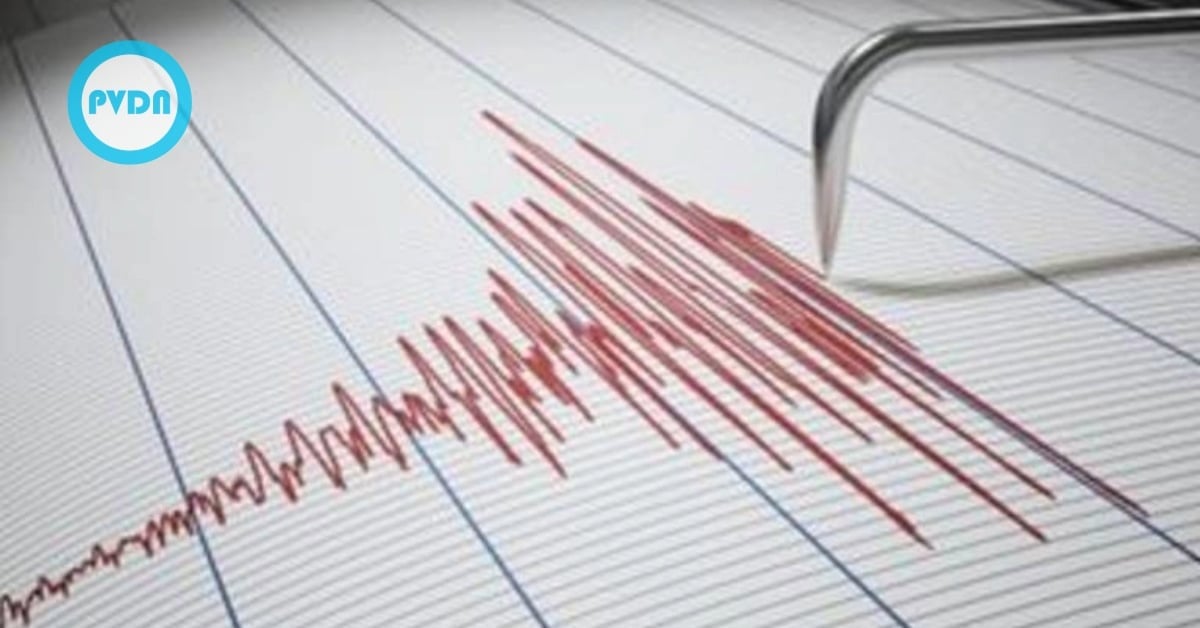
Recent low-magnitude tremors in southern Yucatán may be linked to movement along the Ticul fault, according to a geologist who says the state is not facing a larger seismic crisis.
The comments come after two recent tremors were recorded in the southern part of the state, reviving public concern in a region many people still think of as earthquake-free. The explanation offered by geologists is more measured. Yucatán is not considered a high-risk seismic zone like the Pacific coast of Mexico, but that does not mean the ground never moves.
Juana Elia Escobar Sánchez, a geologist with the National School of Higher Studies in Mérida, said the recent movements may be the result of a rearrangement along the Ticul fault. She said earthquakes in the peninsula are not new. What has changed is that better equipment now detects events that may have gone unnoticed in earlier decades.
The distinction matters for residents and foreign homeowners in the Mérida area. A small tremor can feel surprising in Yucatán because earthquakes are not part of daily life there. But experts say these events are very different from the stronger earthquakes associated with Mexico’s Pacific subduction zone.
Why Yucatán can still feel earthquakes
Yucatán sits far from the country’s most active earthquake zones. The strongest seismic activity in Mexico is usually associated with tectonic plate interactions along the Pacific coast, especially in states such as Guerrero, Oaxaca, Chiapas, and Michoacán.
The peninsula is different. It rests on a more stable carbonate platform, largely composed of limestone. That is one reason damaging earthquakes are not a common feature of life in Mérida, Ticul, Muna, Oxkutzcab, or nearby communities.
But “stable” does not mean motionless. Geological faults can still produce small movements, especially when older structures adjust. In southern Yucatán, the Ticul fault is one of the best-known features. It runs through part of the Puuc region and is often described as one of the peninsula’s most important deformation zones.
Recent tremors have been recorded near Ticul and other southern municipalities. Officials have described them as low intensity, with no reported structural damage or injuries. That fits the broader pattern seen in recent years: occasional small seismic events that draw attention, but do not resemble a high-risk earthquake sequence.
What the Ticul fault is
The Ticul fault is a geological structure in southern Yucatán. It is associated with the Sierrita de Ticul and the Puuc region, where the land rises more noticeably than in the flatter northern part of the peninsula.
Geologists describe the area as a zone of deformation, not as a fault system comparable to the San Andreas Fault or Mexico’s Pacific seismic belt. That is an important difference. A fault can exist without producing frequent or destructive earthquakes.
In simple terms, a fault is a break or zone of weakness in the Earth’s crust. Blocks of rock can move slightly over time. When that movement releases energy, a tremor may be recorded.
In Yucatán, experts say these movements are generally small. Some may be felt by residents, especially if they are shallow. Others may only appear on instruments. That is why people may now hear about more tremors than they remember from the past, even if the ground has always had some level of activity.
Why better monitoring changes the story
One reason Yucatán’s tremors are getting more attention is better seismic monitoring. More sensitive instruments can detect small earthquakes that people may not feel at all.
That creates a perception problem. Residents may assume the region is suddenly becoming more active, when part of the change may simply be better detection. A tremor that would have been missed years ago can now appear quickly in official reports and then spread across social media.
That does not mean every report should be ignored. It means residents should separate confirmed information from the alarm. Experts have urged people to follow official sources and avoid posts that claim a major earthquake is imminent.
Earthquakes cannot be predicted with certainty. That is true even in Mexico’s most active seismic zones. In a lower-activity area such as Yucatán, it is even harder to draw broad conclusions from a few small events.
What this means for Mérida and southern Yucatán
For Mérida residents, the recent tremors do not mean the city is suddenly facing the same kind of seismic risk seen in central or southern Mexico. The strongest recent attention has centered on southern Yucatán, where the Ticul fault and related structures are located.
That said, small tremors can still be unsettling. They can rattle doors, windows or lightweight materials. People sitting still may notice them more than people walking or driving. In some cases, a passing heavy truck may feel stronger than a minor seismic event.
For foreign residents, the main takeaway is practical. Yucatán is still considered a low-seismicity region, but it is not completely free from earthquakes. Homeowners should keep basic emergency habits in mind, even if hurricanes, heat, and flooding remain more familiar risks in the peninsula.
Those habits do not need to be dramatic. Residents should know local emergency numbers, follow state civil protection updates, and avoid sharing unverified earthquake warnings. Buildings with visible cracks or structural concerns should be reviewed by qualified professionals, especially after any felt movement.
Why the recent tremors are not being called a swarm
Some residents have asked whether the tremors represent an earthquake swarm. A swarm usually refers to many earthquakes occurring close together in time and location, often without one clear main shock.
The recent Yucatán events have not been described that way by the geologist quoted in the original report. She noted that the most recent tremors were separated by months, with earlier activity in December and new events in April.
That timing matters. A few low-magnitude earthquakes over several months do not automatically indicate a growing crisis. They may reflect natural, occasional adjustments along local faults.
Still, monitoring remains important. If more events occur, seismologists and civil protection authorities can compare their locations, depths, and magnitudes. That is how a clearer pattern would emerge.
For now, the public message remains steady: stay informed, but do not panic.
A familiar risk in an unfamiliar place
Yucatán’s relationship with earthquakes is unusual because the state is better known for hurricanes, heat, coastal flooding, cenotes, and karst geology. Tremors do not usually shape daily planning as they do in Mexico City, Oaxaca, or Guerrero.
That may be why even small events generate concern. A magnitude that might draw little attention elsewhere can feel newsworthy in Yucatán.
The recent tremors are a reminder that the peninsula has its own geology. The Ticul fault is not new. Small movements are not new. What is new is the speed at which monitoring systems and social media bring those events into public view.
For residents, the best response is not to be alarmed. It is awareness. Yucatán remains a low-risk seismic region, but low risk is not the same as no risk.