Baja California Governor Marina del Pilar Ávila put the Rosarito plant at the center of a broader coastal water strategy, saying it will “be the largest in Mexico” and feed Tijuana, Playas de Rosarito, and, in part, Ensenada. The announcement came in her August 20 briefing, anchored to the state’s 2022–2027 water plan and backed by federal participation.
State and local outlets report the project has moved into execution with CONAGUA leading works and the state assuming long-term operation and maintenance. Officials framed the plant as a way to provide a stable supply to hundreds of thousands of residents who have lived with periodic rationing.
Tijuana, Rosarito, Tecate, and Ensenada depend heavily on the Colorado River via the Río Colorado–Tijuana aqueduct. That dependence has left the coast exposed to cuts, growth pressures, and recurring “tandeos.” The state’s water program notes that more than 83% of public water in Baja California comes from the river, underscoring why diversification matters on the coast.
In the near term, the government has said rationing (“tandeos”) has eased thanks to short-run fixes, but lasting relief requires new sources and new pipes. The Rosarito plant is the flagship piece of that long-term fix.
What’s planned and how it would work
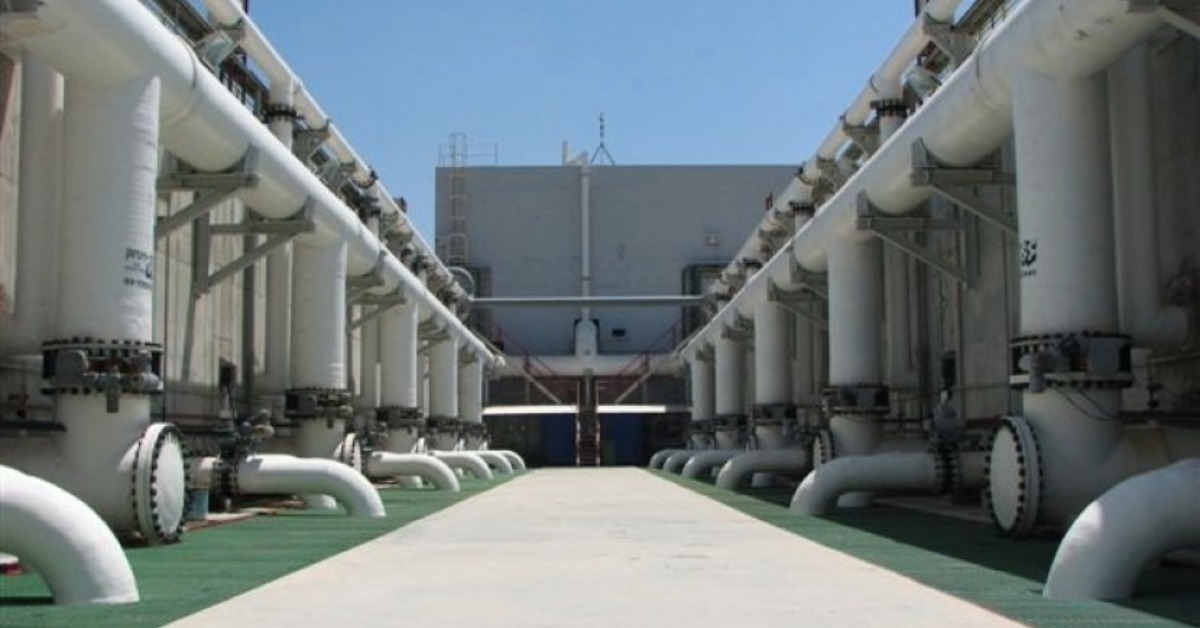
Planning files on Proyectos México—updated in July—describe a first module of 2,200 liters per second with federal–state financing and a public-works contract. That output equals roughly 190 million liters per day, enough to dwarf existing Mexican desal plants, which typically produce 200–250 lps. The same file lists the plant, a transmission line, and a storage tank as core components.
Officials have also briefed on a complementary 81.7-kilometer pipeline to move water along a coastal corridor through Rosarito toward Ensenada’s Morelos tanks. State procurement records show design tenders this spring for distribution works tied to the plant.
Coverage from regional outlets puts the initial investment in the 12–15 billion peso range, within a broader state water portfolio of about 24.6–25 billion pesos across 58 projects. The state says CONAGUA will execute the works and then hand over the operation to Baja California. Several reports point to 2027 as the target for first water.
The federal–state structure marks a break from the previous private-concession scheme. It also spreads risk and could simplify long-term tariff policy compared with a take-or-pay model.
A decade ago, Baja California pursued a massive private desalination plan—“Aguas de Rosarito”—designed for two phases totaling 4.4 m³/s. That contract became mired in controversy and was later canceled, with the state reporting an MXN 800 million settlement related to the termination. The new, public-works approach revives the location and purpose while resetting governance.
Environmental and energy questions the state must answer
Reverse osmosis requires significant electricity and produces a concentrated brine stream. Local researchers at El Colef have flagged the need for robust intake design, brine dispersion modeling, and ongoing marine monitoring to avoid seabed impacts. They also note that desal should complement—not replace—demand management and leakage control. Environmental filings referenced in federal listings show the project moving through the impact-assessment channel.
Between now and 2027, the project’s credibility will rest on three visible milestones: the publication and awarding of significant works, ground movement at the coastal site, and synchronized progress on the transmission pipeline so water can reach urban tanks. Tender documents already point to design work for distribution; officials say the pipe must be ready before the plant comes online. The state’s promise is simple—stable, pressurized, potable water on the coast—and the Rosarito plant is the bet to deliver it.