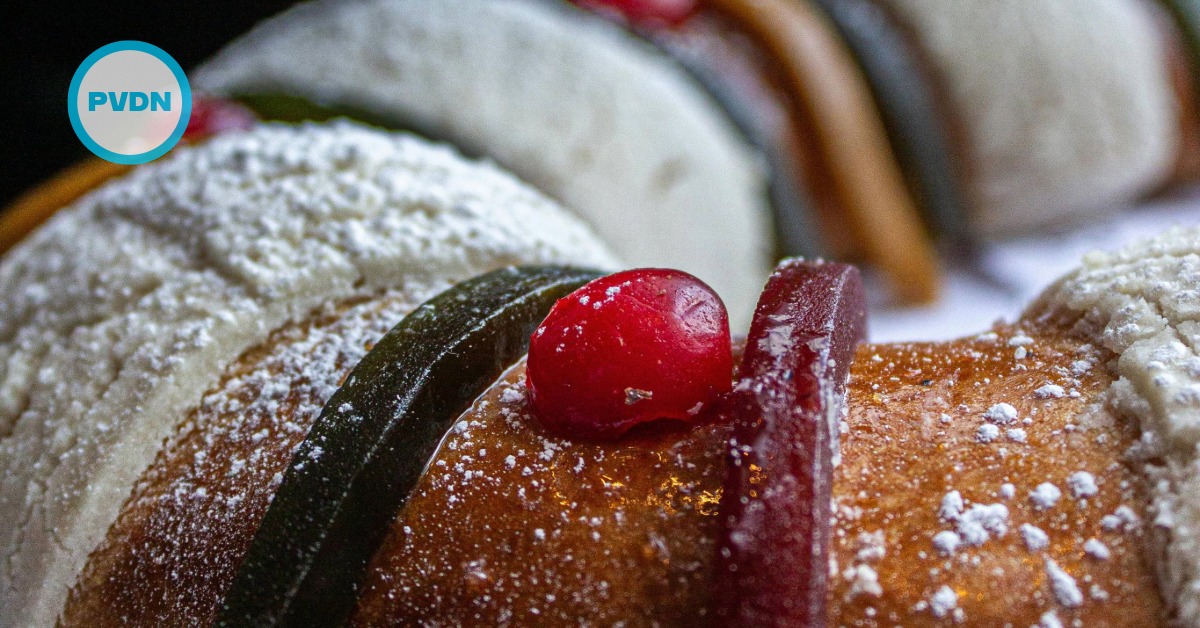
In Mexico, the Rosca de Reyes looks like a festive sweet bread, but it’s really a bite-sized map of the season’s final rituals. The ring shape isn’t just pretty; the bright fruit isn’t random; even the faint orange-blossom scent is there on purpose. And then there’s the tiny figure hidden inside—an edible plot twist that can obligate you to host the next gathering weeks later. If you’ve ever wondered what you’re actually holding when someone hands you a slice, here’s what each part is trying to say.
A bread that acts like a calendar
For many expats, Rosca season is the first time you notice how Mexico’s holidays don’t end abruptly on December 25. They taper, they echo, they keep showing up at work, in apartment courtyards, at kids’ schools, in a neighbor’s kitchen. The Rosca de Reyes, traditionally shared on January 6 for Día de Reyes, is a centerpiece precisely because it’s not only something you eat. It’s something you do together—part dessert, part social contract, part gentle way of pulling everyone into the same room for ten minutes.
What makes it special is that the bread is built like a symbol set. Even if nobody at the table says it out loud, the rosca is quietly telling the Epiphany story and setting up the next chapter.
The ring shape and why it’s a crown
Start with the simplest detail: the rosca’s oval or circular shape. You’ll hear two explanations repeated most often, and they can both be true at once.
One reading is royal. The bread is shaped like a crown, pointing to the Three Kings and the moment they arrive bearing gifts. In that sense, the rosca isn’t just “for” Día de Reyes—it visually marks the holiday. You can spot it across a room.
The second reading is about time. A circle has no beginning and no end, so the rosca becomes a symbol of continuity: faith that repeats, family that returns, a season that closes and opens again. That’s why rosca gatherings can feel oddly grounding even when they’re casual. The bread itself is shaped like an unbroken loop.
The “jewels” on top and what they really represent
Those bright strips and candied pieces aren’t there just to look cheerful. Traditionally, the toppings are read as the jewels set into a crown. That’s the most direct symbolism: a sweet bread made regal through color and shine.
Some interpretations get more specific. In many roscas, the red and green candied accents become a kind of emotional shorthand—festive colors tied to ideas like love, hope, and peace. It’s less about one official definition and more about how communities have taught the meaning from one January to the next.
There’s also a more modern layer that’s worth knowing if you’re new to Mexico: acitrón. For generations, acitrón was one of the iconic toppings—translucent, pale green, and unmistakable. The problem is that traditional acitrón comes from the candied pulp of a biznaga cactus, and overharvesting has put real pressure on wild populations. Many bakeries now avoid it or replace it with other candied fruit, ate, or similar sweets. So, in a quiet way, the “jewels” on today’s rosca can also tell you something about the present: how traditions adapt when ingredients carry an environmental cost.
The orange-blossom aroma that signals the season
If you’ve ever eaten rosca and thought, “This smells like something,” you’re not imagining it. Many roscas are scented with orange-blossom water (agua de azahar), which gives that distinctive, slightly floral citrus perfume.
Symbolically, azahar works like a sensory stamp. Not every element of the rosca is a coded religious reference; some parts function as instant recognition. The scent announces, without explanation, that this bread belongs to one week of the year. It’s memory made edible. You could blindfold someone who grew up with this tradition and they’d still know what month it is from the aroma alone.
The hidden Niño Dios and the story inside the bread
Then comes the moment everyone is secretly waiting for: the muñeco, the small baby figure baked into the bread. This is where Rosca de Reyes symbolism becomes more than decorative.
The figure represents the Niño Jesús, hidden. The hiding matters. It points to the danger in the biblical story—Herod’s threat—and the idea of protection. The baby inside the bread is a reminder that the Epiphany story isn’t only about gifts and kings; it also carries fear, escape, and care.
That’s why the muñeco isn’t treated like a gag. In many homes, finding it is framed as an honor or a blessing. It also assigns you a role, even if the whole thing is handled playfully.
The cut and the “luck” that chooses a host
The rosca is meant to be sliced and shared, which sounds obvious until you realize the cutting is part of the symbolism too. In some popular explanations, the knife itself is read as a reminder of danger—another nod to the threat surrounding the hidden child. Whether or not your table leans into that meaning, the ritual still works the same way: the cut turns dessert into a group event.
The real power of the tradition is what happens next. Whoever finds the Niño Dios doesn’t just win or lose; they inherit a responsibility. In many households, that responsibility is social before it’s religious: you’re the one who has to host (or at least provide food) for the next gathering.
Why the rosca doesn’t end on January 6
This is the part that surprises newcomers: Rosca de Reyes doesn’t end when the bread is gone. It stretches forward to February 2, Día de la Candelaria.
Candelaria is tied to the presentation of Jesus at the temple, forty days after Christmas. In Mexico, that date also became a major communal food moment. The person (or people) who found the muñeco typically provides tamales and often atole, and in many families there’s also the custom of dressing the Niño Dios figure from the nativity scene and bringing it to be blessed.
So the rosca is doing something clever. It takes a single afternoon in early January and quietly schedules the next reunion. That’s why it shows up in offices and friend groups as much as in families. It’s one of the most socially efficient traditions you’ll ever eat: it creates togetherness now, and then guarantees a follow-up later.
A tradition that keeps changing without losing its point
If you’ve lived in Mexico long enough, you’ve probably seen roscas stuffed with nata, chocolate, cream cheese, even modern “gourmet” versions that look nothing like the ones in old photos. None of that cancels the symbolism. The meaning stays anchored in a few key ideas: the crown, the shared table, the hidden child, and the obligation that becomes hospitality.
And that may be the most lasting message of all. The Rosca de Reyes isn’t asking you to memorize symbolism. It’s inviting you to participate in a rhythm—one that starts with sweetness, turns into laughter and suspense, and ends with tamales weeks later. For an expat trying to feel less like a visitor, that rhythm can be a small, delicious doorway into belonging.
In Mexico, the Rosca de Reyes looks like a festive sweet bread, but it’s really a bite-sized map of the season’s final rituals. The ring shape isn’t just pretty; the bright fruit isn’t random; even the faint orange-blossom scent is there on purpose. And then there’s the tiny figure hidden inside—an edible plot twist that can obligate you to host the next gathering weeks later. If you’ve ever wondered what you’re actually holding when someone hands you a slice, here’s what each part is trying to say.
A bread that acts like a calendar
For many expats, Rosca season is the first time you notice how Mexico’s holidays don’t end abruptly on December 25. They taper, they echo, they keep showing up at work, in apartment courtyards, at kids’ schools, in a neighbor’s kitchen. The Rosca de Reyes, traditionally shared on January 6 for Día de Reyes, is a centerpiece precisely because it’s not only something you eat. It’s something you do together—part dessert, part social contract, part gentle way of pulling everyone into the same room for ten minutes.
What makes it special is that the bread is built like a symbol set. Even if nobody at the table says it out loud, the rosca is quietly telling the Epiphany story and setting up the next chapter.
The ring shape and why it’s a crown
Start with the simplest detail: the rosca’s oval or circular shape. You’ll hear two explanations repeated most often, and they can both be true at once.
One reading is royal. The bread is shaped like a crown, pointing to the Three Kings and the moment they arrive bearing gifts. In that sense, the rosca isn’t just “for” Día de Reyes—it visually marks the holiday. You can spot it across a room.
The second reading is about time. A circle has no beginning and no end, so the rosca becomes a symbol of continuity: faith that repeats, family that returns, a season that closes and opens again. That’s why rosca gatherings can feel oddly grounding even when they’re casual. The bread itself is shaped like an unbroken loop.
The “jewels” on top and what they really represent
Those bright strips and candied pieces aren’t there just to look cheerful. Traditionally, the toppings are read as the jewels set into a crown. That’s the most direct symbolism: a sweet bread made regal through color and shine.
Some interpretations get more specific. In many roscas, the red and green candied accents become a kind of emotional shorthand—festive colors tied to ideas like love, hope, and peace. It’s less about one official definition and more about how communities have taught the meaning from one January to the next.
There’s also a more modern layer that’s worth knowing if you’re new to Mexico: acitrón. For generations, acitrón was one of the iconic toppings—translucent, pale green, and unmistakable. The problem is that traditional acitrón comes from the candied pulp of a biznaga cactus, and overharvesting has put real pressure on wild populations. Many bakeries now avoid it or replace it with other candied fruit, ate, or similar sweets. So, in a quiet way, the “jewels” on today’s rosca can also tell you something about the present: how traditions adapt when ingredients carry an environmental cost.
The orange-blossom aroma that signals the season
If you’ve ever eaten rosca and thought, “This smells like something,” you’re not imagining it. Many roscas are scented with orange-blossom water (agua de azahar), which gives that distinctive, slightly floral citrus perfume.
Symbolically, azahar works like a sensory stamp. Not every element of the rosca is a coded religious reference; some parts function as instant recognition. The scent announces, without explanation, that this bread belongs to one week of the year. It’s memory made edible. You could blindfold someone who grew up with this tradition and they’d still know what month it is from the aroma alone.
The hidden Niño Dios and the story inside the bread
Then comes the moment everyone is secretly waiting for: the muñeco, the small baby figure baked into the bread. This is where Rosca de Reyes symbolism becomes more than decorative.
The figure represents the Niño Jesús, hidden. The hiding matters. It points to the danger in the biblical story—Herod’s threat—and the idea of protection. The baby inside the bread is a reminder that the Epiphany story isn’t only about gifts and kings; it also carries fear, escape, and care.
That’s why the muñeco isn’t treated like a gag. In many homes, finding it is framed as an honor or a blessing. It also assigns you a role, even if the whole thing is handled playfully.
The cut and the “luck” that chooses a host
The rosca is meant to be sliced and shared, which sounds obvious until you realize the cutting is part of the symbolism too. In some popular explanations, the knife itself is read as a reminder of danger—another nod to the threat surrounding the hidden child. Whether or not your table leans into that meaning, the ritual still works the same way: the cut turns dessert into a group event.
The real power of the tradition is what happens next. Whoever finds the Niño Dios doesn’t just win or lose; they inherit a responsibility. In many households, that responsibility is social before it’s religious: you’re the one who has to host (or at least provide food) for the next gathering.
Why the rosca doesn’t end on January 6
This is the part that surprises newcomers: Rosca de Reyes doesn’t end when the bread is gone. It stretches forward to February 2, Día de la Candelaria.
Candelaria is tied to the presentation of Jesus at the temple, forty days after Christmas. In Mexico, that date also became a major communal food moment. The person (or people) who found the muñeco typically provides tamales and often atole, and in many families there’s also the custom of dressing the Niño Dios figure from the nativity scene and bringing it to be blessed.
So the rosca is doing something clever. It takes a single afternoon in early January and quietly schedules the next reunion. That’s why it shows up in offices and friend groups as much as in families. It’s one of the most socially efficient traditions you’ll ever eat: it creates togetherness now, and then guarantees a follow-up later.
A tradition that keeps changing without losing its point
If you’ve lived in Mexico long enough, you’ve probably seen roscas stuffed with nata, chocolate, cream cheese, even modern “gourmet” versions that look nothing like the ones in old photos. None of that cancels the symbolism. The meaning stays anchored in a few key ideas: the crown, the shared table, the hidden child, and the obligation that becomes hospitality.
And that may be the most lasting message of all. The Rosca de Reyes isn’t asking you to memorize symbolism. It’s inviting you to participate in a rhythm—one that starts with sweetness, turns into laughter and suspense, and ends with tamales weeks later. For an expat trying to feel less like a visitor, that rhythm can be a small, delicious doorway into belonging.