Royal Caribbean’s planned Perfect Day destination in Mahahual has cleared an important legal obstacle after a federal court dismissed an injunction tied to land-use approvals. But the ruling does not give the project a final green light. Environmental permits, public scrutiny, and concerns over mangroves, water, waste, and the future of Costa Maya remain central to what happens next.
Court ruling reopens the path for permits
Royal Caribbean’s planned Perfect Day project in Mahahual can move forward in the administrative process after a federal court dismissed an injunction that had slowed the development earlier this year.
The ruling came from the First Collegiate Circuit Court of Quintana Roo. The court revoked the admission of an amparo filed by the civil group Defendiendo el Derecho a un Medio Ambiente Sano, known as DMAS.
According to the ruling, the legal challenge was filed after the deadline allowed under Mexican law. The court found that the group should have filed before December 30, 2025. The filing was presented on January 16, 2026.
That decision removes the suspension that had blocked certain project-related permits. It does not mean construction can begin freely. The development still needs environmental clearance and remains under public and regulatory review.
What the project proposes for Mahahual
The development is part of Royal Caribbean’s plan to create a private-style cruise destination on the Costa Maya, near Mahahual in southern Quintana Roo.
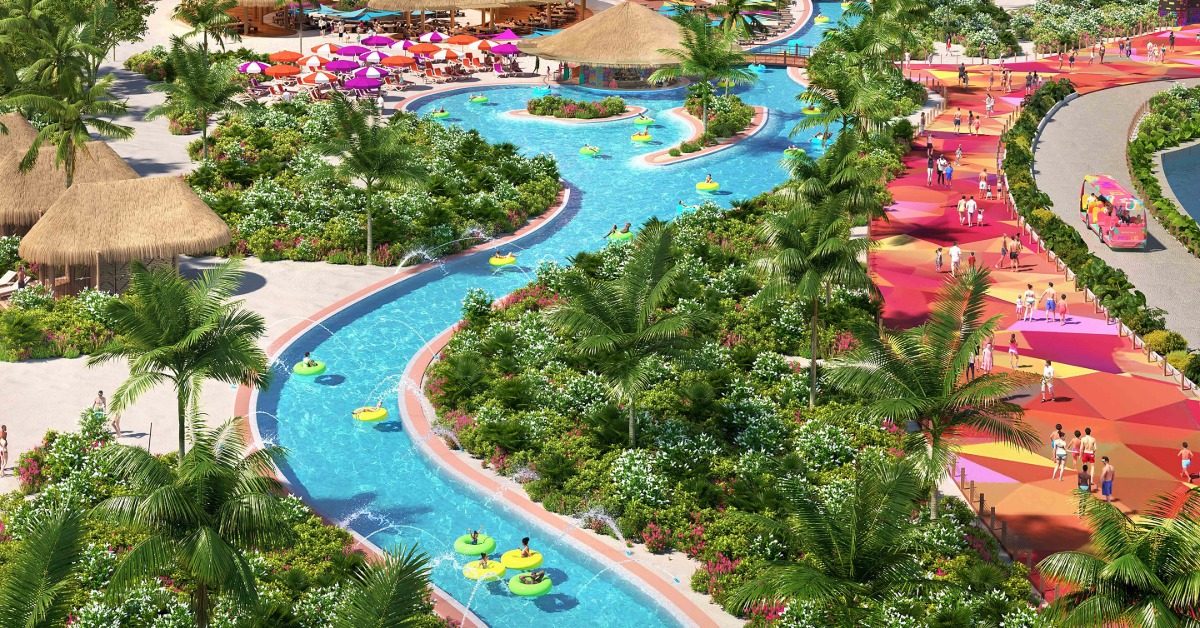
The company has promoted Perfect Day Mexico as a major tourist destination with water attractions, beach areas, food and drink venues, pools, and entertainment designed primarily for cruise passengers. Royal Caribbean has advertised an opening target of fall 2027.
The land-side environmental filing describes a project area of about 82.58 hectares. It includes a proposed water park and tourism infrastructure that could receive up to 21,000 cruise visitors per day, along with thousands of workers.
The scale of the project is central to the dispute. Supporters see it as a major investment for southern Quintana Roo. Critics argue that Mahahual’s infrastructure, environment, and small-town identity could be placed under heavy pressure.
What the court ruling does and does not decide
The court ruling is important, but it is narrow. It focused on whether the amparo was filed within the legal deadline. It did not decide whether the project is environmentally safe. It also did not approve the project’s construction.
The dismissed amparo challenged land-use changes approved by the municipality of Othón P. Blanco. Those changes were connected to the project’s ability to obtain permits and move through the planning process.
With the amparo dismissed, the company can continue seeking approvals from federal agencies. But Semarnat, Mexico’s Environment Ministry, still has to decide whether the environmental impact filing is complete and whether the project should be authorized.
That makes the court ruling a procedural victory for the project, not a final authorization.
Environmental review remains the central test
The project remains under scrutiny because it involves land near sensitive coastal ecosystems. Concerns raised by environmental groups include possible impacts on mangroves, coastal vegetation, underground water systems, waste management, and local demand for water and electricity.
Profepa, Mexico’s environmental enforcement agency, temporarily closed works linked to the project in January. The agency said inspectors documented demolition, dismantling, and filling activity in an area with coastal vegetation and mangrove presence. The agency also said the work lacked the required federal environmental authorization.
That enforcement action is separate from the dismissed amparo. It matters because it shows the project has faced more than one regulatory obstacle.
Semarnat also suspended the environmental evaluation process earlier this year while requesting additional information. That type of suspension does not automatically kill a project. It pauses the review while the developer responds to the authority’s questions.
Public consultation exposed divided views
The project also went through a public consultation process. That process allowed residents, organizations, academics, business representatives, and other interested parties to present comments on the environmental filing.
During that discussion, supporters focused on investment, job creation, and the potential to attract more visitors to southern Quintana Roo. The company has said the project will include environmental measures, worker housing, water treatment, waste treatment, and energy investments.
Opponents questioned whether those commitments are enough. They argue that Mahahual is not simply another resort corridor. It is a smaller coastal community with limited services, direct ties to the reef, and a local economy already shaped by cruise traffic.
The debate is not only about one water park. It is also about which tourism model should shape the Costa Maya in the coming years.
A bigger question for Costa Maya
Mahahual has long been marketed as a quieter alternative to Cancún, Playa del Carmen, and Tulum. Cruise tourism already plays a major role in the area, especially through the Costa Maya port.
A project of this size could shift that balance. It could concentrate spending within a controlled destination while also increasing daily visitor volume. For local businesses, that raises practical questions about whether more cruise passengers will reach town or stay within the company’s attraction.
For residents, the concerns are broader. Large tourism projects can bring jobs and infrastructure. They can also raise pressure on housing, public services, roads, waste systems, water supply, and coastal access.
Those issues are familiar across Quintana Roo. The difference in Mahahual is scale. A project built for tens of thousands of daily visitors would land in a community far smaller than the state’s main tourism centers.
What happens next
The court decision gives Royal Caribbean and its local project vehicle room to continue the permitting process. The next key issue is environmental authorization.
Semarnat can authorize a project, deny it, or authorize it with conditions. Those conditions can include mitigation measures, technical changes, monitoring requirements, or limits on certain activities.
Profepa’s administrative process also remains relevant. If the agency’s earlier findings lead to penalties, restoration orders, or additional restrictions, those could affect how the project moves forward.
Environmental groups may also continue using legal and public-pressure strategies. The dismissal of one amparo does not prevent other challenges if new permits are granted or if groups identify new legal grounds.
For now, Perfect Day Mahahual is moving again, but it is not past the finish line. The court cleared one legal obstacle. The environmental and social questions around the project remain unresolved.