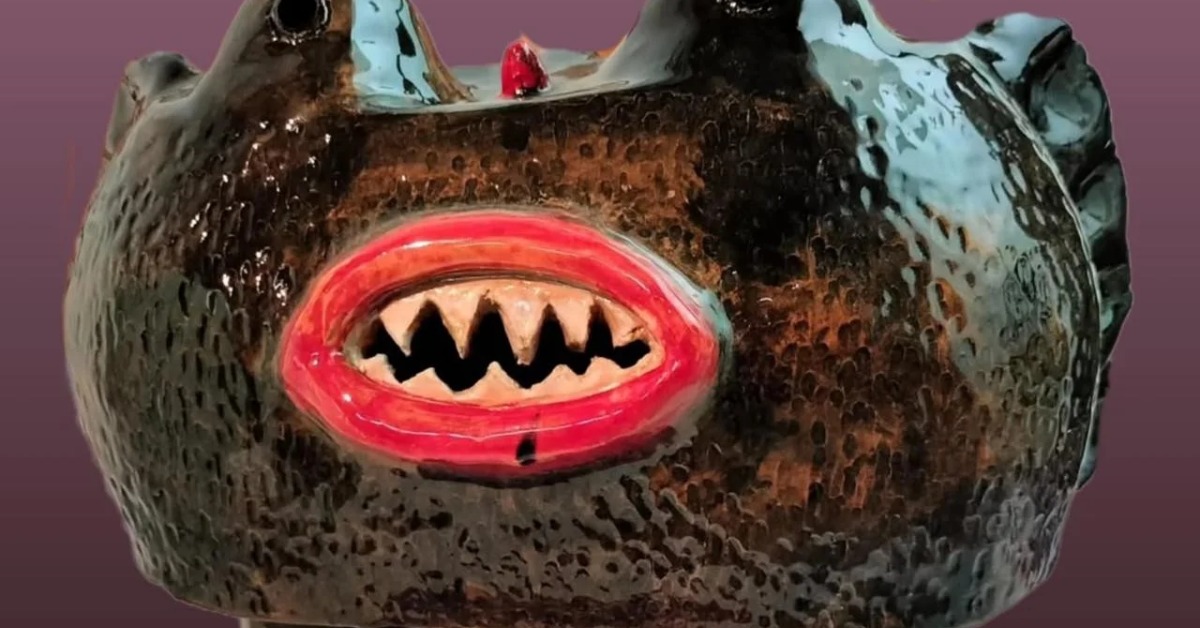
San Miguel de Allende’s gallery scene gets a new arrival this week with an exhibition built around creatures that never quite existed, but feel rooted in the natural world. Artist Jesús Reyna brings together ceramics, drawings, color, porcelain, botany, and fantasy in a show that connects Aguascalientes, ancient life, and Mexico’s long tradition of turning animals into symbols. For residents and visitors, it adds another stop to the city’s active cultural calendar.
Jesús Reyna’s exhibition of imagined creatures
Artist Jesús Reyna is bringing a new exhibition of ceramics and drawings to San Miguel de Allende, opening Friday, May 8, at Licea Moctezuma on Calle Quebrada.
The show presents a bestiary of improbable creatures, built from the artist’s interest in prehistoric animals, botany, taxonomy, fantasy, and the natural history of his home state, Aguascalientes.
The exhibition includes 20 ceramic sculptures and 40 drawings. Some works use color, while others move into porcelain, giving certain pieces a more translucent texture.
The show is scheduled to remain open until July 20.
What visitors will see
The exhibition is centered on creatures that seem part animal, part plant, and part invention. They are not presented as monsters in a violent sense. Instead, the works lean toward playful forms, color, and imagined biology.
Reyna has described the project as a way to give a face to beings that may never have lived in Aguascalientes, but could be imagined through the region’s prehistoric past.
That idea gives the show a clear entry point for visitors. It does not require a formal art background. The works invite viewers to look closely, notice textures, and think about how humans create meaning from animals, fossils, and unknown forms.
The bestiary tradition, in simple terms
A bestiary is an old form of storytelling that uses animals, real or imagined, to explore ideas about life, nature, and human behavior.
In medieval Europe, bestiaries were illustrated collections of animals and creatures. They often mixed observation, myth, and moral meaning. Lions, birds, dragons, and other beings were used to explain human qualities or spiritual lessons.
Reyna’s work does not copy that tradition directly. It updates the idea through a Mexican and regional lens. His creatures come from drawing, clay, porcelain, research, memory, and imagination.
That mix makes the exhibition easier to approach. Visitors can see it as art, but also as a visual field guide to a world that almost existed.
Aguascalientes as a starting point
The exhibition is rooted in Aguascalientes, where Reyna has been active in the contemporary art scene.
His earlier work has also moved between ceramics, drawing, watercolor, painting, and printmaking. Past writing about his work has noted recurring interests in plants, animals, imagined ecosystems, and forms that shift between the natural and the symbolic.
That background helps explain this new show. The pieces are not only fantasy figures. They come from a long interest in how living things are shaped, classified, and reimagined.
Reyna has also worked with scientific illustration, including botanical subjects. That experience is evident in the attention to form and surface in his more imaginative pieces.
Why San Miguel is a fitting place for the show
San Miguel de Allende has long been tied to art, galleries, and cultural travel. Its historic center and nearby Sanctuary of Atotonilco are recognized by UNESCO for their architectural and cultural value.
For many foreign residents, San Miguel’s art spaces are part of everyday life. Gallery openings, workshops, and exhibitions are often more than tourist activities. They are part of the city’s social calendar.
Licea Moctezuma fits into that smaller-gallery side of the city’s cultural life. The Quebrada street location places the exhibition within easy reach of residents and visitors already walking the historic center.
For readers in San Miguel, the show offers a local cultural option beyond the city’s larger institutions and better-known galleries.
A show built around peace, not aggression
One notable aspect of the exhibition is how Reyna avoids violent expressions in the creatures.
That choice aligns with his participation in Amalgama Gráfica Internacional Contemporánea por la Paz, an international graphic art exhibition in Spain focused on peace themes.
In this San Miguel show, the creatures may be strange, but they are not designed mainly to frighten. They sit closer to curiosity than fear.
That gives the work a different tone from many modern monster images. These are invented beings, but they are also soft entry points into questions about nature, origin, memory, and place.
A cultural stop for residents and visitors
For San Miguel residents, the exhibition offers a compact way to engage with Mexican contemporary art outside the usual tourist frame.
For visitors, it adds context to the city’s broader cultural identity. San Miguel is often described through architecture, restaurants, weddings, and travel awards. Shows like this point to another side of the city: working artists, small galleries, and current Mexican visual culture.
Reyna’s bestiary also gives international viewers an accessible subject. Animals, plants, and imagined creatures cross language barriers. The deeper context comes later, through the artist’s connection to Aguascalientes and the long history of bestiaries as a visual language.
The result is a show that can be read at more than one level. It works as a gallery visit, a local outing, and a look at how Mexican artists continue to reshape older forms.