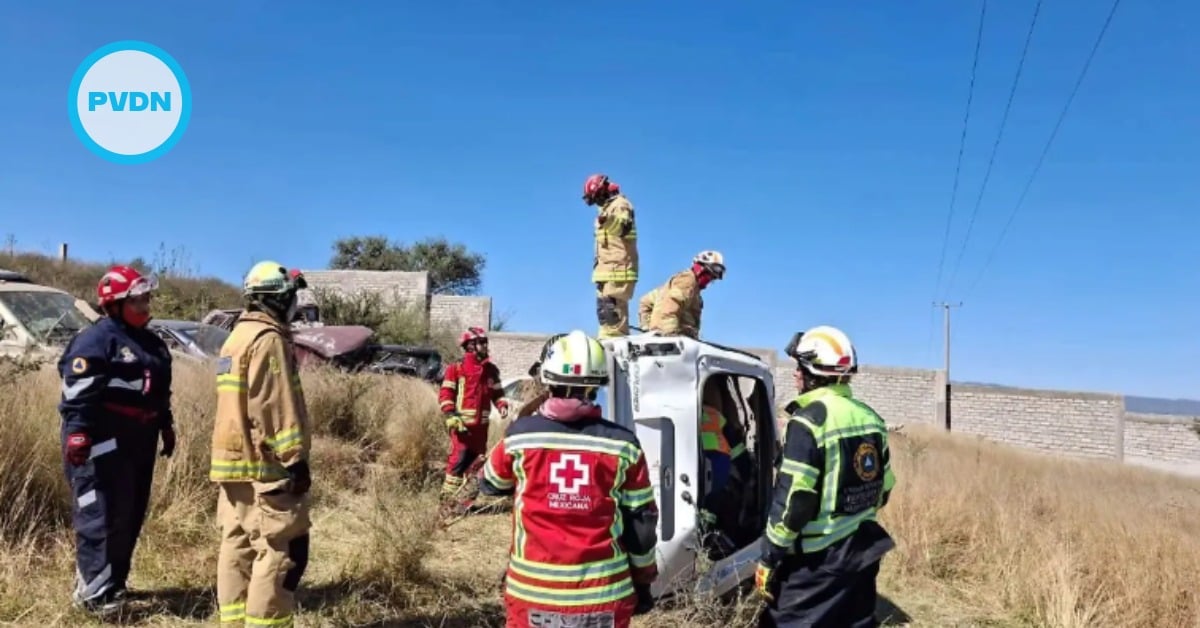
The San Miguel de Allende branch of the Mexican Red Cross has strengthened its emergency teams with an intensive vehicle rescue course designed to change what happens in the minutes after a serious crash. Built on international standards for extrication and trauma care, the program focuses on how to reach trapped patients faster while keeping crews safe around twisted metal and live traffic.
Local firefighters joined Red Cross paramedics and volunteers on the training ground, reflecting how real crashes are handled in the city. In an emergency, firefighters stabilize the vehicle and control hazards while medical teams work inside the car; the course brought both groups together to rehearse that coordination step by step.
According to the Mexican Red Cross’ own curriculum for vehicle rescue technicians, courses of this type combine classroom theory with intensive hands-on drills. Participants learn to read the “anatomy” of modern vehicles, plan safe access routes, and use specialized tools to open doors, remove roofs, and create space around a patient without worsening hidden injuries. They also review how airbags, batteries, and fuel systems can turn a routine rescue into a high-risk scene if crews misjudge the hazards.
For San Miguel’s delegation, which already operates urban rescue teams for vehicle collisions, structural collapses, and confined-space emergencies, this training acts as a refresh and an upgrade rather than a basic introduction. The goal is to bring every shift in line with current techniques so that the care a victim receives at three in the morning matches the standard at three in the afternoon.
In line with international guidance on extrication, instructors emphasized a balance that is hard to achieve under pressure. Rescuers must move fast enough to get a severely injured person out of a crushed vehicle, but not so fast that they cause new spinal or internal damage while cutting and lifting. Modern research suggests that reducing the time a patient spends trapped, when it can be done safely, improves their chances once they reach hospital care.
Beyond cutting metal, the course also reinforced habits that protect the rescuers themselves. Crews drilled the use of full protective equipment, safe tool handling, and clear lines of command at the scene, all of which are designed to prevent secondary accidents. A volunteer injured on the roadside is one less set of hands for the next call – and one more patient for an already stretched system.
Guanajuato’s numbers explain why this kind of investment matters. National statistics show that the state records more than fifteen thousand urban traffic accidents in a single year, placing it among the entities with the highest crash volumes in the country. Across Mexico, hundreds of thousands of road accidents are logged annually, and the vast majority are linked to human error rather than bad luck. In that context, shaving even a few minutes off a complex rescue can mean fewer deaths and fewer people living with life-changing injuries.
From drills to real emergencies
San Miguel de Allende is better known for its historic center and UNESCO World Heritage status than for pile-ups on the ring road. Yet the same qualities that draw visitors – narrow colonial streets, steep slopes, and heavy weekend traffic – can turn a simple mistake behind the wheel into a complicated rescue. When a vehicle collides on a hillside curve or near the edge of the historic core, first responders may face tight access, curious crowds, and limited space to work.
That is where San Miguel Red Cross training in vehicle rescue becomes more than an internal exercise. By practicing realistic scenarios with firefighters, crews can decide in advance who stabilizes the car, who manages traffic, who enters the vehicle, and who stays outside to manage equipment. Those decisions used to be made in the heat of the moment; now they come from a shared plan.
The course in San Miguel is part of a broader trend inside the Mexican Red Cross. Delegations across Guanajuato and other states have been offering specialized extrication and pre-hospital trauma courses for volunteers who already hold basic emergency medical credentials. National materials stress safe scene management, patient-centered care, and continuous drills, and they frame vehicle rescue as a technical specialty rather than an improvised add-on to ambulance work.
International research in trauma care supports this shift. Studies on extrication after motor vehicle collisions highlight that the longer a seriously injured person remains trapped without definitive treatment, the higher their risk of death or disability. At the same time, those studies warn that poorly planned, rushed rescues can cause avoidable harm. The emerging consensus is clear: teams need structured training, simple decision tools, and plenty of practice long before they face a crushed car on a dark road.
For residents and visitors in San Miguel de Allende, the impact of this new training will rarely be visible. Most people will only see a line of flashing lights and a briefly closed street when something goes wrong. But inside that cordon, the way rescuers move, communicate, and make space around a patient has already changed. This month’s course gives crews a shared language and a set of tactics they can fall back on when adrenaline and emotion would otherwise take over.
The volunteers who spent hours cutting and stabilizing training vehicles will likely say they hope never to use their new skills. Yet traffic will continue to flow into and out of this popular city, and crashes will continue to happen despite better education and enforcement. When the next serious collision leaves someone trapped in a vehicle, San Miguel’s Red Cross teams and firefighters will arrive with more than goodwill and experience. They will bring a common plan, tested tools, and a clearer understanding of how to get a patient out alive.