Sea lions remain one of the best-known animals along Mexico’s northwestern coast. But the picture behind those sightings is changing. Specialists say a long decline tied to warming seas now overlaps with a more visible danger: fishing gear that injures animals that survive long enough to be seen. In Baja California Sur, some rescues are succeeding, yet prevention remains uneven, and the legal framework for rapid intervention remains incomplete.
Sea lion decline is becoming harder to ignore
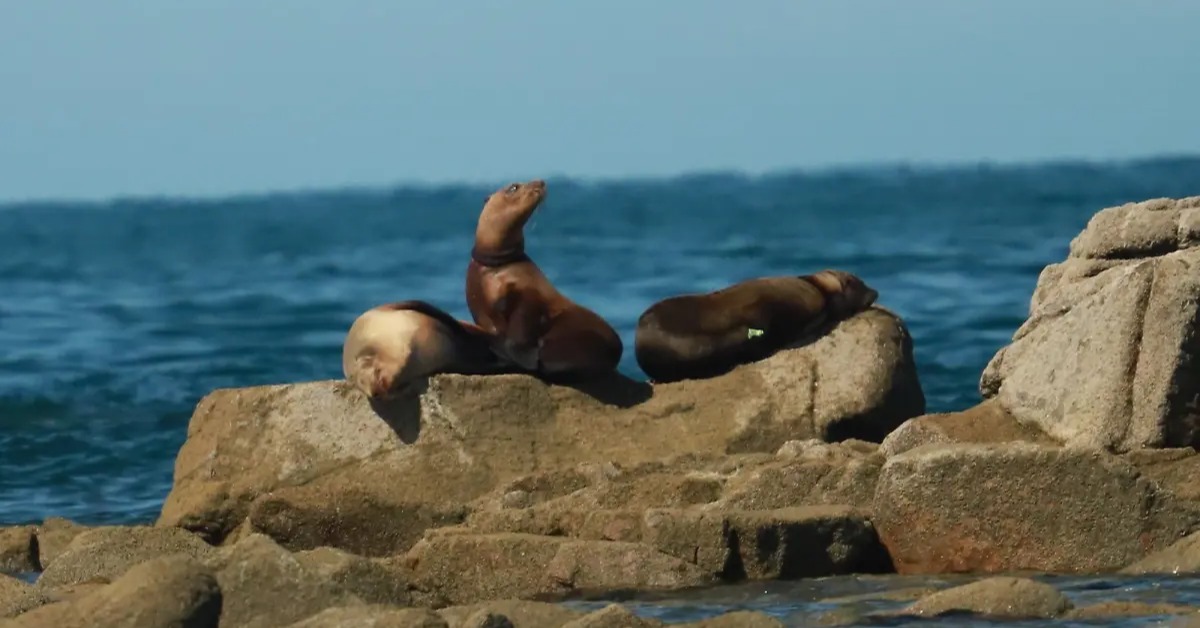
For many residents and visitors in northwestern Mexico, sea lions are part of the coastal landscape. They are seen resting on rocks, circling fishing areas, or drawing tour boats offshore. That familiar image can make the species seem secure. The new concern is that visible animals do not tell the whole story.
Specialists working in the region say the sea lion population has fallen sharply across parts of the Gulf of California and the Pacific side of the peninsula over the past three decades. Research published in recent years supports that broader warning. One major study reconstructed the Gulf of California population from 1978 to 2019 and found a steep drop after the early 1990s. By 2019, the estimated population was far below its earlier peak.
That does not mean every colony is following the same path. In Baja California Sur, the picture is mixed. Some Pacific-side colonies have shown severe losses, while the protected colony around Espíritu Santo has been described as more stable and, in some monitoring, as improving. That contrast matters because it suggests the decline is not only about a single bad season or an isolated event. It reflects a broader combination of ecological pressure and human impact.
For international readers, one point may sound confusing at first. The California sea lion is not treated the same way everywhere. In Mexico, it is protected under federal wildlife rules. Globally, the species is still considered to be of lower risk. Both things can be true at once. A species can remain widespread overall while local or regional populations weaken in specific places.
Warmer water changes the food chain
The long-term climate signal is one of the strongest parts of the story. Scientists studying sea lions in the Gulf of California found that the population decline closely tracked a sustained rise in sea surface temperatures that began in the late 1980s. The concern is not only that the water is warmer. It is the warmer water changes where prey gathers, how abundant it is, and how much energy it provides.
That shift matters most for breeding females and pups. When prey becomes less available, or when high-energy prey is replaced by lower-quality food, females can struggle to maintain condition and nurse their young. In practical terms, a warmer sea can weaken reproduction without producing the kind of sudden die-off that immediately draws public attention.
Newer research adds another layer. During the 2014 to 2016 marine heatwave, sea lions in the Gulf of California ate fewer schooling fish and squid and more benthic prey. That change reduced the overall energy density of their diet. Scientists do not argue that diet alone explains every colony’s trend. But the work shows how warming seas can reshape the food web, leaving some colonies less resilient than others.
This is why the issue is bigger than wildlife rescue. What happens to sea lions can also reveal strain in the marine ecosystem itself. They are top predators, and when their numbers drop or their bodies show chronic stress, that can be an early warning that conditions below them in the food chain are shifting.
Fishing gear leaves the clearest wounds
Climate stress is slower and harder to see. Entanglement is the opposite. It leaves visible, often severe injuries. Specialists in northwestern Mexico say sea lions continue to be caught in active fishing gear as well as in ghost nets, the abandoned or lost gear that remains in the water and continues to trap animals long after it is discarded.
Sea lions that survive entanglement may reach shore with rope or netting cutting into their necks, chests, or flippers. In juveniles, the damage can worsen as the animal grows. A loop that looks survivable at first can slowly cut deeper into tissue over months. Some animals drown before anyone sees them. Others die offshore, which means the cases documented on beaches or in colonies may capture only part of the loss.
That is why rescue work is so specialized. Removing fishing gear from a wild sea lion is not as simple as cutting loose a trapped animal. It can require capture teams, sedation, veterinary support, monitoring, and the ability to release the animal safely afterward. In recent months, authorities in Los Cabos and La Paz reported several such rescues, underscoring that the threat is current, not historical.
Rescuers also say the visible cases can distort public understanding. The animals that make it to shore with nets around them are usually the ones that lasted long enough to be found. The ones that never return to land may never be counted at all.
Protection on paper does not solve rescue gaps
Mexico does have legal protection for the species. That is important, but it does not fully solve the rescue problem. Specialists working on disentanglement say there is still no clear, dedicated legal mechanism for sea lion disentanglement itself. In other words, the animal is protected, but the act of intervening quickly in the field can still be uncertain.
That legal gray area affects timing, coordination, and prevention. Teams may need multiple authorities involved before acting. There are also complaints that lost gear is not always reported quickly and that fishermen lack better tools and incentives to respond when an entanglement happens. The result is that rescue can become reactive, case by case, instead of part of a stronger prevention system.
Recent cooperation between Profepa and civil society groups shows that authorities are moving toward more formal coordination. That is a positive sign. It reflects years of practical rescue work and a recognition that this is now a recurring conservation problem. But rescuers argue that cooperation alone is not enough. They want clearer rules, faster authorization, and stronger policy around abandoned gear and bycatch.
The lesson from places like Espíritu Santo is that protection can work when habitat rules, monitoring, and long-term management line up. The harder question is whether that model can spread quickly enough to help colonies under heavier pressure.
Why this matters beyond Baja California Sur
This story is about more than one species. It touches tourism, fishing, marine conservation, and the health of the Gulf of California and the Pacific coast. Sea lions are one of the animals people most easily recognize. That visibility can help, because it makes decline harder to ignore.
But recognition alone will not reverse the trend. The warning from specialists is that rescue, while necessary, comes late in the chain. By the time a team is removing net from a sea lion’s body, the deeper failures have already happened. The more important work is earlier: cleaner fishing practices, less abandoned gear, better reporting, clearer rules, and stronger protection for breeding areas.
For readers living in Mexico, especially along the coast, that makes this a local story as much as an environmental one. The decline in sea lion populations is a measure of what is happening offshore. It is also a test of whether policy can catch up before rescue becomes the only answer people see.