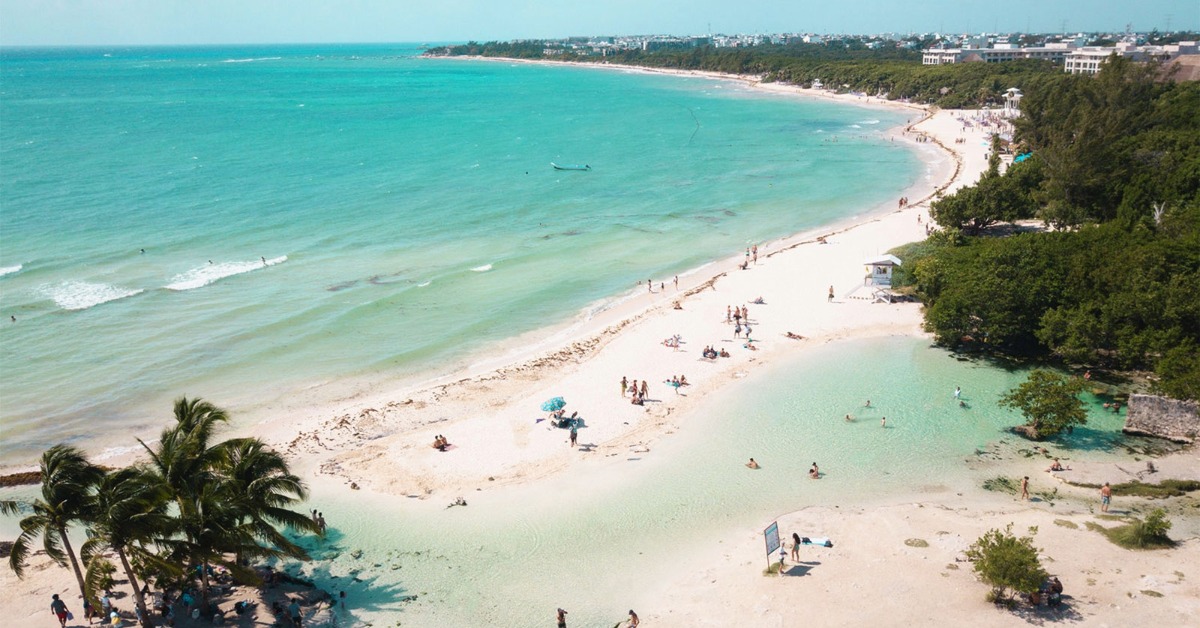
A federal green light for nearly 1,000 hotel rooms north of Playa del Carmen looks simple on paper. It is not. The decision reaches back to a permit trail that began more than a decade ago and lands in one of the Riviera Maya’s most built-up coastal corridors. It also raises a broader question for residents, investors, and visitors alike: when another large resort moves forward, where does the real impact show up first, inside the property or in the city around it?
Mexico’s environment ministry, Semarnat, has approved the environmental review for Moxché Club & Resort, a 926-room project planned for the Xcalacoco–Punta Esmeralda corridor north of Playa del Carmen. Reported plans include 20 buildings, shared amenities, commercial areas, and an investment of more than 1 billion pesos. On its face, the decision adds another large development to the Riviera Maya pipeline. In practice, it reopens a familiar Playa del Carmen debate: how much more coastal growth can this corridor absorb?
A decision years in the making
Publicly available project records show the Moxché file has been moving through federal environmental channels for years. Historical material points to an original authorization in 2013. Later filings described expansion phases. In 2019, one proposal said the broader complex could reach 1,197 rooms. By 2021, at least one later phase had already been approved. This latest decision looks less like a sudden arrival and more like another step in a long buildout.
For readers outside Mexico, the key point is simple. An environmental impact approval is a major federal filter. Semarnat’s review is meant to identify likely environmental effects and the mitigation proposed by the developer. That makes the decision important. It does not mean a finished hotel appears quickly. Projects of this size often advance in stages, and the gap between approval, construction, and operation can span years.
Why north Playa keeps drawing projects
The location helps explain the pressure. The latest public tourism bulletin from Quintana Roo put Solidaridad at 316 hotels and 47,639 rooms in August 2025. That made Riviera Maya in Solidaridad one of the state’s largest lodging markets. Developers keep returning to north Playa because the corridor already has road access, established tourism infrastructure, and the scale needed for large resort-style projects. In simple terms, growth tends to attract more growth.
The Moxché name is also already on Playa’s hotel map. Hyatt says Secrets Moxché has 485 suites, while Impression Moxché adds 198. That does not answer every question about how this new approval will unfold. It does show that Moxché is already tied to Playa del Carmen’s tourism expansion, not an unfamiliar concept arriving in an empty stretch of coast.
The bigger question is what happens outside the gates
Supporters of hotel expansion usually talk about jobs, tax revenue, and future demand. Those arguments matter in a tourism economy. But new rooms do not affect only hotel ledgers. They add demand for water, wastewater treatment, waste collection, electricity, roads, and beach management. That matters here because the project sits near both established resorts and everyday neighborhoods, including Luis Donaldo Colosio and Nicte-Ha.
The Xcalacoco–Punta Esmeralda corridor is not a remote shoreline waiting for first construction. It is one of the places where Playa del Carmen’s development model is already most visible. Another large approval here adds to cumulative pressure, even if the site itself has long been part of an altered urban-tourism landscape. For local residents, the impact is not measured only in room counts. It is measured in how well the city keeps pace with the growth around it.
A long-term bet despite softer recent numbers
There is also a market-side wrinkle. State estimates showed that tourist arrivals in the Mexican Caribbean fell by 3.9 percent in the first 10 months of 2025. Even with that softer trend, new supply continued to move forward. That suggests developers are still betting on Playa del Carmen as a long-term tourism market. The tension is familiar. Investment decisions are made on a long horizon, while the local effects of growth are often felt much sooner.
For international readers, the story is not only that Semarnat approved more hotel rooms. It is that Playa del Carmen keeps absorbing new projects in one of its most intensively developed stretches of coast. This approval may help expand lodging capacity. It also keeps alive a larger question: whether the city can match private growth with the public services and environmental management that growth requires.