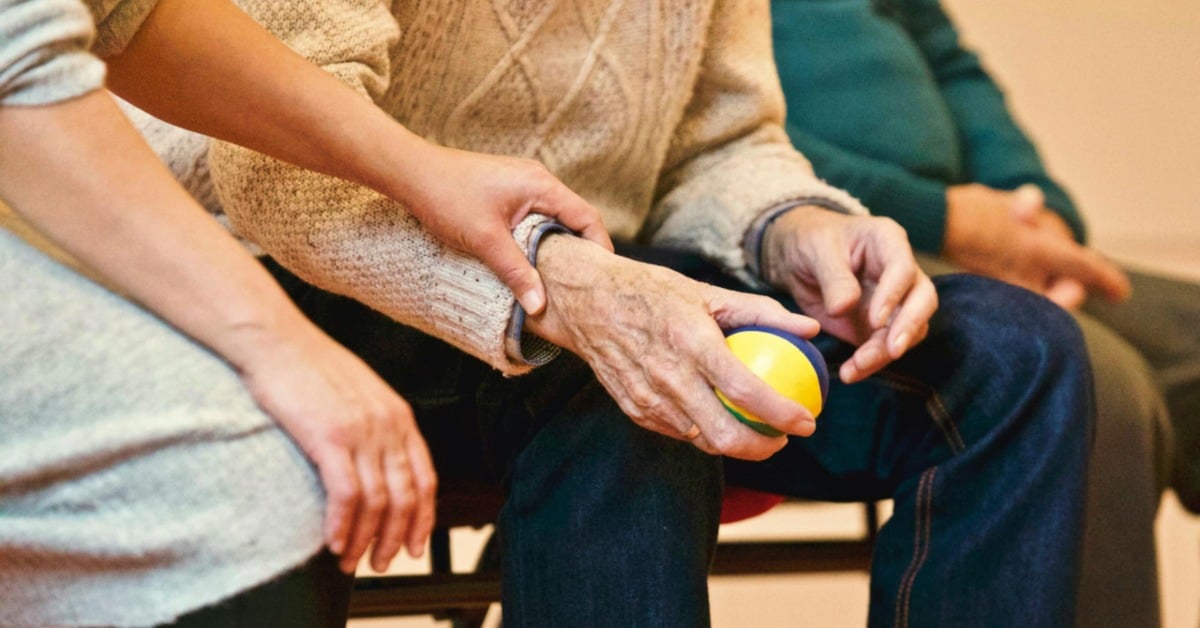
Mexico’s demographic curve has already begun to bend. More people are entering their sixties than ever, and they will keep coming for decades. That single fact is starting to shift how developers, lenders, and city planners think about housing. The next growth story is not a tower of investment condos. It’s a building that feels like home and runs like a clinic in the background.
By mid-2024, adults aged 60 and older will account for roughly 12.9% of the country’s population, approximately 16.5 million people, according to federal population projections. By 2050, they will be around one-quarter of all residents. In plain numbers, that’s the mid-30 million—on a national population expected to peak near 147 million around 2052. The shift isn’t a forecast on a slide deck. It’s a pipeline of real people who will want independence, safety, and community without the feel of a hospital.
From hospital feel to homes
Well-executed senior communities in Mexico are not nursing wards by another name. They are apartments with daylight, good acoustics, and small social spaces that encourage routine and dignity. The clinical elements are there, but out of sight: staff circulation paths, emergency response nodes, and discreet monitoring tech that do not turn a living room into a nurse station. That design approach is consistent with global best practices. It is already visible in Mexico City’s Belmont Village Santa Fe, a mixed-use project connected by a skybridge to a hospital. It combines assisted living and memory care with hospitality-level amenities and direct healthcare connectivity.
Private operators are also planting flags outside the capital. Spain’s Ballesol launched in Querétaro and the State of Mexico with 24/7 geriatric support and hotel-grade residential environments. The model is not about replicating institutional care; it is about delivering daily life with clinical readiness behind the scenes.
Where demand turns first
The first wave will concentrate where three conditions overlap: aging cohorts with spending power, strong hospital and specialist networks, and local governments accustomed to permitting complex mixed-use developments. Guadalajara, Monterrey, Puebla, Querétaro, and Mexico City check those boxes, with private health systems already clustered around their business districts. As populations age, those markets will anchor proof-of-concept projects and supply the operating talent needed to scale. Demographic authorities expect the share of people aged 60 and above to double nationally between now and 2050, with some states aging much faster than others—a reality planners can’t ignore.
Money follows the demographic math
Institutional capital surrounds the category, even though the bulk of direct data still originates from the U.S. and Europe. Senior housing cap-rate expectations tightened this year in major investor surveys, and rent growth is projected to remain positive on constrained new supply. That sentiment tends to spill over into Mexico when operators can demonstrate healthcare partnerships, a deep operating team, and transparent compliance. For developers already fluent in mixed-use, the draw is steady occupancy, low turnover, and multi-phase expansion paths on the same site.
Mexico’s real estate trusts and private funds are watching the “living” sectors—multifamily, student, and senior—because they diversify income and match long-horizon liabilities. Trade coverage and industry briefings this year reflect a growing belief that senior living is transitioning from a niche to a mainstream market, particularly as the 60-plus cohort accelerates. The segment won’t replace industrial or logistics, but it adds a durable leg to the portfolio stool.
Rules that shape the building
This is still real estate that must function like healthcare. Projects providing ongoing care or assistance are subject to Mexico’s NOM-031-SSA3-2012, the national standard that governs social-assistance services for adults and older adults. It sets requirements for organization, staffing, records, and infrastructure. Where medical services are provided, additional health-facility rules and sanitary licenses are applicable through COFEPRIS and state health authorities. In practice, this pushes developers to integrate hospital-grade back-of-house systems with residential-grade front-of-house systems from day one.
Done well, operations are designed into the walls: kitchen and laundry logistics that don’t cross resident areas; staff routes that preserve dignity; and emergency response that is present but unobtrusive. The goal is hospital-like efficiency with the soul of a home—exactly what Mexico’s aging population says it wants.
What this means for cities
Cities that plan now can reduce emergency-room strain later. Senior living communities that integrate with nearby clinics, pharmacies, and rehabilitation services keep routine care close and predictable, allowing families to stay involved without becoming full-time caregivers. As the share of 60-plus residents climbs toward 25% by mid-century—and one-third by 2070—the urban fabric will need more of these addresses. Not mega-facilities on the edge of town, but mid-scale, mixed-use buildings tied to walkable neighborhoods and transit.
Mexico still has time to build its own playbook. That means designs rooted in local culture and climate; partnerships with domestic health systems; and pricing ladders that don’t exclude the middle class. The opportunity is significant, but it is also ethical. The market is asking for homes that allow people to age with independence, dignity, and genuine support—without feeling like a patient.