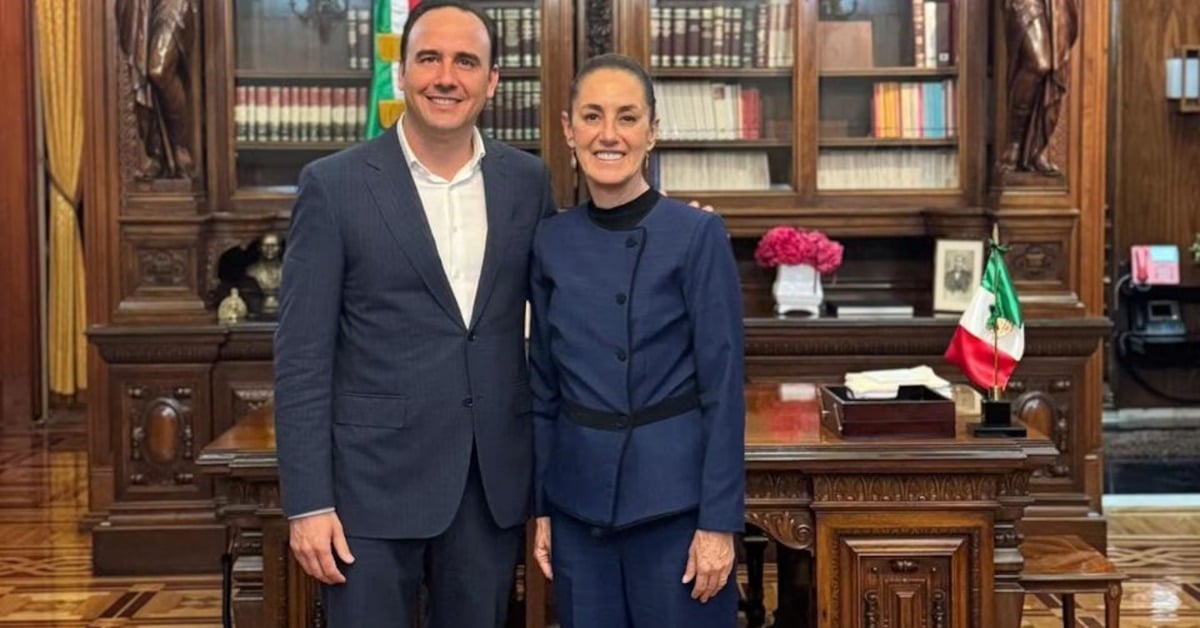
President Claudia Sheinbaum and Governor Manolo Jiménez met at the National Palace and put fresh political weight behind a set of projects designed to protect jobs, restore growth, and shore up public safety across Coahuila. The governor called it “an excellent meeting” and said the plan is to work “as a team for the good of Coahuila and Mexico,” framing the package as investment-friendly and security-minded.
The checklist coming out of the room is unusually concrete: revive the economy in the state’s central belt, address the uncertainty around AHMSA, push development in the Coal Region, and kick off a temporary employment program in La Laguna. Each piece targets a pressure point that touches families’ incomes and local confidence.
The economic core and AHMSA’s shadow
Coahuila’s industrial heart depends on steady demand, predictable logistics, and functional credit. When a major steel player stumbles, suppliers, transporters, and small workshops feel it fast. That is why the “reactivación” item sits at the top of the agenda and why the AHMSA situation was explicitly discussed, with the state seeking federal alignment as decisions take shape. The goal is to keep payrolls intact and avoid cascading closures while a long-term fix is pursued.
Alongside that, both governments flagged the Coal Region. Producing communities face price swings, environmental obligations, and aging infrastructure. The message from the meeting is that the region will not be left to slide; the state and federation intend to pair oversight with investment so coal towns are part of the recovery story rather than sidelined by it.
Jobs now and safety always
The headline near term measure is a temporary employment program in La Laguna. That kind of bridge program matters when factories retool, supply chains adjust, or municipal works need labor yesterday. Delivering it at speed can lower household stress and steady local demand while longer projects ramp up. The meeting also committed to stronger joint security operations, coordinated with federal security chief Omar García Harfuch—an explicit signal that any growth push will be paired with enforcement and prevention.
The infrastructure signal investors watch
Infrastructure was not an afterthought. The governor listed the modernization of the Saltillo–Monclova highway, a freight and passenger rail project, a new road to Derramadero, and a new IMSS hospital. These are not vanity line items. The highway move cuts times and accidents on a corridor that carries goods and staff every day. Freight-and-passenger rail—if executed well—can pull costs down and make the state more attractive for logistics-heavy industries. The Derramadero road is an industrial artery; widening and improving it reduces bottlenecks for the manufacturing zone. A hospital is a basic state capacity: it protects the workforce and absorbs population growth.
Crucially, the governor underscored that these works will be carried out with the federal government. In Mexican infrastructure, coordination is the difference between glossy renderings and cranes on site. The joint approach also reduces investor risk: when the state and federation move together, procurement, rights-of-way, and operating rules tend to resolve faster.
A livestock push for small producers
Beyond steel and highways, the two governments agreed to reinforce a livestock program aimed at micro, small, and mid-size producers. That choice matters in a state where secondary towns and rural corridors tie into larger industrial centers. When smaller ranchers can buy input, access credit, or upgrade herds, the effect shows up at feed stores, abattoirs, and regional markets. The meeting’s emphasis suggests this will not be a token line in the budget but a program with measurable reach.
The bottom line for Coahuila households
The output from this meeting is not just a press note. It is a map of the next moves that will determine whether factories keep hiring, whether ranchers can scale, whether border-facing corridors flow, and whether families feel safer on their commute. The governor closed with a promise to work “in conjunction with the Government of Mexico” to attract investment, generate employment, and guarantee security and well-being. That promise will now be judged in kilometers paved, shifts added, and permits issued.