Mexico will study the U.S. fentanyl WMD label, weighing legal risks, sovereignty concerns, and how to protect legitimate medical use.
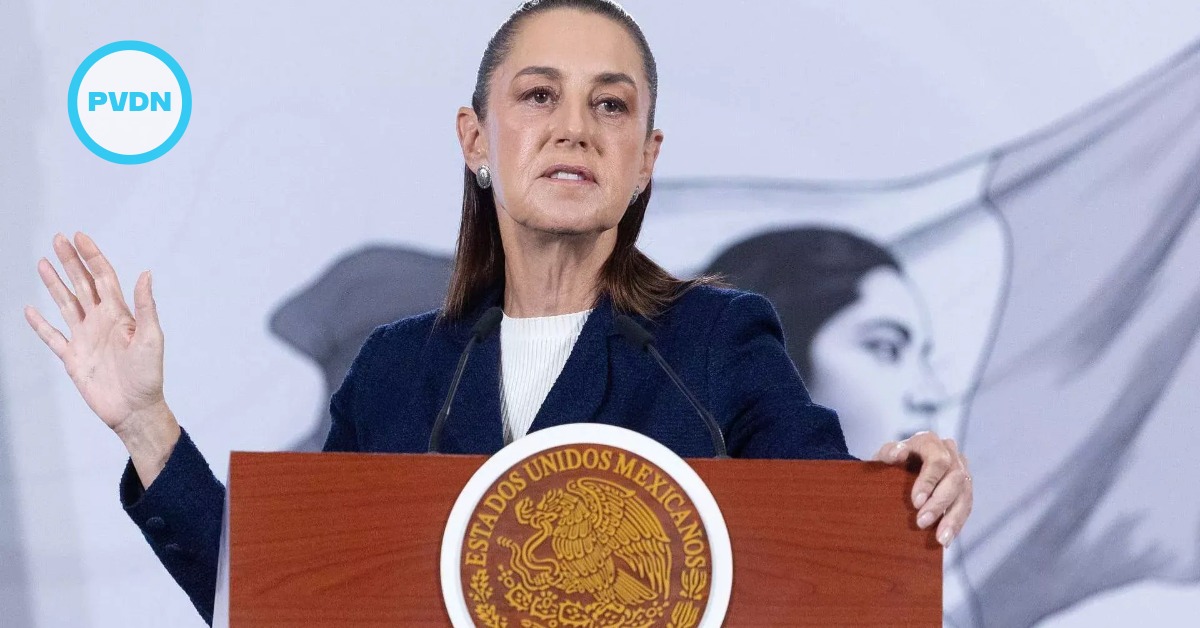
Mexico’s president says her government will take a close look at a new U.S. move that treats illicit fentanyl like a national security weapon. Speaking Tuesday in her morning press conference, Claudia Sheinbaum said Mexico will analyze the legal and political implications of Washington’s decision to classify illicit fentanyl, and key precursor chemicals, as “weapons of mass destruction.”
Sheinbaum framed the review as necessary, not symbolic. She said the U.S. action appears to have two paths. One would require changes that go through a lawmaking process. The other relies on executive action. Mexico, she said, needs to understand what each path could trigger.
She also drew a firm line on sovereignty. Asked whether this U.S. decision could revive talk of cross-border military action, Sheinbaum said Mexico’s sovereignty and territorial integrity are not up for discussion under any circumstances.
A second concern sat beneath the politics. Fentanyl is not only an illicit drug. It is also a tightly controlled medicine used in hospitals, including as an anesthetic. Sheinbaum warned that any international debate must keep the difference clear, or it risks confusion that spills into legitimate medical use.
What the fentanyl WMD label means
The U.S. executive order dated December 15 designates illicit fentanyl and “core precursor chemicals” as weapons of mass destruction. In its definitions, the order lists piperidone and other piperidone-based substances as core precursors. It argues that illicit fentanyl is closer to a chemical weapon than a narcotic, and it points to the drug’s extreme potency as the reason.
The order is also a blueprint for enforcement. It directs the Justice Department to pursue investigations and prosecutions tied to fentanyl trafficking, including the use of sentencing tools where applicable. It calls on the State Department and the Treasury Department to target assets and financial support networks linked to fentanyl production and distribution. It also pulls in the Department of Defense and the Department of Homeland Security, including updates to chemical-incident planning and the use of threat intelligence normally associated with WMD and nonproliferation work.
That framing matters because “WMD” is not just a scary label. Under U.S. legal definitions, weapons of mass destruction can include weapons designed to cause death or serious injury through toxic or poisonous chemicals, and in some contexts, their precursors. In plain terms, the label can widen which tools get used, and which agencies get priority roles.
This idea did not appear out of nowhere. A nonpartisan analysis published by the U.S. Congressional Research Service in 2022 noted that some stakeholders had pushed for a fentanyl WMD designation. It also noted that existing law already gave the executive branch significant options to act against fentanyl as an illicit drug and, in some scenarios, as a chemical weapon issue. The report laid out why the debate keeps resurfacing. It pointed to fentanyl’s death toll, its potential misuse in concentrated attacks, and the way supply chains can cross borders while staying hard to trace.
The same CRS analysis also placed Mexico in the center of the policy conversation. It said Mexico had emerged as the primary source and transit point for illicit fentanyl flowing into the United States, while many precursor chemicals were sourced from Asia, especially China. Those points often shape how U.S. officials talk about responsibility, even when production methods and routes shift over time.
For Mexico, the immediate issue is not rhetoric. It is consequences. A fentanyl WMD label can create pressure for sharper coordination on prosecutions, seizures, and financial tracking. It can also add force to arguments for tougher measures that Mexico has long resisted, especially when those measures brush up against sovereignty.
Mexico’s review and the red lines
Sheinbaum said Mexico will study what the U.S. move changes on paper and in practice. That includes the legal hooks it creates, the diplomatic risks it raises, and any spillover into areas Mexico considers off limits. Her government has not described a timeline for finishing that review, but she made clear it is underway.
She also used the moment to restate Mexico’s broader position on drug policy. Enforcement matters, she said, but it is not enough on its own. If governments do not address the roots of addiction, the market will simply shift. “If we don’t address the causes, it will be fentanyl or another drug,” she warned, tying the problem to mental health, social disconnection, and limited opportunities for young people, along with pressures inside families and schools.
That argument is not new in Mexican politics, but Sheinbaum’s emphasis was pointed. It signals how her administration may respond if Washington leans harder on a security frame. Mexico can pursue trafficking cases and violence linked to organized crime, while still insisting that demand reduction and treatment matter on the U.S. side of the border.
The medical question is also real. Fentanyl is an essential medicine when used under strict controls. Hospitals rely on it for anesthesia and severe pain care. Even when a U.S. order targets illicit production, the public headline can blur the line. Sheinbaum flagged that risk directly. She said Mexico must distinguish clearly between clinical use and illegal trafficking, so legitimate care is not caught in the political crossfire.
Sheinbaum also pointed to upcoming data meant to ground Mexico’s approach. She said results from a national drug-use survey, prepared by Mexico’s National Institute of Public Health, are expected next week. Those findings may shape how her government talks about prevention, public health, and the scale of domestic consumption.
For now, Mexico’s message is cautious and firm. It will read the fine print. It will measure the legal and political impact. And it will cooperate on crime without accepting any framing that could be used to push past Mexico’s red lines.