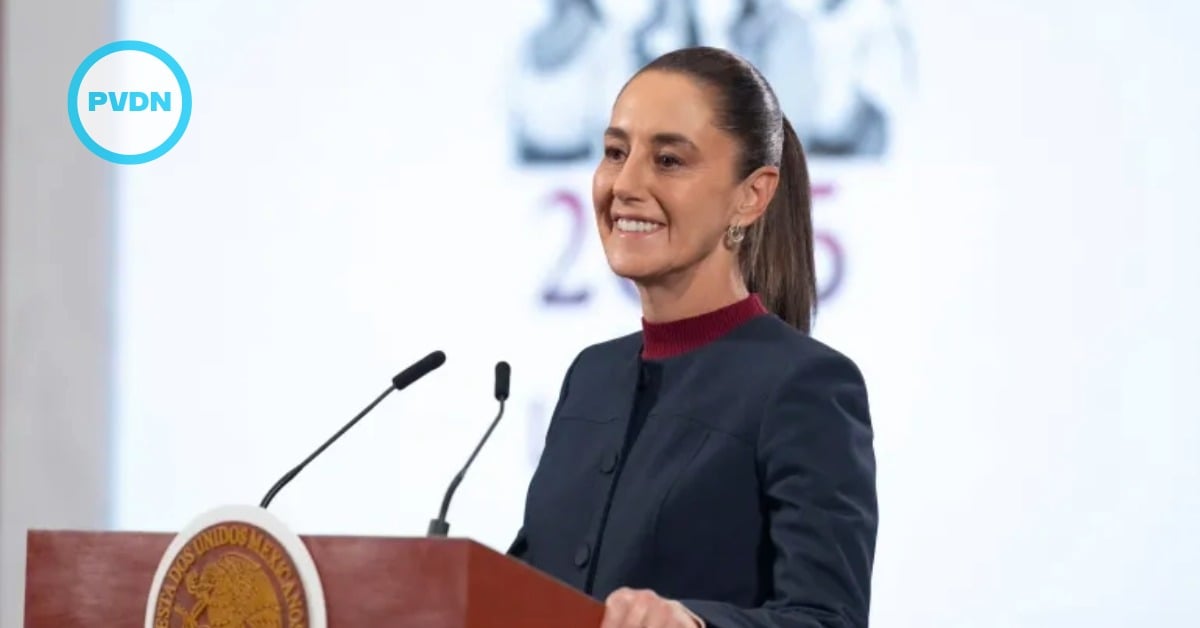
Mexico’s President Claudia Sheinbaum rejected the latest round of U.S. missile strikes on vessels Washington says are used for drug trafficking, including recent attacks near Colombia’s Pacific coast. “Obviously, we do not agree,” she said, adding that maritime operations “must follow international law.” Her government, she noted, has communicated that position directly to U.S. officials.
Why this matters for Mexico’s diplomacy
The U.S. campaign—first concentrated in the Caribbean—moved into the eastern Pacific this week, with Washington confirming strikes that killed five people and destroyed two boats. The Pentagon then announced a tenth attack today, bringing the death toll reported by U.S. officials and international media above forty since early September. The shift widened the geographic scope and the political stakes across the region.
Colombia’s reaction has been blunt. President Gustavo Petro and his government condemned the operations after boats were hit off the country’s Pacific coast, arguing the actions violate international law and damage a long-standing partnership with Washington. His foreign ministry urged an immediate halt. That anger has only grown as details surface about casualties and the lack of judicial process.
Sheinbaum’s message lands between two red lines: Mexico continues to cooperate with the United States on interdictions and intelligence, yet insists that enforcement at sea must respect legal frameworks on the use of force, jurisdiction, and the treatment of detainees. That balance reflects Mexico’s recent posture—active against smuggling networks but wary of escalatory tactics that could draw neighbors into open-sea conflict narratives.
Sheinbaum rejects US strikes
Sheinbaum rejects US strikes as a matter of principle and practice: alleged criminal conduct on the high seas should trigger pursuit, boarding, evidence gathering, and prosecution—not stand-off strikes that leave families and courts with bodies and questions. Her position also mirrors a broader Latin American unease with framing counter-narcotics as an “armed conflict,” a characterization U.S. officials have leaned on to justify rules of engagement far from domestic courts. As Sheinbaum put it, there are clear “international laws on how to operate” in such cases, and Mexico expects those rules to be followed.
The political risk for Washington is a regional backlash that undermines practical cooperation at the very moment traffickers diversify routes and technology. After a Caribbean strike last week, two survivors—one Colombian, one Ecuadorian—were repatriated; one was released without charges by Ecuadorian prosecutors, a detail that sharpened questions about target validation and due process. If the U.S. keeps scaling the operation, expect louder calls—from Mexico City to Bogotá—for transparency about rules, evidence standards, and post-incident accountability.
For Mexico, the path forward looks familiar: protect sovereignty and human rights while staying engaged on the operational work that actually reduces harm—intelligence sharing, seizures, arrests, and judicial cases that stick. That is slower than a missile, but it is also how the rule of law travels. And that, Sheinbaum is signaling, is where Mexico will stand as this campaign spreads from the Caribbean’s blue water to the Pacific’s gray zones.