President Claudia Sheinbaum said Thursday that the right to housing must be compatible with real-estate development, placing the federal government in the middle of one of Mexico City’s most sensitive policy debates.
Her remarks came after questions about a proposal in the capital to cap annual rent increases at inflation. She said housing costs in Mexico City have climbed sharply for both buyers and renters, and acknowledged that gentrification has affected several parts of the city. At the same time, she said the answer is not to reject private construction outright.
That framing matters. It signals that the federal government wants to avoid presenting the issue as a simple contest between tenants and developers. Instead, Sheinbaum argued that growth, legal certainty, and affordability must move together. She also said officials have already held talks with both residents and developers on the rent policy.
For many readers outside Mexico, the key point is simple. This was not a call to stop building. It was a call to keep building under clearer rules, while also expanding access to housing that ordinary households can actually afford.
Why the Mexico City rent debate matters
The immediate backdrop is Mexico City, where local officials are pushing a broader housing agenda as rent pressure becomes harder to ignore. The city government has been moving toward a plan that would anchor rent increases to inflation, while also taking on related issues such as evictions and legal protections in the rental market.
That debate has become politically important because it touches several pressures at once. Rents have risen faster than many local incomes. Buying a home has become increasingly difficult in central areas. At the same time, city leaders do not want to send a message that private investment is unwelcome.
Sheinbaum’s intervention suggests the federal government sees the issue in similar terms. Her message was that housing access, urban services, and private development should be treated as linked questions. In practice, that means public officials are trying to keep investment flowing while responding to anger over rising rents and the shrinking supply of affordable homes.
The political challenge is clear. If the government leans too far toward deregulated development, it risks deepening fears of displacement. If it leans too far toward restriction without adding supply, it risks freezing investment and worsening shortages. Thursday’s comments showed Sheinbaum trying to occupy the middle ground.
The city’s proposal is broader than a rent cap
The rent issue is only one part of the local plan. Mexico City officials have tied the proposed reform to a larger housing strategy that includes social housing, anti-eviction measures, and the creation of a tenant defense office intended to support both landlords and renters.
That matters because the capital is not treating this as a one-line rent rule. Officials are trying to build a larger framework for how the rental market should function. The local government has also linked the issue to neighborhood stability and the idea that longtime residents should not be pushed out simply because prices rise faster than wages.
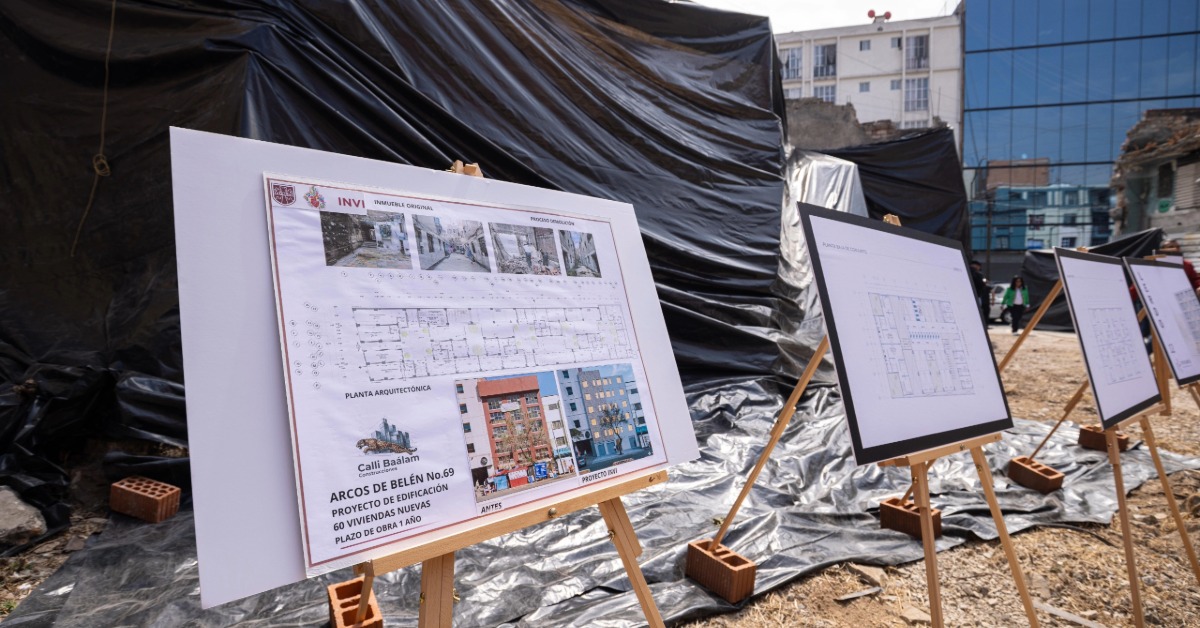
Earlier this month, Mayor Clara Brugada also connected the rent debate to a new construction push in the historic center, where her administration announced thousands of planned housing units and framed them as part of a strategy against displacement and depopulation.
In other words, city officials are trying to pair regulation with new supply. That is important because rent policy on its own rarely settles a housing crisis. Governments usually need some mix of price discipline, legal enforcement, and additional construction to change the direction of the market.
The federal housing program shapes the message
Sheinbaum also tied the discussion to her administration’s national housing goal. She referenced the federal target of building 1.8 million social housing units during her term, with homes aimed at lower price points than much of the private market now offers.
That national target helps explain why she is trying to balance two messages at once. On one side, her government wants to show that it recognizes the strain many households face. On the other, it wants to reassure investors and builders that private development still has a place in Mexico’s housing future.
The contrast is especially sharp in Mexico City. Sheinbaum noted that small apartments can carry price tags far beyond what many residents can realistically pay. She also pointed to a gap between land prices and local incomes. That mismatch is central to the current housing tension. When land and housing values start to resemble those of much wealthier global cities, but salaries do not, affordability becomes a political issue very quickly.
Her answer was not to dismiss development, but to insist that development must operate within the law, urban regulations, and a broader public obligation to expand access to housing.
What comes next
The next steps will likely unfold at the city level first. Mexico City’s proposal still has to move through the local legislative process, and that will determine how far officials go on rent regulation, tenant protections, and enforcement.
Even so, Sheinbaum’s comments gave the issue wider national weight. They showed that housing affordability is no longer being discussed only as a local complaint or a neighborhood dispute. It is now part of a larger federal narrative about social housing, urban inequality, and the limits of market-led development in high-cost cities.
For readers watching Mexico’s property market, the takeaway is straightforward. The government is not signaling a retreat from construction. It is signaling that future housing policy will be judged by whether it can protect access to homes without shutting down investment. That balancing act is now at the center of the story.