After Washington’s dramatic raid in Venezuela, Donald Trump turned his attention north and revived a familiar threat: military force to hit the cartels. Claudia Sheinbaum’s answer was blunt. Mexico will work with the United States, but no foreign troops will operate on Mexican soil. Behind that short exchange is a bigger story about sovereignty, fentanyl politics, and the quiet bargaining that shapes day-to-day security for people living in Mexico. What, exactly, is Mexico offering the U.S.—and where is the hard line?
Sheinbaum draws a hard line on intervention
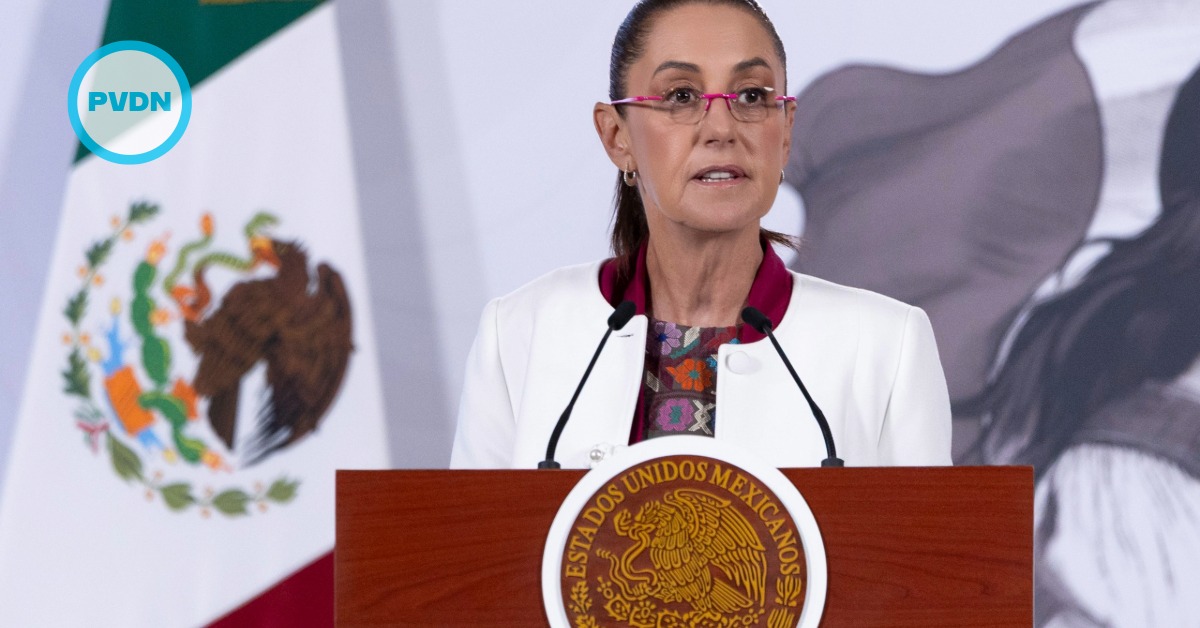
President Claudia Sheinbaum used a direct phrase that landed with purpose: US military action in Mexico is not an option. She made the point while addressing questions about Donald Trump’s comments that “something” must be done about Mexico because, in his framing, cartels run the country.
For Sheinbaum, the message wasn’t just for Washington. It also speaks to a Mexican public that has spent decades watching security strategies rise and fall, and that remains deeply sensitive to anything that looks like foreign intrusion. Her stance keeps the door open to cooperation while making the boundary unmistakable: Mexico will work with the United States on security, but Mexico will not accept U.S. forces operating on Mexican territory.
That distinction matters because it shapes what collaboration can look like in practice. Intelligence sharing, joint investigations, financial tracking, coordinated arrests, and border enforcement can all expand without crossing the political red line of boots-on-the-ground operations.
Why the Venezuela operation changed the tone
The timing is the point. Over the weekend, the U.S. carried out a military operation in Venezuela that resulted in Nicolás Maduro being captured and taken to the United States to face criminal charges. Sheinbaum publicly condemned that intervention and leaned on long-standing principles in Mexico’s foreign policy, including non-intervention and respect for sovereignty.
Trump’s remarks about Mexico came immediately after that action against Venezuela, which raised the stakes for every country watching from the region. In Mexico, the fear isn’t abstract. It’s rooted in history, nationalism, and the basic idea that security policy—whatever its flaws—must remain under Mexican command.
Sheinbaum’s pushback is also a way to stop a dangerous expectation from taking hold. If the U.S. military force is presented as a solution in one Latin American country, the argument can be recycled elsewhere. Her response tries to shut that door early, before rhetoric becomes a policy trial balloon.
Cooperation without subordination
Sheinbaum didn’t argue for less cooperation. She argued for a different kind of cooperation.
Her core framing is simple: Mexico is already collaborating with the United States to weaken cartels, and that work should deepen under a principle of mutual respect. She has also made clear that Trump has raised the idea of the U.S. military entering Mexico more than once, and that Mexico’s answer has been a firm no—not only on sovereignty grounds, but because, in her view, it isn’t necessary.
That last part is strategic. If Mexico says “no” while also projecting capability, it avoids looking like it is refusing help out of pride while failing to control violence. The implicit promise is that Mexico will deliver results through its own institutions, even if it uses U.S. intelligence and coordination to do it.
At the same time, U.S. pressure isn’t going away. The Trump administration has already widened its policy toolbox by designating major criminal groups, including Mexico’s Sinaloa Cartel and others, as terrorist organizations. That label changes the political weather in Washington. It creates momentum for harder-edged approaches, and it fuels talk of unilateral action when U.S. domestic politics demand a show of force.
“Shared responsibility” is the real argument
Sheinbaum’s most important line may not be the rejection of intervention. It’s the phrase she paired with it: “shared responsibility.”
In her telling, Mexico’s obligations are clear. Her government must reduce violence at home and prevent drugs from reaching the United States. But the U.S. has obligations too. It must do more to stop weapons from flowing into Mexico and confront the criminal networks that operate on U.S. soil.
This argument has deep roots in the modern security relationship between the two countries. For years, U.S.-Mexico security frameworks have been sold as partnerships built on shared burdens—Mexico confronting production and trafficking, the United States confronting demand, weapons trafficking, and the movement of illicit money. The promise has often been easier to recite than to deliver. Still, it remains Mexico’s most vigorous political defense when Washington’s rhetoric turns punitive.
For expats living in Mexico, this shared-responsibility framing is not just diplomatic language. It’s a reminder that Mexico’s security situation is shaped by forces on both sides of the border: U.S. drug consumption, U.S.-sourced firearms, binational money flows, and criminal logistics that don’t care where the customs line sits.
What this means for expats living in Mexico
In the short term, Sheinbaum’s stance is meant to calm a specific fear: that Mexico could wake up to a sudden “Venezuela-style” operation being floated as a serious policy option. Her answer is designed to make that scenario politically toxic and diplomatically costly.
But the larger story is that security cooperation will likely intensify even as public rhetoric gets sharper. Mexico can expand collaboration in ways less visible to ordinary residents—such as information sharing, targeting financial networks, and tightening port and border inspections—while continuing to insist that enforcement operations remain Mexican-led.
That combination can feel contradictory from the outside: more cooperation alongside more public resistance. For Mexico’s government, it’s the only workable lane. It offers Washington a tangible partnership while protecting a foundational political principle at home.
The risk is that heated talk can still spill into real-world friction. If U.S. officials keep escalating public threats, Mexico’s government may harden its tone further, and cooperation could become more transactional and less trusting. For people living here, the most noticeable effects tend to show up indirectly: changes in travel advisories, border scrutiny, airport procedures, or even the mood in bilateral relations that can ripple through markets and the peso.
Sheinbaum is signaling that Mexico will not be pressured into accepting a loss of control. She is also signaling that Mexico is not walking away from the fight. The coming weeks will show whether Washington agrees with that balance—or keeps trying to tip it.