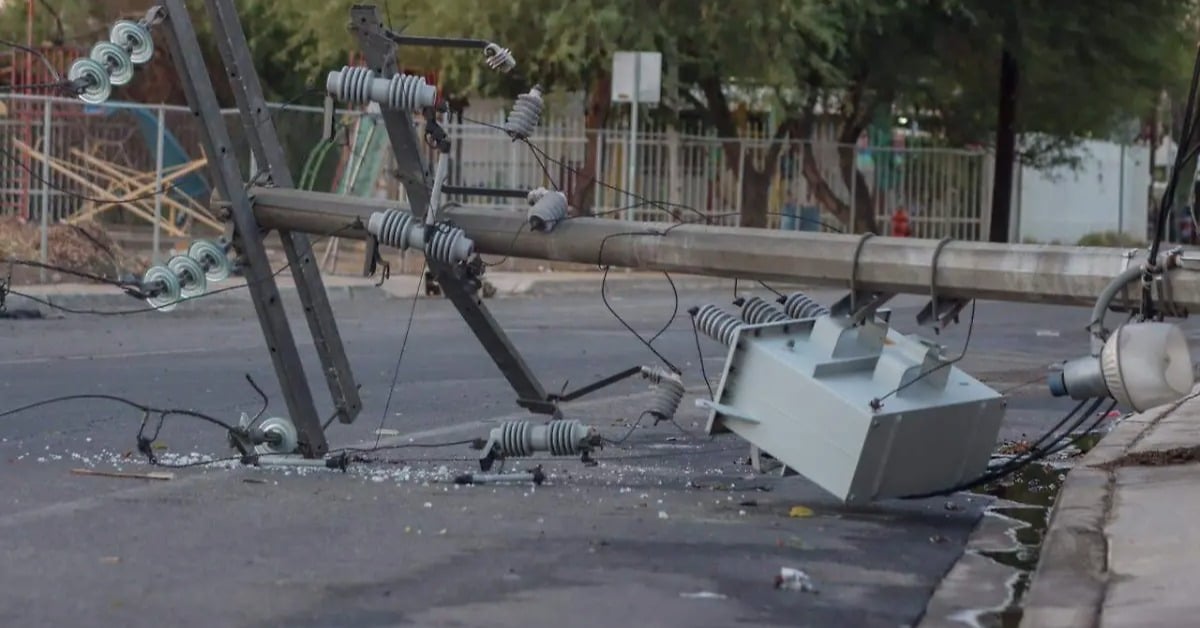
A fast-moving storm ripped through Mexicali with winds and lightning that toppled power poles, darkened neighborhoods, and forced emergency crews to work through the night. City officials warned that more electrical storms could follow. As the grid came back in pieces, residents on the west side reported long waits, blocked streets, and downed lines. Here’s what failed, what’s being fixed, and what to expect if the weather turns again.
Storm damage in Mexicali
The mayor reported 160 medium- and low-voltage poles damaged across the city after Sunday’s storm. Forecasts also indicated an 80% chance of another electrical storm the following day, prompting additional warnings to residents.
Counts continued to shift as crews accessed blocked streets. By Monday, other outlets tallied 157 fallen CFE poles and at least 5,500 customers without power, concentrated on the city’s west side.
City hall said teams prioritized hazardous spots first—live lines, intersections, and hospitals—before moving to secondary outages. The municipality also opened a shelter and paused activities at the Palacio Municipal after a blackout.
What failed and why it matters
The damage mapped closely to exposed corridors where wind has a clean run at wooden distribution poles. Lightning and wind-borne debris snapped crossarms, slashed spans, and blew fuses. These are common weak points during late-summer storm bursts in the Mexicali Valley.
The grid impact was broad rather than catastrophic. Distribution circuits tripped in clusters, which explains why some colonias saw a quick return while adjacent blocks stayed dark.
Repairs, timelines, and partial restoration
By Monday afternoon, officials stated that CFE had restored service to approximately 83% of affected users, while replacement work continued on damaged poles and transformers. The city urged patience as crews patrolled lines, swapped hardware, and re-energized feeders in stages.
Local reporting also noted that the storm hit 28 distribution circuits—another reason some pockets remained dark while nearby areas lit up. Re-energizing main feeders first, then side taps, is standard practice to bring the most people back fastest.
Civil Protection warned that storms with lightning could persist through the week, especially over San Felipe, Ensenada, and Mexicali’s urban and mountain areas. Expect short-notice advisories, more tree and pole falls in saturated soils, and on-off outages if new convective cells form. Keep devices charged and avoid flooded or debris-strewn streets.
Accountability and resilience
Storms expose old problems. West-side neighborhoods have seen repeat outages during wind events this year. Replacing broken poles reduces immediate risk, but longer-term resilience needs sturdier hardware, better vegetation management, and faster isolation switches on vulnerable feeders. Those choices cost money, yet they save hours of downtime when the next cell hits.
As the city clears the current backlog, residents should expect more targeted maintenance in the hardest-hit circuits. If you continue to file precise location reports—complete with cross streets, pole numbers, and photos—CFE can triage more efficiently on the next pass.