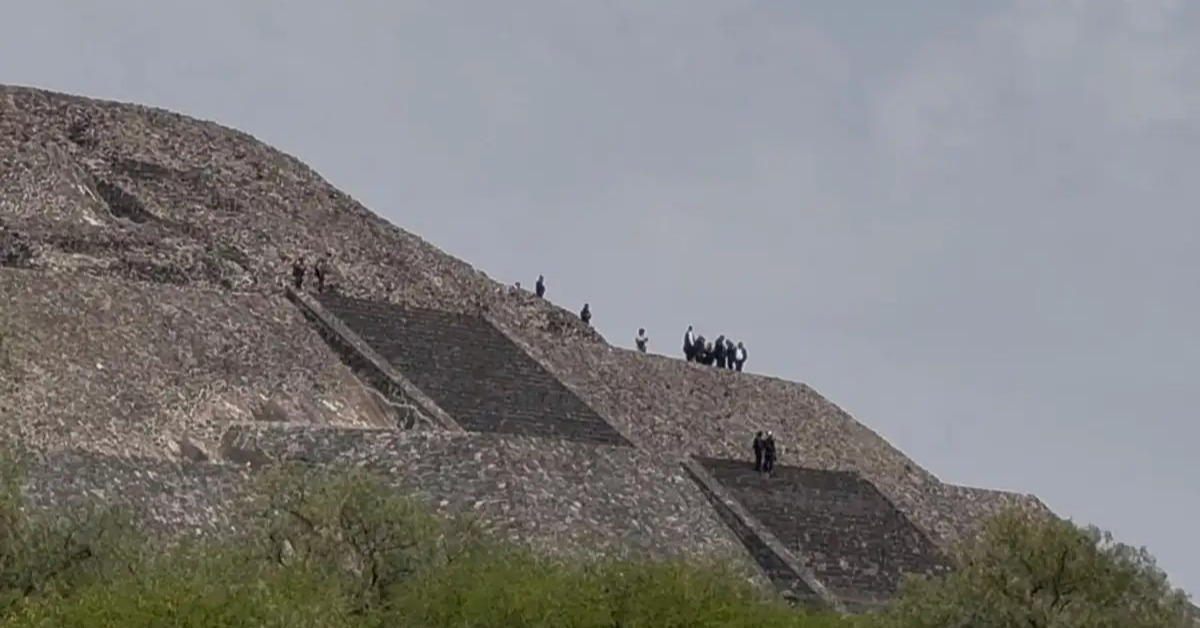
The attack at Teotihuacán now appears to have been a planned lone-wolf assault, not a spontaneous outburst. Authorities say the gunman arrived in an Uber, checked into a nearby hotel the previous day, and returned to the archaeological zone before opening fire from the Pyramid of the Moon on Monday. Officials say he acted alone. He later died at the scene after the confrontation ended. A Canadian woman was killed. Thirteen other people were hurt. Authorities say seven suffered gunshot wounds, while others were injured during the panic and escape.
By Tuesday, officials said several injured victims had already been released, while the remaining patients were hospitalized in stable condition. Those affected included foreign visitors from the United States, Colombia, Brazil, Russia, the Netherlands, and Canada. Federal and state authorities said embassies, consulates, and families were being contacted directly. For international readers, that detail matters. This was not an isolated clash in a remote area. It struck one of Mexico’s best-known visitor sites, where foreign tourists are part of the daily flow.
Why this case matters beyond central Mexico
That is why the case carries weight far beyond the State of Mexico. Teotihuacán is a UNESCO World Heritage Site and one of the country’s most visited archaeological zones. It sits just outside Mexico City and is a standard stop for international travelers, tour groups, and school visits. Violence of this kind is highly unusual in a place like this. The site was closed after the shooting, and officials said it would remain closed while the investigation and security review continue.
The shooting also comes at a sensitive moment for Mexico’s tourism image. The country is preparing to welcome large numbers of international visitors in the run-up to the 2026 World Cup, and public officials are under pressure to demonstrate that major attractions can be protected without turning them into fortified spaces. For visitors, the immediate question is simple. How did a man carrying a handgun, ammunition, and a knife make it into a globally known heritage site without being stopped first? That question now sits at the center of the response.
Why investigators are focusing on a copycat pattern
Investigators say the gunman carried literature, images, and handwritten material tied to past acts of mass violence in the United States. Authorities described that as a possible copycat pattern, meaning an attack modeled on earlier crimes. The reference point appears to include the April 1999 Columbine massacre, which happened on the same calendar date. That does not settle the motive on its own. But it does suggest premeditation, symbolic timing, and an effort to mirror a well-known act of mass violence.
That distinction matters because it points to a different security challenge. Mexico regularly confronts organized crime, targeted killings, and territorial violence. A copycat mass attack at a heritage site is something else. It does not fit the usual public understanding of violence in Mexico, and it raises different prevention questions. Security plans built around cartel threats are not the same as screening for a single armed attacker seeking fear, spectacle, and international attention.
What may change after the attack
President Claudia Sheinbaum said the government will review security protocols at archaeological sites and work to prevent weapons from entering them. Officials have also signaled tighter access controls and stronger visible security at major tourist destinations. Those steps may sound obvious in hindsight. In practice, they raise difficult questions about staffing, equipment, and how to protect open cultural spaces without changing their character.
For readers living in Mexico or planning to travel within the country, the broader takeaway is not that archaeological sites have become routine targets. They have not. What this attack shows is that a place long treated as symbolically safe can still be vulnerable when screening is limited, and that the threat can come from a single determined person. The investigation is now about more than identifying a gunman. It is about whether Mexico’s most visible cultural sites are prepared for risks they were never designed to confront.