Posadas blend 16th-century faith, neighborhood ritual, and seasonal food—ponche, tamales, and sweets—across Mexico each December.
December in Mexico has its own soundtrack. You hear it in a call-and-response at the front door, in a chorus that moves from house to house, and in the clink of cups filling with something hot. A posada can look different from one neighborhood to the next, but the heartbeat is familiar. People reenact the search for shelter. Then they feed each other like the night depends on it.
That food is not an afterthought. It is the point where history becomes personal. A steaming pot of fruit ponche can pull a shy cousin into the kitchen. A stack of tamales can keep a courtyard talking past midnight. A bag of aguinaldos can make kids feel rich with simple things, even if it is just sugar cane and peanuts.
Posadas also work as social glue. They give neighbors a reason to cross the street and knock. They let families practice welcome without needing a special occasion beyond the season itself. And they keep older relatives at the center of the room, because they are often the ones who still remember the songs, the rhythm of the ritual, and the flavors that “should” be there.
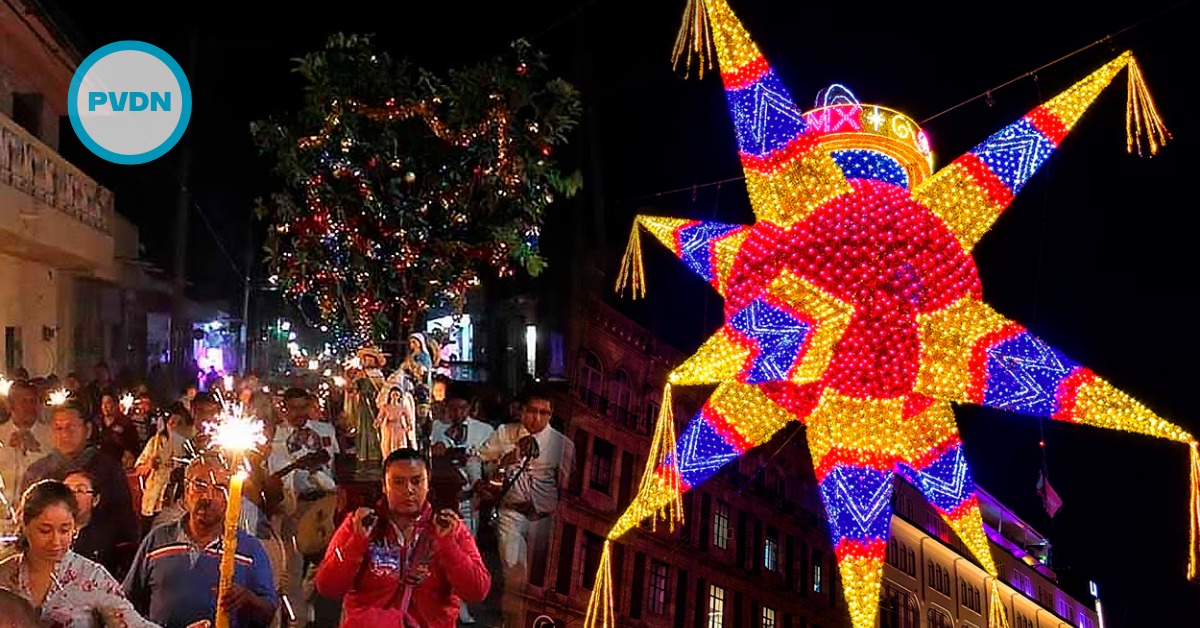
There is a small choreography to it all. Someone hands out candles or sparklers. Someone finds the lyrics. Someone stirs the pot until the fruit starts to soften. When the singing ends and the door “opens,” the night flips from performance to party.
You can also see posada season in the shopping bags. Tejocotes show up at markets. Piloncillo bricks vanish fast. Paper cups pile up in kitchens. These are ordinary items that, for a few weeks each year, become the props of a tradition.
Today’s posadas carry a story that starts in the 16th century. The ritual arrived with Catholic evangelization and learned to live alongside older seasonal celebrations. Over time it moved from convent courtyards into streets, homes, school patios, and workplace parties. In many places, the prayers are shorter now. The shared table is not.
Mexican posadas tradition
The word “posada” points to lodging, and the ceremony turns that idea into theater. One group plays the travelers, asking for a place to stay. Another group answers from behind a closed door. The back-and-forth builds until the door opens and everyone comes inside. In its most traditional form, the scene echoes the biblical journey of Mary and Joseph before the birth of Jesus, and it sets the tone for nine nights of gatherings that run from December 16 through December 24.
Many accounts trace the organized celebration to the late 1500s in what is now the State of Mexico. In Acolman, an Augustinian convent is widely linked to early “misas de aguinaldo,” a novena of masses held in the days before Christmas. Local records describe a papal permission granted in August 1586 for those nine masses, and they place the first cycle of celebrations in the 1587 season. That early model mixed worship with dramatization and community participation, which helped it spread far beyond a single convent and into new communities.
Acolman’s story also helps explain why a posada feels like both catechism and carnival. The same sources connect the early celebrations to the rise of the piñata as a teaching tool. In the Christian symbolism promoted during the colonial period, the classic seven-pointed form represented the seven deadly sins. The blindfold stood for faith. The stick stood for virtue. The fruit and sweets inside were framed as the reward for resisting temptation.
Not every family talks about that meaning now, and many never did. Still, the object did its job. It turned a lesson into something physical. It gave children a role in the night, and it gave adults a shared moment of laughter. That is one reason the piñata survived as posadas spread into homes and streets, where formal sermons did not.
This is where posadas show Mexico at its most adaptable. In some towns, the procession still walks the same route each year. In big cities, security gates and apartment living can shrink the route to a hallway, a rooftop, or a single doorway between friends. Some families keep the full litany. Others keep only the opening line. Either way, the “asking” matters. It is a rehearsed way to practice welcome, even when life feels tight.
The tradition of the aguinaldo followed a similar path. It began as a small gift tied to the religious gatherings, and it became a bag of seasonal treats that says, “thank you for coming.” In many homes that still means fruit, nuts, and sugar cane. In others it means packaged candy. The point is not the brand. It is the gesture of sending guests home with something that feels abundant.
In Acolman, that link between tradition and treats remains visible. The town is closely associated with piñata-making, and it has hosted a piñata fair since the late 19th century. You can read that as tourism, or as pride, or as both. Either way, it shows how a ritual that began in a convent atrium kept finding new stages.
Food is the most persuasive reason posadas endured. It makes the ritual easy to join, even for people who are not especially religious. It also turns the night into an act of care. Hot drinks keep hands steady while candles drip. Filling dishes give the host permission to stop worrying and start visiting.
Even the “traditional menu” is flexible. Families borrow from each other, and cities borrow from everywhere. Some neighborhoods treat posadas as a reason to cook one big dish, rather than a full spread. Others keep the old rhythm of sweet, warm, and shared, because that is what makes the night feel like December.
What has changed fastest is not the date or the script, but the pace of life around it. When people work late or travel across town, the food often becomes the shortcut. A pot that can feed many matters more than a perfect spread. A store-bought dessert may replace a slow-cooked one. The party adjusts, and the ritual stays recognizable.
What the season tastes like at a posada
Start with ponche, because it signals that the night has officially begun. In many homes it simmers in a clay pot with tejocote, guava, apple, sugar cane, prunes, cinnamon, and piloncillo. Some add hibiscus or tamarind. Some add a splash of alcohol for adults. The core idea stays the same. Warm hands, warm throats, warm spirits.
Alongside it, atole and champurrado do the heavy lifting. They are thick, corn-based drinks that make a December gathering feel protective. Atole itself reaches back to pre-Hispanic maize cooking, and later took on ingredients such as sugar, milk, cinnamon, and fruit. In posada season, people often lean on guava, a fruit that also perfumes the ponche.
Then come the bites you can hear. Buñuelos crackle when they break. Churros vanish fast when there is hot punch nearby. Tamales appear because they travel well and feed a lot of people without fuss. In many urban posadas, pozole has become a common main dish, and tostadas laid out for self-assembly keep everyone moving and talking.
There is also a quieter story told by what is missing. Old-style colaciones, those hard sugar-coated candies that once dominated aguinaldo bags, now compete with brightly wrapped sweets. Slow desserts like candied sweet potato and candied squash appear less often than they did in grandparents’ kitchens. Crystallized fruits and homemade seasonal breads can be harder to find when a bakery box is faster.
None of that means the tradition is fading away. It means it is doing what it has always done. It is folding new habits into an old frame. The ritual can shrink or stretch. The menu can change. The point remains a shared night that makes room for one more person.
In the end, posadas survive for the same reason they started. They offer a script for belonging. You show up. You ask. The door opens. You eat together. And for a few hours, you give each other the kind of shelter that fits inside a cup of ponche.