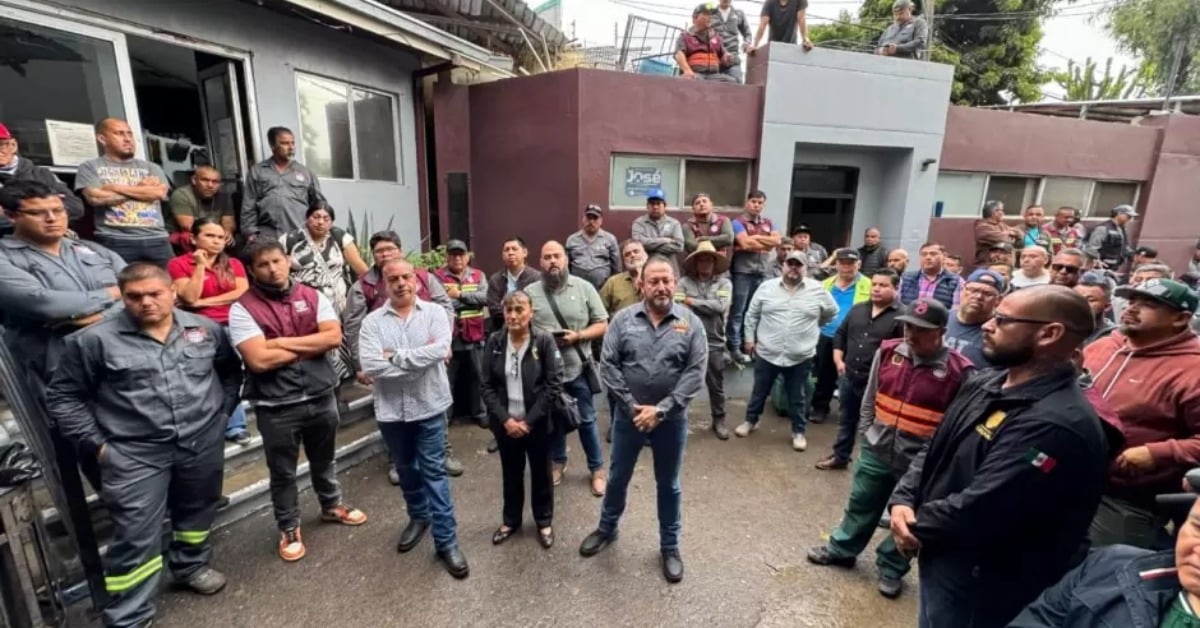
Parks and Gardens crews in Tijuana walked off the job, citing rusty trucks with failing brakes and a lack of basic tools as reasons for the risk they face. Their union backed the stand-down and filed a formal petition with City Hall. Behind the immediate dispute lies a stack of national rules that require employers to provide protective gear and maintain safe machinery. We break down what workers say is happening on the ground, what the law requires, and how this stoppage fits into a larger year of labor pressure on the city.
Tijuana parks workers stoppage
Workers from the municipal Parks and Gardens Department halted tasks on Thursday, citing “unsafe vehicles” and “insufficient basic equipment.” One crew described trucks so deteriorated that some lacked reliable brakes, alongside out-of-service restrooms and shortages of essential tools.
Union leader José Guillermo Aldrete Casarín stated that the Sindicato de Burócratas had already submitted a formal request to municipal authorities and would stand in solidarity with the workers until conditions improve. His statement frames the stoppage as a safety issue first, not a political one.
What workers say is broken
Accounts shared on local outlets and social clips match the grievances: vehicles in poor mechanical shape and crews left without basic personal protective equipment. A Uniradio report said employees flagged risky units; separate clips on regional pages show the work stoppage outside municipal facilities. Together, they reinforce the same core claim: unsafe gear, unsafe trucks, and inadequate PPE.
The details in El Mexicano are specific. Workers described trucks that “put their safety at risk” due to brake problems, as well as bathrooms that were under repair for months, and a shortage of basic tools. Those conditions, they argued, make routine pruning, hauling, and clean-up duties dangerous.
What the law requires the city to provide
Mexico’s updated NOM-017-STPS-2024 requires employers to select, provide, and supervise the correct use of personal protective equipment. That includes documenting risks by task and ensuring workers actually have, and use, the right gear.
For machinery and vehicles, NOM-004-STPS-1999 requires centers of work to maintain equipment in a safe operating condition and implement protection systems to prevent injuries during operation and maintenance. If the allegation about failing brakes is accurate, that would run directly against the standard’s core duties.
The Federal Labor Law (LFT) also sets baseline obligations for employers, including complying with official safety norms and providing the necessary means to protect workers. Municipal governments, as employers, fall under the same framework.
A year of labor pressure at City Hall
This stoppage does not come out of nowhere. In June, approximately 1,600 municipal employees staged a brief work stoppage and secured responses on licensing and staffing; in July, firefighters joined bureaucrats in a separate action over working conditions. Those episodes set the context for today’s dispute in Parks and Gardens.
While the city has highlighted recent reforestation and park-focused initiatives in official channels, Thursday’s stoppage centers on the basics: roadworthy trucks, working bathrooms, and proper gear, the union says its petition asks City Hall to address those immediate needs.
What it means for residents
Parks crews keep public spaces usable by pruning trees before storms, removing debris, repairing irrigation systems, and clearing hazards. When they stop, service delays accumulate quickly. If vehicles are unsafe and PPE is missing, work slows even more or becomes risky. The standards are clear, and they exist to prevent exactly that kind of trade-off between speed and safety.
For residents, the practical test will be whether the city and union translate a one-day stoppage into concrete fixes: inspected and repaired trucks, stocked PPE, and a clear schedule for restoring facilities. That’s the difference between a headline and a safer workday.