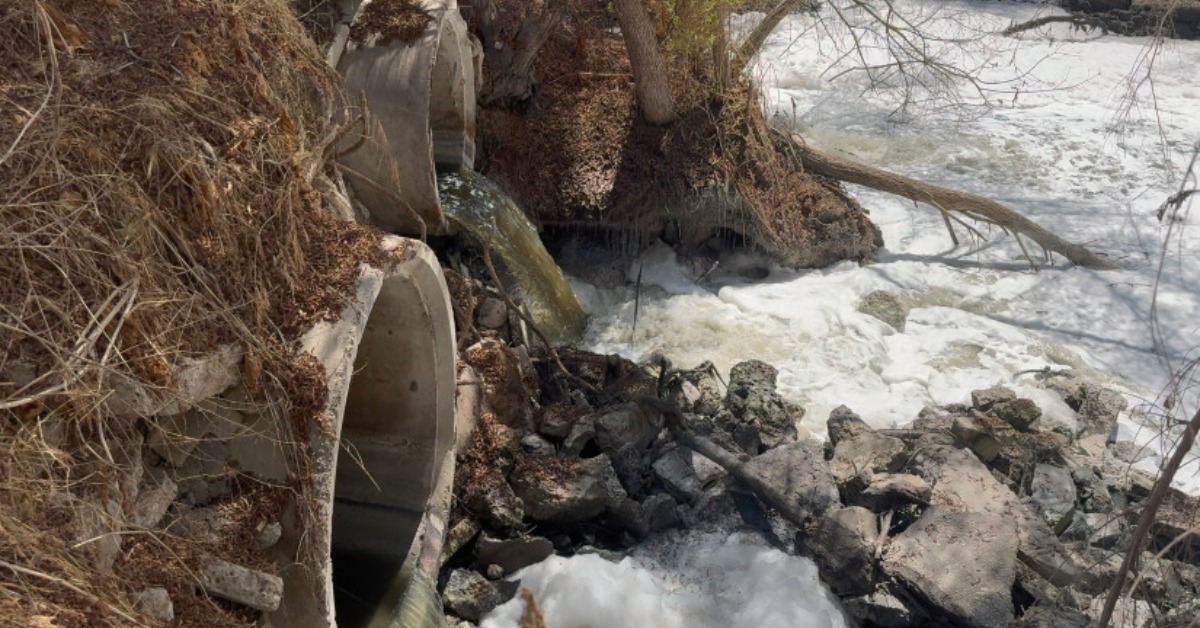
The Tijuana River pollution crisis is again drawing attention after new reporting highlighted the daily flow of sewage and industrial waste from Tijuana into the cross-border watershed.
The estimate cited by local officials is more than 132 million liters a day, equal to about 35 million gallons. The flow includes domestic wastewater, industrial waste, plastics, tires, and other debris that move through Tijuana’s canyons and toward San Diego County.
The river does not stop at the border. It crosses into Southern California and empties into the Pacific Ocean. That means pollution from Tijuana can affect neighborhoods, beaches, estuaries, and public spaces in the United States.
For residents near the river, the concern is not only dirty water. It is also the air.
Why the river carries so much contamination
The problem has built up over decades. Tijuana has grown quickly, while parts of its wastewater system have struggled to keep up with population growth, urban runoff, and industrial activity.
When sewer lines, pump stations, or treatment systems fail, wastewater can flow through canyons and channels that eventually drain into the Tijuana River Valley. Stormwater can make the problem worse by carrying trash, sediment, and untreated waste downstream.
The result is a cross-border pollution route. Waste generated in one country can affect homes, schools, beaches, and businesses in another.
This matters beyond Baja California. It shows how fast urban growth, aging infrastructure, and weak wastewater controls can become a regional public-health issue.
Why health concerns now include the air
The health debate has shifted because researchers and local agencies are looking beyond beach water. The focus now includes hydrogen sulfide, a gas linked to sewage and the smell of rotten eggs.
A peer-reviewed study found that polluted water in the Tijuana River can release large amounts of hydrogen sulfide and other gases into the air. Researchers measured peak hydrogen sulfide levels thousands of times higher than those typical of an urban area.
Residents in affected communities have reported headaches, nausea, eye and throat irritation, breathing discomfort, fatigue, and other symptoms. Some have also described migraines, allergies, and respiratory problems that they associate with repeated exposure.
Officials have been careful about what can be proven medically. Individual symptoms still require medical evaluation. But public agencies now treat the odor and gas exposure as a serious quality-of-life and health concern.
What residents are being told to do
San Diego air-quality officials now monitor hydrogen sulfide levels at several community sites, including areas near San Ysidro, Nestor, and Imperial Beach.
Public guidance tells residents to limit outdoor activity when odors are strong, keep doors and windows closed, and use air conditioning or air purifiers when possible. People with asthma, COPD, or other lung conditions are advised to keep rescue medication available and seek medical care if symptoms worsen.
The guidance also recognizes that odor conditions can change quickly. Wind, temperature, humidity, proximity to sewage flow, and the volume of wastewater in the river can all affect what residents smell and breathe.
For visitors and foreigners living in Mexico, the broader lesson is practical. Beach warnings, water-quality notices, and local environmental alerts should be taken seriously, even when the problem starts miles away.
Beach closures show the scale of the problem
The pollution has also kept parts of the San Diego coastline under repeated closure or advisories.
Imperial Beach and areas near the Tijuana Slough have faced extended closures because bacteria levels exceeded health standards. These closures affect swimmers, surfers, families, lifeguards, tourism businesses, and coastal workers.
This is one reason the Tijuana River issue has become more than a local environmental dispute. It now touches public health, cross-border diplomacy, tourism, infrastructure spending, and community trust.
The river has become a test of whether Mexico and the United States can manage a shared environmental problem before it becomes a permanent public-health burden.
What Mexico and the United States are trying to fix
Mexico and the United States have signed agreements to reduce sewage flows and improve wastewater treatment in the Tijuana-San Diego region.
The planned work includes upgrades to wastewater treatment capacity, pump stations, collectors, sediment control, and trash removal. One major goal is to expand the South Bay International Wastewater Treatment Plant on the U.S. side and improve infrastructure on the Mexican side.
A later binational agreement added technical studies, a sediment basin in Matadero Canyon, a new wastewater treatment plant in Tijuana, and a schedule for removing sediment and solid waste from the river channel.
These projects are important, but they will not produce instant relief. Some work is scheduled over multiple years. That leaves residents in affected communities asking how they will be protected while long-term construction continues.
Why this story matters in Mexico
The Tijuana River case is a reminder that environmental problems in Mexico can have international effects. Wastewater, polluted runoff, and poor infrastructure do not stay inside municipal boundaries.
For Mexico, the issue also raises questions about urban planning, industrial regulation, and the cost of delayed investment. Cities can grow faster than the systems meant to support them.
For the United States, the crisis shows that border infrastructure is not only about migration or trade. It is also about water, air, health, and the daily lives of people who live near the boundary.
The most important question now is not whether the problem is recognized. It is whether the fixes will move fast enough for the people already breathing, smelling, and living with the pollution.