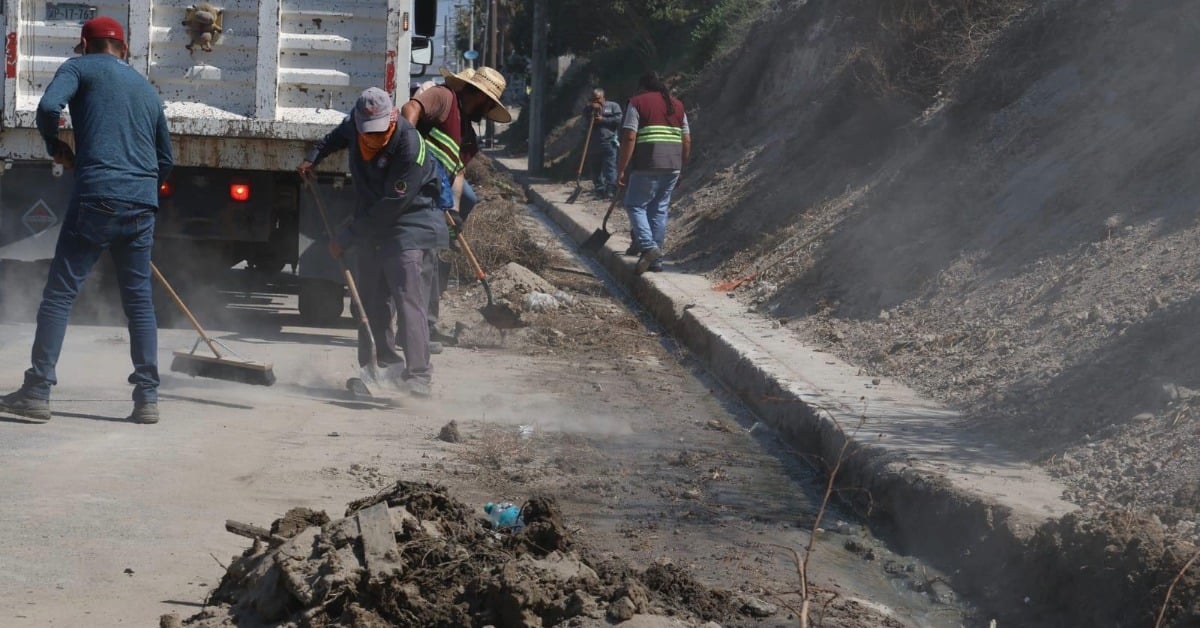
The city says more than 25,000 people felt tangible improvements this week. Workers cleared drains, repaired streetlights, hauled debris, and cleaned verges in three eastern delegations. The push—bundled under a broader cleanliness drive—landed in neighborhoods that have long asked for routine fixes, not big ribbon-cuttings. Officials framed it as a response to specific resident requests gathered by the delegations.
Tijuana urban maintenance
City hall’s note lists three stops. In La Presa Este, crews worked along Boulevard 2000 at the access to Del Bosque, Section del Sol II, clearing 780 meters of drainage, shaping 500 meters of shoulder, and removing 1.5 tons of trash—changes that the city says aid more than 12,000 people who use that access daily.
In neighboring La Presa Abelardo L. Rodríguez, crews pruned trees, cleared 150 meters of canal, and removed roughly 40 tons of rubble around Altiplano. The city pegs the immediate benefit there at 7,800 residents. In Cerro Colorado’s Parque Industrial Presidentes, workers cleaned a 180-meter pedestrian path, maintained 800 square meters of green area, repaired eight lights, pruned seven trees, and lifted 10 tons of debris, which officials say affects about 5,200 people.
Where residents saw changes
The interventions are clustered in the city’s fast-growing east. La Presa Este covers large tracts of new housing and industry; La Presa A.L.R. is one of Tijuana’s most populous delegations; Cerro Colorado blends housing with industrial parks. City documents describe these areas as both expansive and densely settled, which is why seemingly minor fixes—lighting, drain clearing, shoulder cleaning—can change daily routines for thousands.
Officials say the day’s work followed site visits by the acting head of the delegation coordination office and local delegates, who fielded resident complaints on location. The city characterized the effort as responding to “peticiones e inquietudes,” not just running a generic sweep. That framing matters in Tijuana, where residents often measure progress by whether crews show up on their block.
A recurring push and the bigger picture
This week’s tally is one slice of an ongoing campaign the administration brands Tijuana: Ciudad Limpia. Earlier this month, the municipality said its maintenance actions had benefited roughly 215,000 people citywide since the summer push began, with work ranging from pothole and lighting repairs to trash and silt removal. Independent outlets and prior city notes have tracked similar weekend operations in Altiplano and other eastern neighborhoods through June and July.
The city’s news brief credits Mayor Ismael Burgueño Ruiz’s government and identifies specific officials present at each site. City hall also amplified the actions on official channels and delegation pages, underscoring that these are organized deployments tied to the cleanliness program rather than one-off cleanups.
Beneficiary counts are city estimates, not a headcount. They help gauge scale but do not prove long-term upkeep. The areas visited—Boulevard 2000’s access to Del Bosque, Altiplano’s canal stretch, and the Parque Industrial Presidentes corridor—will be worth revisiting after the rains and after peak traffic returns. If lights stay on, drains keep flowing, and debris doesn’t pile back up, residents will feel the difference in safety and commute time, not just on press-release day.
The east-side delegations carry some of Tijuana’s heaviest growth and service demand. Keeping pace requires steady maintenance cycles, not single bursts. The city’s promise to align actions with resident petitions—and to point people toward 072 and the online portal—sets a clear yardstick: response times, quality of fixes, and whether work orders translate into visible changes block by block.