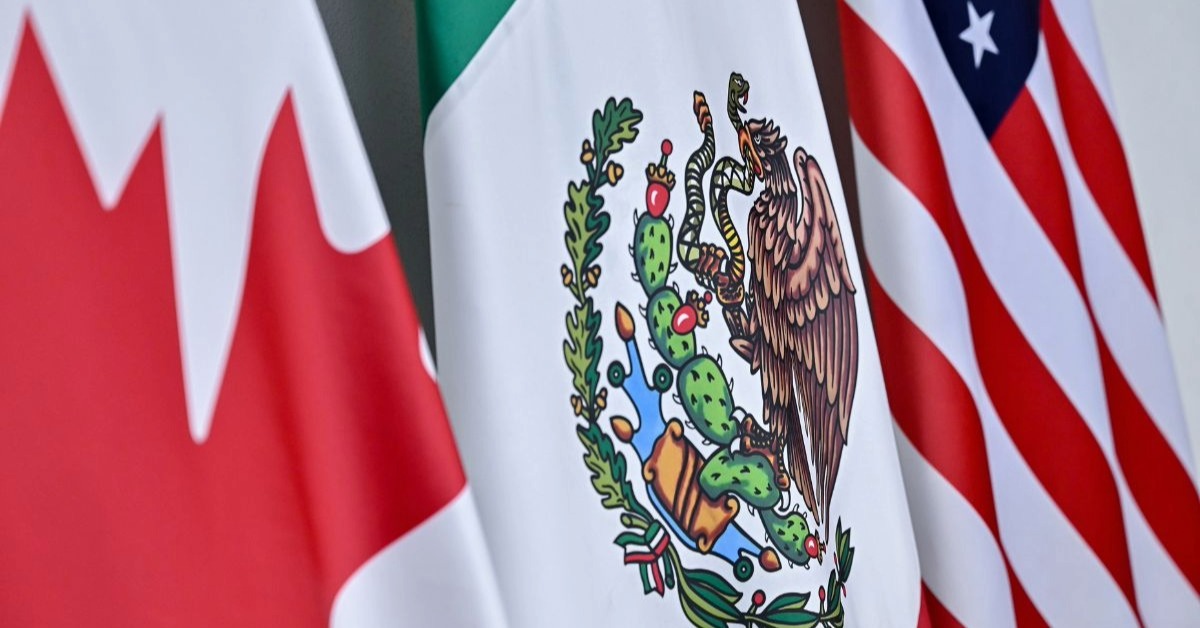
U.S. President Donald Trump said June 10 at the White House that he is “not looking to renew” the T-MEC, adding pressure on Mexico and Canada weeks before the North American trade pact enters its first formal review.
Trump made the comments during an Oval Office event tied to a border and immigration funding bill. Asked about the agreement, known in the United States as USMCA, he said, “After six years, it comes up for renewal. I don’t know that I’m going to renew it.”
No formal withdrawal was announced. Trump said his administration is still speaking with Mexican and Canadian officials as the review process approaches.
The comments put a sharper edge on a negotiation already moving through Washington and Mexico City. Mexico is preparing for a new round of T-MEC review talks in Washington from June 15 to 18, with Economy Secretary Marcelo Ebrard expected to travel with presidential business adviser Altagracia Gómez and incoming ambassador Roberto Lazzeri.
“We are ready, we have all the arguments,” Ebrard said during remarks on Mexico’s preparations. He also said Mexico already has formal conversations underway with Washington, a point he described as important because earlier in the process, it was not clear those talks would happen on schedule.
Mexico enters the review under pressure
The warning follows earlier movement in U.S.-Mexico trade talks ahead of the June round and months of tension over tariffs, regional content rules, and how much North American manufacturing should be tied to the United States.
The U.S. Trade Representative said the May and June rounds would focus on economic security, rules of origin for key industrial goods, agriculture, and what it called “a level playing field.” U.S. officials have also said the negotiations are meant to make the agreement work better for American manufacturers, farmers, workers, and suppliers.
Trump argued that the United States does not need cars, lumber, or energy from its neighbors, while Mexico and Canada need access to the U.S. market. “They have to treat us better,” he said.
For Mexico, the risk is not only diplomatic. The T-MEC shapes decisions in autos, agriculture, electronics, logistics, medical devices, and factory investment. It also affects confidence in the peso and long-term supply chain planning.
A recent explainer on why Mexico’s economy still runs through the U.S. detailed how production, customs flows and investment decisions remain deeply tied to the North American market.
The deal does not automatically end on July 1
The T-MEC entered into force on July 1, 2020, replacing NAFTA. The July 1, 2026, date marks the start of the first six-year joint review. It is not an automatic expiration date.
Under Article 34.7 of the agreement, the three governments can extend the pact for another 16 years if all confirm in writing that they want it to continue. If one country refuses, the agreement enters annual review and can still be extended later. Without an extension, the pact is set to expire in 2036.
That review clause gives Trump leverage without requiring an immediate withdrawal notice, while Mexico tries to keep trade and investment confidence steady through a process that could stretch beyond July.
Trump said the talks remain open.
“We’re talking to them,” he said. “We’ll see if we do something.”
Trump typically negotiates in public through the media, using threats, hoping the other side at the table will weaken its stance. A tactic that has lost its bite. Ending a trade agreement with Mexico and Canada would be catastrophic for the U.S. economy.