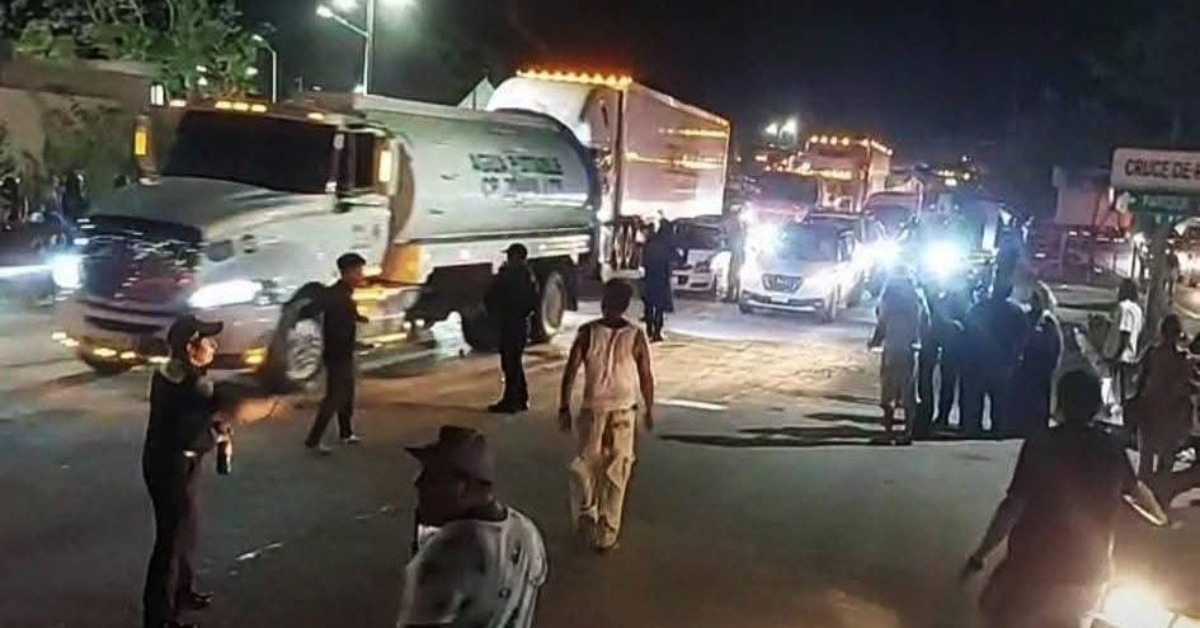
A Sunday protest over Tulum beach access brought Federal Highway 307 to a standstill near Jaguar National Park. Residents and tourism workers say new checkpoints and fees are cutting them off from public shores that, by law, should remain free to enter. Officials and operators offered competing versions of what access costs—and for whom—leaving visitors confused and locals angry. The road eventually reopened, but only after hours of gridlock and a promise to sit down at City Hall. What actually changed at the park, and what does the law guarantee?
Tulum beach access
Residents, merchants, and tour workers blocked Federal Highway 307 at the entrance to Jaguar National Park, demanding free passage to the coastline. The shutdown began Sunday morning and stretched into the night, snarling the state’s main north-south artery. Some travelers reportedly abandoned vehicles and walked toward the Tulum airport and other destinations.
By late evening, the blockade eased and traffic resumed. Local reports indicate that the disruption lasted nearly ten hours, with a public meeting scheduled for the following day at City Hall to continue the negotiations.
What changed at Jaguar National Park
At the heart of the standoff is the question of how to access beaches within the protected area and who bears the cost. Jaguar National Park has implemented a ticketed entry system with posted tariffs. Recent official communications and park messaging indicate prices of approximately 415 pesos for foreign visitors, 255 pesos for Mexican nationals, and 105 pesos for Quintana Roo residents, with specific exemptions for students and teachers. Access to the Tulum archaeological zone is separate and incurs an additional fee.
City officials say the operator—Grupo Mundo Maya, a state-majority company administered under the Defense Ministry—promised free entry for accredited locals but failed to honor it, triggering frustration and the highway action. The company later stated that entry would be free “for everyone,” further muddying the expectations of visitors at the gate.
That confusion is compounded by restricted entry points and changing procedures announced earlier this year, which have redirected beachgoers through a limited number of controlled access points. For workers who rely on daily beach commerce, unpredictable rules translate into fewer customers and fewer shifts.
The law versus practice on Mexico’s beaches
Mexican law is clear on principle: beaches and the adjacent federal maritime zone are public goods, and access must be free. A 2020 reform to the General Law of National Assets codified that right and created sanctions for blocking or charging to reach the shore. The government has reiterated that “no private beaches” exist in Mexico.
Reality on the ground often looks different. Across tourist coasts, residents regularly report blocked paths, hotel-managed checkpoints, and ad-hoc charges that functionally privatize what the law deems public. Tulum’s rapid growth and the creation of new protected areas have intensified those tensions, putting conservation goals and community access on a collision course.
Why this standoff matters
Highway 307 is Quintana Roo’s spine. When protesters occupy it, travelers, employees, and local businesses feel it immediately. Sunday’s action underscored how access rules—however well-intentioned for conservation—can backfire when they aren’t communicated clearly or applied consistently.
It also highlighted the complex governance structure surrounding Tulum’s coastline: a federally protected park, a state-linked operator under military administration, an INAH-managed archaeological site with a separate ticket, and municipal authorities attempting to regulate the movement of residents and visitors. Unless those layers align with simple, transparent rules, expect more friction.
What happens next
Protesters and local officials agreed to meet after the highway reopened. Residents want written guarantees of free local entry, clearer signage, and reliable, open pathways to the beach. Park managers and federal agencies will need to reconcile fee schedules, credentials, and exemptions with the national legal mandate for open shorelines. A durable fix will hinge on public, plain-language rules that hold at the gate—and in practice.