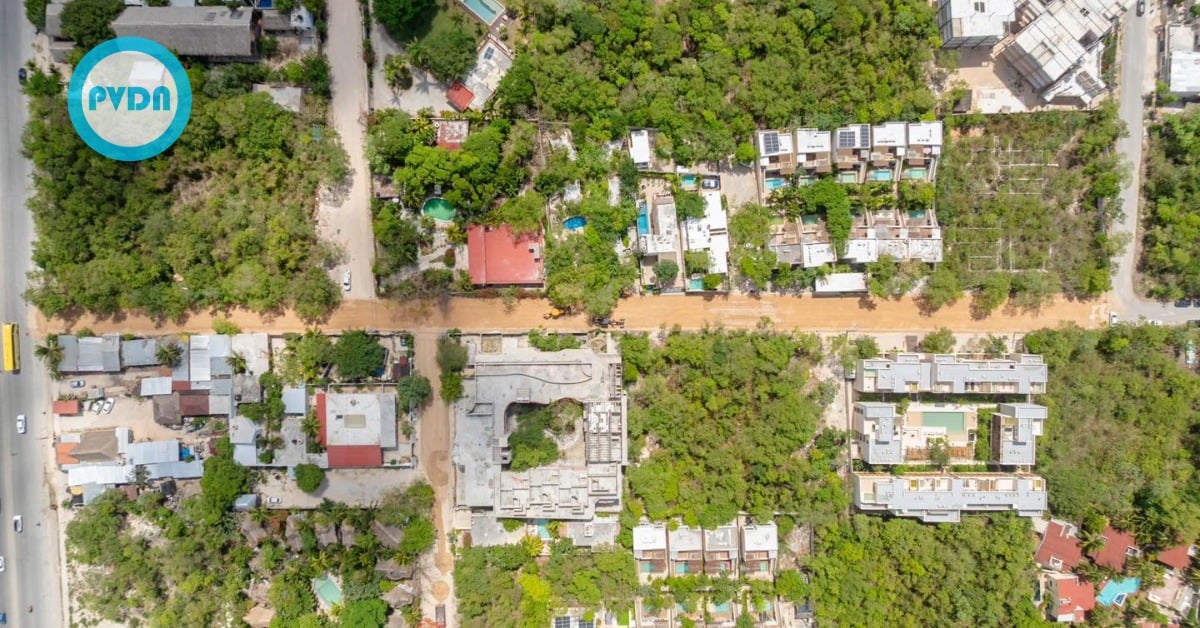
Residents and would-be buyers in Tulum woke up this weekend to a blunt warning from Quintana Roo’s housing and urban development authority. State officials, working with the Tulum municipal government, say a group of real-estate projects is marketing land or units without the permits the law requires. The public alert names individual developments and urges people to hold off on buying, selling, or renting until they verify legal status with authorities. It’s an unusual step that reflects how fast Tulum has grown—and how easy it is for paperwork to fall behind the sales pitch.
Tulum irregular developments
La Jornada Maya reported on September 14 that at least 13 developments were flagged as irregular by the state housing agency Sedetus, in coordination with the Tulum city government. The list includes Luna Sanctuary, Santuario Uh May, Uxcan Tulum Bamboo Villas, Haciendas Cobá, Viventum, Nova Tulum, Maia Holistic Community, Selvadentro, Akun, Arunte, Emana, Tulum Cenote Gardens, and Oken. Municipal officials added that some brand names don’t match the companies’ legal names, and they are cross-checking each case against city records.
The message from City Hall is straightforward: some projects have paperwork in order, some are in process, and others have never been filed. Until the review is finished, the state and the municipality are telling the public not to engage in transactions that could put family wealth at risk.
Why some outlets list 26
Two days earlier, several outlets carried a broader Sedetus warning that listed 26 developments said to be operating without required dictámenes, constancias, permits, or authorizations. Those lists include additional names such as Ilik Ha, Selvarum, Ulumi, Rosela Tulum, Trebola, Bosque Tulum, Cosmos, Zool, Xeelenja, Nero, Iktan, Cibelia, and 528 Tulum. The difference in counts likely reflects evolving verification work between the state and the municipality, and how projects are marketed under trade names vs. their legal entities.
Local media also echoed the government’s warning that participating in deals at these sites could constitute urban-development offenses and expose buyers to title problems or the lack of basic services in the future. Noticaribe’s write-up, for example, underscores the state’s point that these projects don’t meet obligations under state urban-development and condominium laws.
What the law requires
Three state frameworks sit at the heart of these alerts. The Law on Human Settlements, Territorial Planning and Urban Development sets the rules for how land can be urbanized and serviced. The Law on Urban Actions governs the instruments and procedures authorities use to control subdivisions and construction. The Law on Condominium Property establishes how multi-unit projects must be legally formed to deliver clear titles. If a project is selling without approvals under these laws, buyers can end up with contracts that never translate into registrable deeds.
There’s also the municipal layer. Tulum’s Urban Development Program (PDU) was approved in September 2024 amid debate, and it now guides land-use decisions and densities. Projects that don’t align with the program—or that skip mandatory city and state steps—are vulnerable to sanctions and stoppages.
Enforcement is picking up
The legal risk isn’t theoretical. In August, a federal judge ordered the environmental watchdog Profepa to ensure demolition and ecosystem restoration at the Adamar condo project in Tulum’s Solimán Bay, citing violations and unfinished sanctions. That ruling followed prior closures and shows courts are willing to push agencies to act when projects move ahead without full compliance.
Environmental closures have also occurred in and around protected areas, reinforcing that construction without the proper permits can trigger federal action—not just state or municipal oversight. Buyers drawn by glossy renders should read those headlines as a practical warning.
What buyers and sellers should expect next
Tulum’s city office says it is reconciling project brand names with corporate records and will update the public once each case is resolved. That process can confirm which developments are fully regularized, which are curing defects, and which have never entered the system. In the meantime, Sedetus and City Hall are offering guidance to anyone considering a purchase.
This clampdown is also part of a broader state picture. Quintana Roo’s breakneck population growth—well above the national average—has strained water, power, roads, and planning capacity. Sedetus has been publishing alerts across multiple municipalities this year as part of a push to restore order in the market. The politics of growth may change, but the fundamentals don’t: without permits, there’s no guarantee of services or titles, and court-ordered tear-downs are on the table.