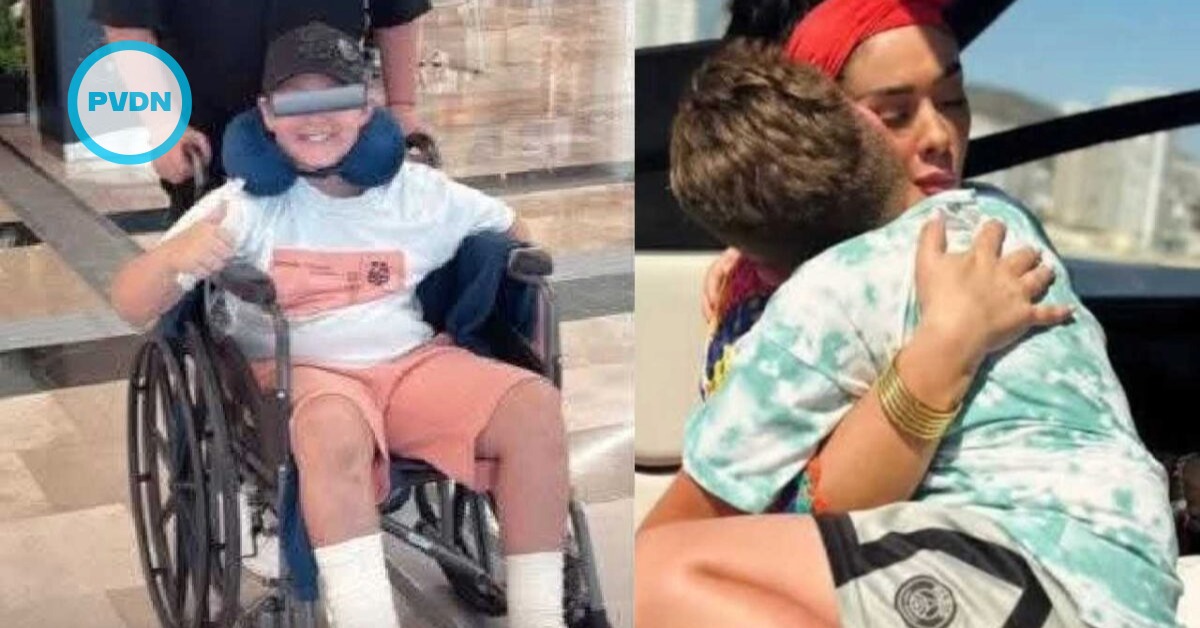
A family beach day in Tulum turned into an emergency when a child linked to Mexico’s D’Alessio music dynasty was bitten in knee-deep water. The injury was serious enough to need stitches, yet the family says he is out of danger. What kind of shark was it, and where exactly did it happen? Officials have not released a detailed report. Here is what can be verified so far, what remains unclear, and what beachgoers should actually do if the ocean bites back.
What the family says happened
In public posts on February 18 and 19, the parents described a shark bite involving their son Patricio D’Alessio. He is 11 and the grandson of singer Lupita D’Alessio. He was playing near shore in Tulum, Quintana Roo. The children were close to the adults, in water up to their waists. Patricio first yelled that something stung him, and his older brother pulled him out. The family then saw heavy bleeding and a wound that looked like a bite. Marichelo Puente said she glimpsed a tail moving away in the shallows. Jorge D’Alessio later said she improvised a towel tourniquet to slow blood loss. The parents drove their son to a nearby hospital for urgent care. They said an orthopedic specialist cleaned the wounds and closed them with stitches. They later described bite marks on both legs, with the right leg worse. Jorge said the right leg needed about 30 stitches. The family has said Patricio is out of danger and recovering quickly.
What is confirmed and what is still unclear
As of Thursday, February 19, local authorities have not published a detailed incident bulletin. It has not named the beach, the species, or the shark’s size. The family has not released the hospital’s name, and medical staff have not spoken publicly. That is common in Mexico because of patient privacy rules and security concerns. In early retellings, the injury was described as one leg, then later as bites to both legs. That shift may reflect confusion in a stressful moment, not a contradiction. Jorge D’Alessio has described the animal as a small reef shark, under a meter long. That identification is unverified, and no photo of the animal has been provided. No official update has confirmed whether lifeguards filed a report or closed any section of the beach. There is also no confirmed shark advisory tied to this case. Until authorities publish a record, the most responsible framing is narrow. A child was treated for a bite consistent with a shark encounter, and he recovered.
How rare shark bites are in the bigger picture
Shark bites grab attention because they feel unthinkable, but the baseline risk is low. The International Shark Attack File is maintained by the Florida Museum of Natural History. It investigated 105 alleged shark–human interactions worldwide in 2025. Researchers confirmed 65 unprovoked bites and classified others as provoked, boat-related, or scavenge cases. Unprovoked is the category used when a person does not initiate contact with the animal. In 2025, unprovoked fatalities were reported in single digits worldwide. Annual totals can swing, which is why trends matter more than headlines. Mexico sits far from the global hotspots, but it is not a zero-risk coastline. Riviera Maya sits on the Caribbean, where reefs concentrate fish and draw predators closer. Risk rises when visibility is poor or baitfish cluster near swimmers. That history cannot predict a given beach day, but it does set expectations. Encounters are rare, yet they are part of the region’s reality.
Why bites can happen in shallow water
Marine experts often describe near-shore bites as confusion or split-second testing, not hunting. A shark may follow schools of fish into shallow water, especially near reef edges and drop-offs. Low light at dawn or dusk can also reduce contrast and hide details. Add splashing, jewelry that flashes like fish scales, or nearby fishing activity, and risk can rise. Strong currents can also push fish and predators closer to shore. That is why ISAF advises against swimming at dawn or dusk. It also urges swimmers to avoid schools of fish and areas where people are fishing. The same guidance discourages shiny jewelry and excessive splashing in the surf zone. None of this guarantees safety, and it does not mean sharks are villains. It is basic risk management in a shared ecosystem. In Tulum, where families often wade close to shore, a common misconception is that depth equals safety. A bite can happen in water that barely reaches the waist.
What to do if someone is bitten at the beach
First, get the injured person out of the water and away from the surf. Alert lifeguards or beach staff, and ask someone to call 911, the national emergency number. When speaking with an operator, be ready to state what happened, where it happened, and when it happened. Control bleeding with firm, direct pressure using a clean cloth or gauze. If blood soaks through, add more material and keep pressing. Keep the person warm and still, and watch for signs of shock, such as weakness or clammy skin. In American Red Cross first-aid manuals, a tourniquet is a last resort for severe bleeding. A commercial tourniquet can be lifesaving in cases of uncontrolled limb bleeding. It should be used only when severe bleeding cannot be stopped, and ideally by trained hands. If one is applied, note the time and do not remove it before medical care. Even when bleeding slows, seek urgent evaluation for cleaning, stitches, and infection prevention. For prevention, choose guarded beaches, stay in groups, and avoid water near active fishing.