Tourism operators across the Mexican Caribbean are seeing numbers that do not match what they see on the ground. On many days, the lobbies still feel busy. Beach clubs still put out the “full” signs on key weekends. Yet the official counts tell a different story, one that points to fewer arrivals from the United States and more intense competition for every seat on a plane.
State tourism figures show that total passenger movement in Quintana Roo fell in early 2025 compared with the previous year, even as Mexico as a whole continued to grow. The country received more international visitors and more foreign spending, but the state that depends most on sun-and-sand tourism is now running slightly behind.
At the same time, a federal report on air arrivals notes that US passengers flying into Mexico between January and August slipped by just over one percent, while Canadian arrivals grew. That sounds modest on paper, but in a region where US travelers still make up the majority of foreign visitors, even a slight shift translates into thousands of empty seats and quieter hotel corridors.
US tourism Mexican Caribbean at a crossroads
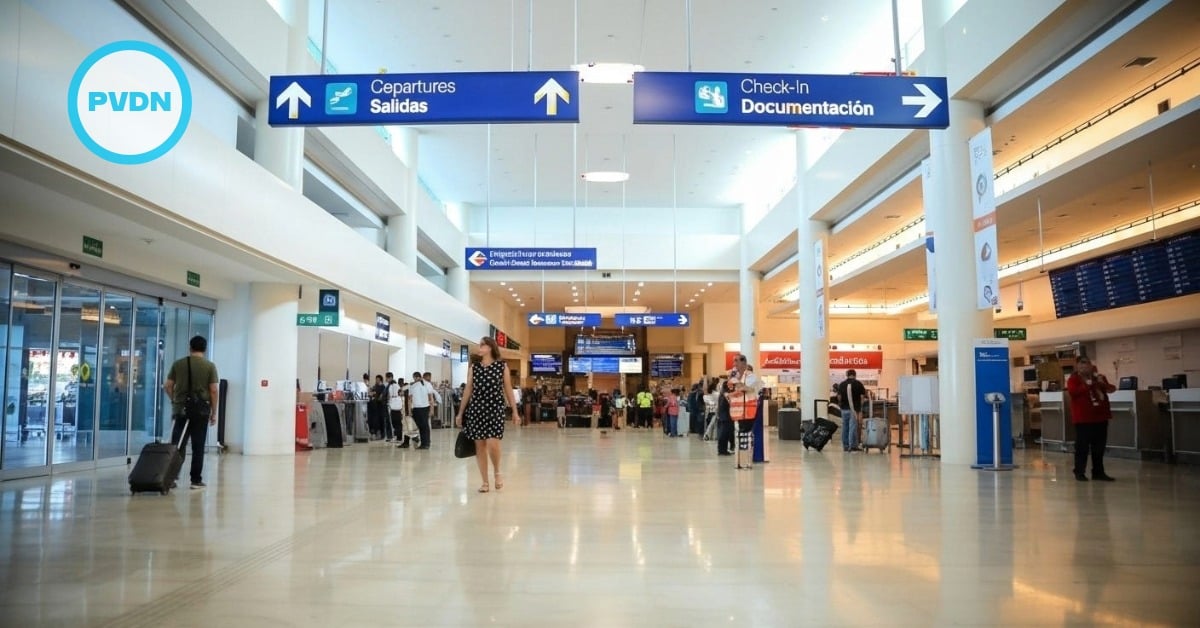
Within that national picture, the Mexican Caribbean stands out for a sharper drop. Industry data suggest that arrivals from the United States to Cancún and nearby resorts have fallen by around 6 to 6.5 percent compared with the same period last year, a loss of more than 200,000 visitors. Over the first eight months of 2025 alone, Cancún’s international airport reported about 650,000 fewer international passengers, a decline of 4.5%.
The story is not that US travelers have stopped coming to Mexico. They are simply landing somewhere else. Major cities away from the beaches have gained ground, with Mexico City recording a notable jump in US arrivals this year. That shift suggests that travelers are experimenting with cultural and urban trips rather than defaulting to the all-inclusive model on the Caribbean coast.
Abroad, rival destinations are pressing their advantage. Caribbean tourism as a region has already moved beyond pre-pandemic levels. The Dominican Republic closed 2024 as the most visited country in the Caribbean, with more than eight million tourists, while islands like Jamaica and the Bahamas also reported firm growth. For a US traveler looking for blue water and direct flights, those options now compete head-to-head with Cancún and the Riviera Maya.
South American countries are also working hard for the same visitors. Brazil and Argentina, for example, promote combinations of beach, gastronomy, and big-city life, often packaged with aggressive airfare offers. For some US travelers, that means they can swap a familiar resort in Quintana Roo for a new stamp in their passport at a similar price.
Air connectivity reflects this new tug-of-war. Several routes between US cities and Cancún have seen double-digit drops in passenger numbers this year. One of the steepest declines is on the Chicago–Cancún route, where traffic has fallen by roughly 15%. Other links from Panama, Dallas, New York, and Atlanta also show weaker results, suggesting that airlines are quietly rethinking where to place planes and which markets look most promising.
For hotel workers and small business owners in Cancún, Isla Mujeres, and Puerto Morelos, those percentages translate into something personal and straightforward. Fewer US guests mean fewer tours sold on the beach, fewer restaurant tables turning over in low season, and more pressure to keep staff employed when the winter rush ends.
Many in the industry stress that the issue is not only global economics or currency shifts. They point to a gap in international promotion. Since national marketing efforts abroad have been scaled back, the burden of selling the Mexican Caribbean often falls on local hotel collectives and individual brands. That leaves smaller properties and family-run businesses at a disadvantage compared with big chains that can fund their own campaigns.
Despite that, booking reports for the coming winter are not bleak. Many resorts already have strong reservations on the books for December through March, and some are close to closing sales for key holiday weeks. But the way those rooms are being filled is changing. Operators describe a growing dependence on last-minute bookings, more aggressive discounting, and a constant need to reassure travelers about safety, service, and value.
How to win back US tourism Mexican Caribbean
Hoteliers and tourism leaders in the region are now pushing for a renewed international campaign aimed at the US market. They argue that local efforts, while creative, cannot replace a broad federal strategy that restores visibility in key cities such as Chicago, Houston, New York, and Los Angeles. In their view, the region needs to appear again in television spots, digital ads and joint promotions with airlines and tour operators, not only in generic “Visit Mexico” messages but with clear focus on the Mexican Caribbean.
Part of that strategy, they say, must address perception. US travelers follow news about crime, storms, and political tension, even when incidents are far from tourist corridors. When other Caribbean and South American destinations flood social media with images of calm beaches and happy families, the silence from Mexico can be read as a sign that something is wrong. The region’s business community wants a more consistent narrative that acknowledges challenges while highlighting the everyday reality of millions of safe, routine vacations.
There is also a call to diversify the offerings of the Mexican Caribbean. For decades, the area built its success on large all-inclusive complexes and package deals. Now, younger travelers and repeat visitors often look for smaller hotels, local food, and experiences that feel more connected to everyday life. Towns south of Cancún, and islands off the coast, see an opportunity to position themselves as quieter, more sustainable choices that still fit within the same flight plan.
Another piece of the puzzle is price. Across the wider Caribbean, many businesses have raised room rates to keep up with costs. Mexico is not immune to those pressures. Airlines face higher fees and fuel prices, while hotels face wages, energy costs, and import costs. If US visitors start to sense that Cancún costs as much as a week in the Dominican Republic or Jamaica, then the region loses one of its traditional advantages. Hoteliers insist that targeted promotions and better coordination could help keep perceived value high without a race to the bottom on rates.
For now, the numbers are a warning, not a crisis. The Mexican Caribbean remains one of the most visited beach regions in the Americas, and the United States remains its primary source of foreign visitors. Yet the six percent drop in arrivals from that market, combined with losses in air traffic and strong growth in rival destinations, has changed the mood in boardrooms and back offices across Quintana Roo.
Behind every statistic are workers whose livelihoods depend on a healthy high season and a manageable low season. The bellhop who counts on tips from repeat US guests, the taxi driver who waits at the terminal for airport runs, the family that rents rooms in a guesthouse a few blocks from the beach — all of them are watching to see whether this downturn is a passing wobble or the start of a new pattern.
They hope that a stronger push abroad, smarter coordination at home, and a clearer message about what the region offers can steady the numbers before the next winter cycle. If that happens, the Mexican Caribbean could turn a worrying trend into a reminder that even the most famous beach destinations have to keep telling their story, year after year, to stay on the map.