
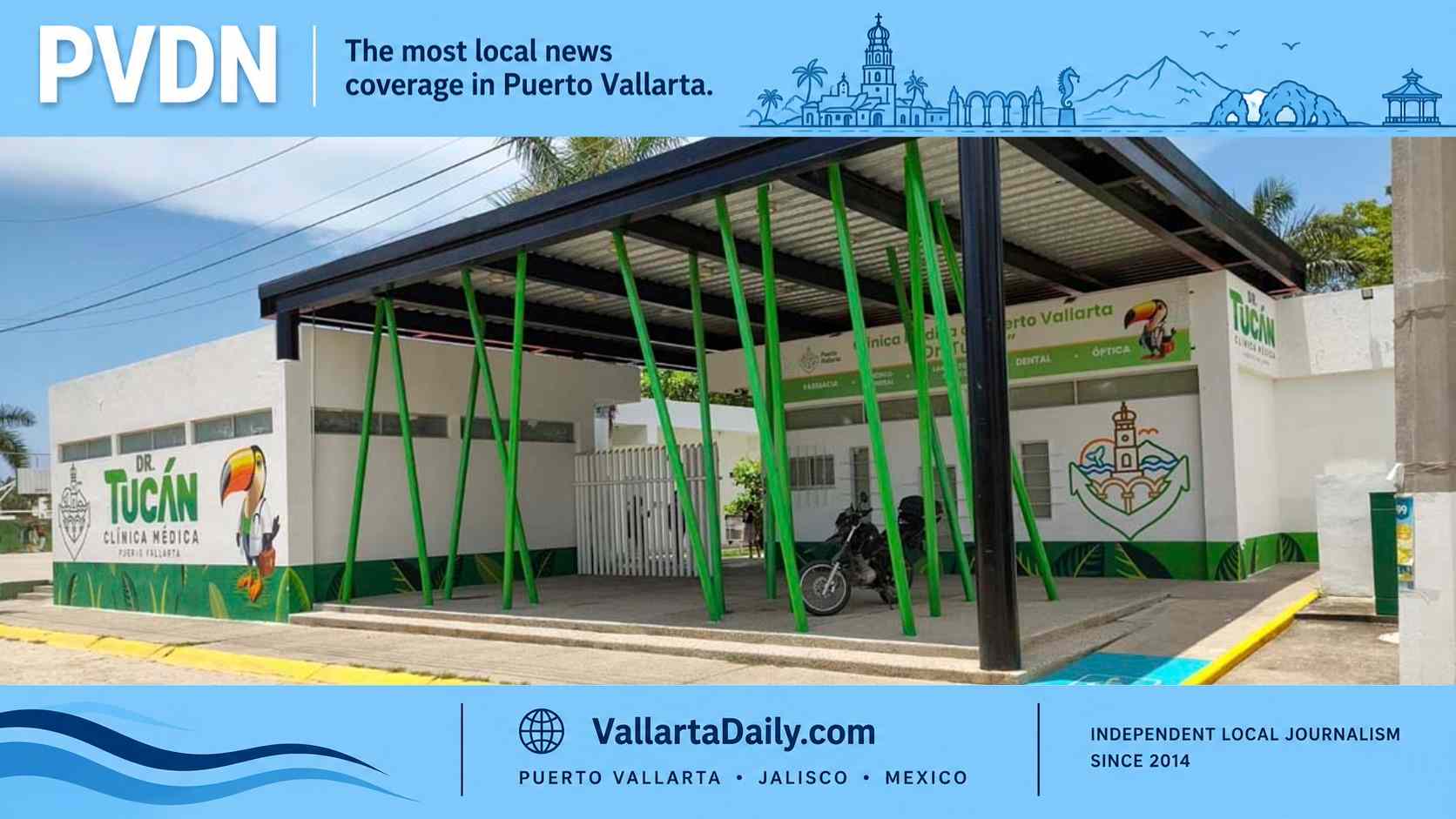
Puerto Vallarta, Jalisco, October 17, 2026 – Municipal cash shortages left clinics closed and school supplies delayed this week, while about 2,000 employees missed payday, according to local reports.
Councilor Víctor Manuel Bernal Vargas said the disruptions include the Dr. Tucán health program and the municipality’s share of educational assistance. Separately, another payroll delay affected approximately 2,000 temporary and nonunion employees on October 16.
For residents, the immediate question is which promised services they can actually access while City Hall struggles to meet its payments. The answer depends on the program: clinic operations have been interrupted, school supplies remain outstanding, and the school accident-insurance gap involves a failed contracting process.
The latest payroll report follows an earlier attempt to catch up. In an October 6 interview, Mayor Luis Ernesto Munguía González said he had paid overdue wages and bonuses to temporary workers. He also announced payroll adjustments and cuts to unnecessary spending. That earlier payment does not establish that the subsequent payday was covered.
Bernal has described the broader difficulty as a shortage of available cash for immediate obligations. In an October 15 interview, he said the end-of-September payroll arrived a week late and that supplier obligations competed with everyday expenses, including fuel.
The clinic interruption shows how those financial problems reach households.
The municipality’s 2026 Dr. Tucán operating rules specify an annual budget of 75.2 million pesos. That allocation covers medical personnel, medicines, supplies, maintenance, and other operating costs for a planned network of four fixed clinics and one mobile unit. An approved budget authorizes spending; it does not show that a contractor has been paid or that a clinic is open.
As Vallarta Daily’s earlier coverage of the free clinics explained, the program includes medical consultations, dental care, optical services, laboratory testing, and pharmacy benefits. Losing access can therefore interrupt several parts of a household’s routine care.
An October 5 report on the service reductions identified sites in Ixtapa, Las Mojoneras and El Coapinole, along with the mobile clinic. It described limited consultations, dental assessments and eyeglass delivery continuing after the broader service interruption.
That dated account does not confirm those services remain available this weekend. Tribuna’s October 16 report described clinics closed for more than a month. Munguía previously attributed the suspension to an audit, while Bernal said part of the provider’s payment remained outstanding. The accounts reviewed do not establish a current service list for each clinic or a firm reopening date.
School assistance presents a different immediate expense for families.
In his account, Bernal said the state-funded portion of uniforms, shoes and backpacks had been delivered, but the municipal contribution remained outstanding because of insufficient funds. He also said the school still owed money to a supplier from the previous year.
The school accident-insurance problem requires a separate explanation. Bernal said the latest information he had was that the insurance had not been contracted because the tender attracted no interested participants.
“As far as I know, it is not because of a failure to pay,” he said in Spanish, referring specifically to the insurance arrangement.
The municipality’s procurement register lists a second insurance tender published August 31, with a projected September 11 contract-signing date. A tender notice and proposed signing date do not establish that an agreement was completed or coverage activated.
The accompanying school accident-program rules allocate 2.415 million pesos for September through December 2026. They require the service agreement to define coverage, treatment limits, procedures, and its effective period. Families need these details before relying on municipal assistance.
No firm payroll settlement calendar appears in the reporting reviewed for this article. For school accidents, the unresolved practical issue is the current authorized provider and how treatment costs will be paid.
The program’s rules require an accident form signed and stamped by the school. A parent can obtain that paperwork; the municipality still needs to make clear where the child can receive covered care.