Puerto Vallarta, Jalisco, October 17, 2026 — Puerto Vallarta remained under a tropical storm warning Saturday as Hurricane Trudy approached Mexico’s Pacific coast, bringing weekend threats of flooding and dangerous surf.
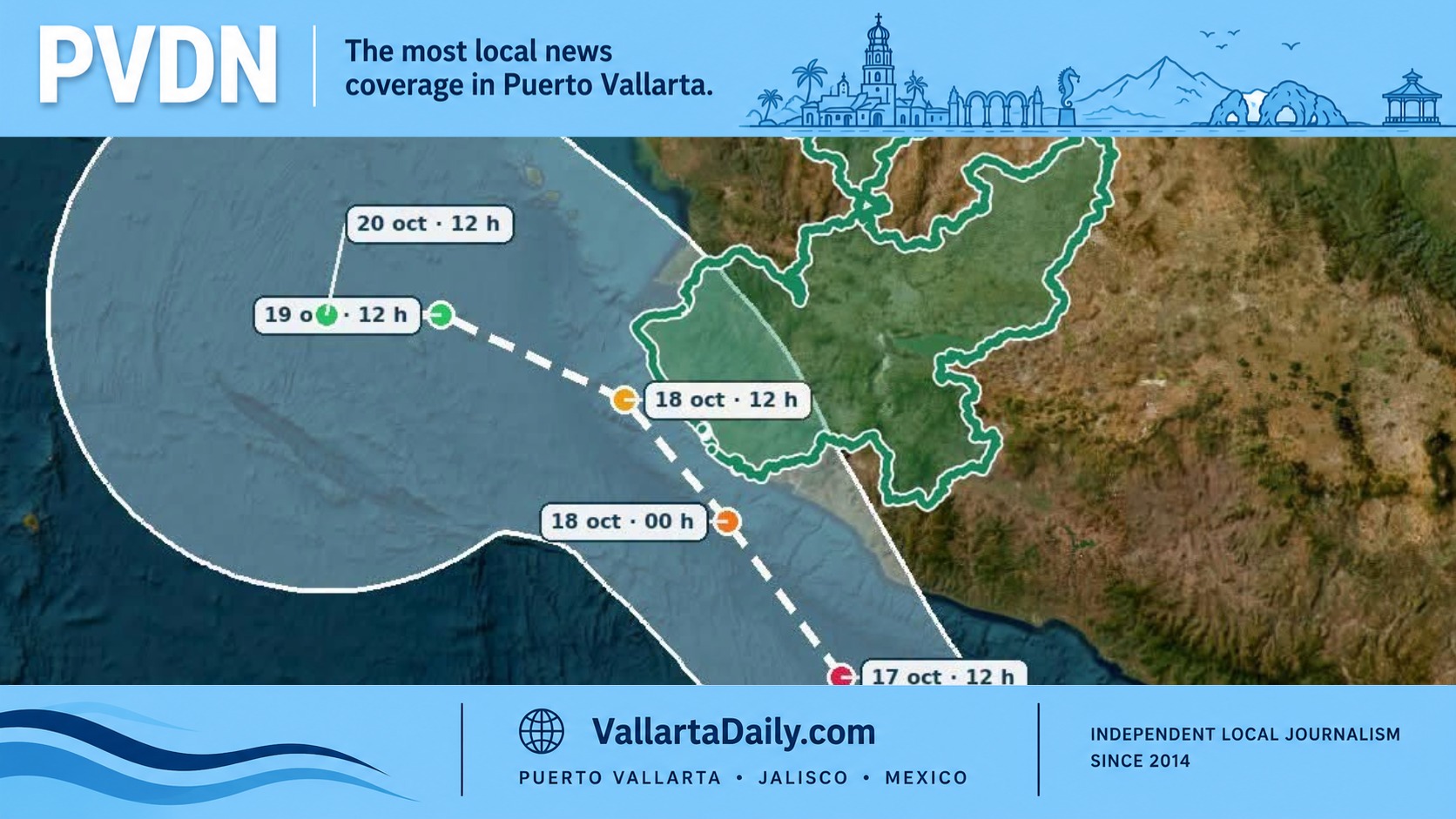
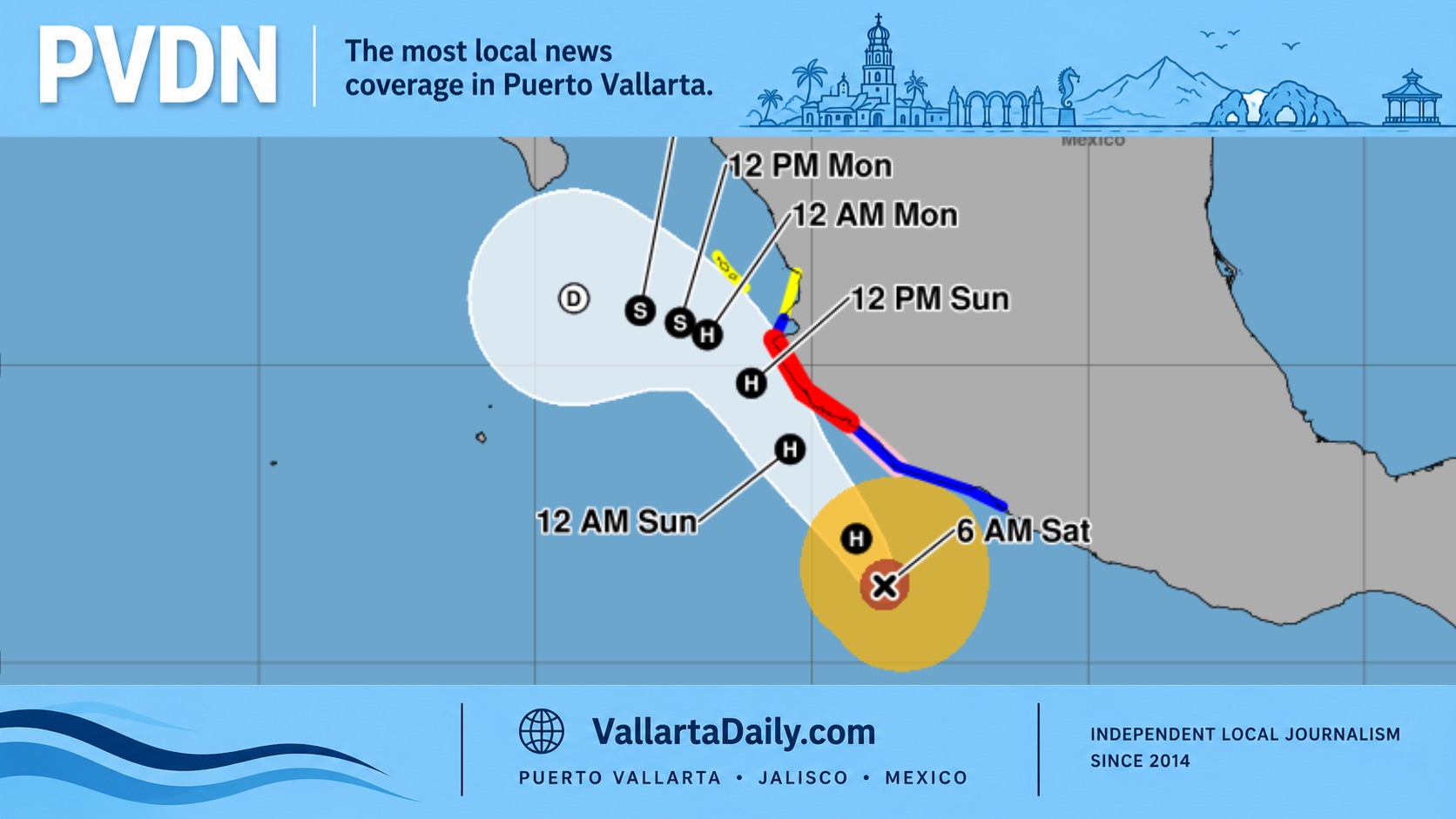
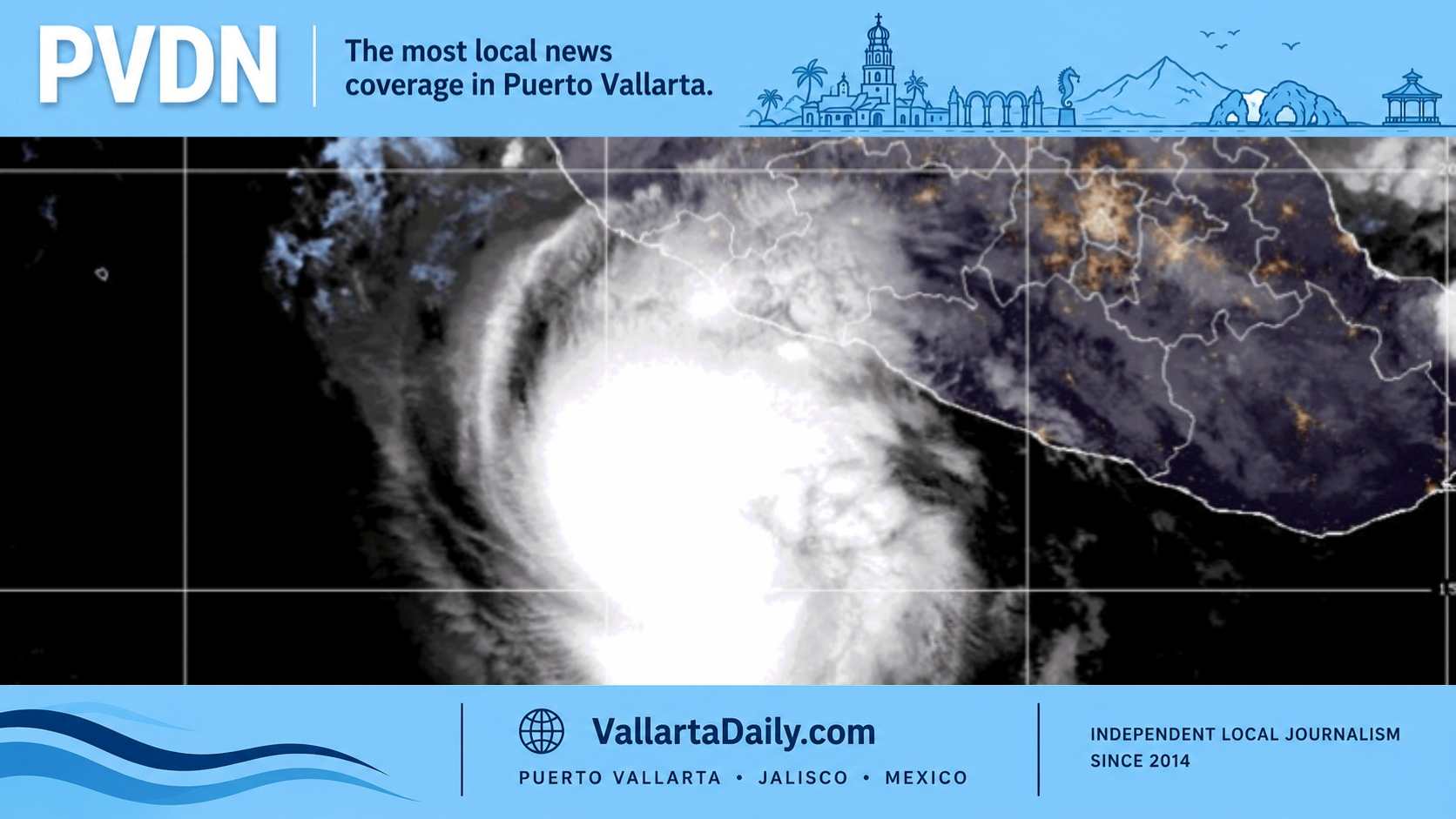
The National Hurricane Center’s 9 a.m. advisory kept Trudy at Category 1, with sustained winds of 150 km/h (90 mph). Its center was about 270 kilometers south of Manzanillo, moving northwest at 17 km/h, according to the latest update included in Vallarta Daily’s live storm coverage.
Mexico also extended the tropical storm warning northward from Punta Mita to San Blas. Puerto Vallarta was already inside the warning area. The separate hurricane warning remains along the coast from Manzanillo northward to Cabo Corrientes, south of the city.
For households around the bay, the practical question is straightforward: What needs to be ready before conditions worsen?
The timing makes preparation a Saturday priority. Tropical storm conditions are expected within the warned coastal areas today, while Trudy’s center is forecast to pass near Mexico’s southwestern and west-central coast tonight into Sunday. Some strengthening remains possible before weakening begins Sunday.
Those 150 km/h winds describe the hurricane’s strongest sustained winds near its center. They are not a forecast for a particular Vallarta neighborhood, and the regional advisory does not provide an exact arrival hour for conditions at an individual address.
Rain is a central concern even where the strongest winds remain offshore. The updated NHC forecast calls for approximately 100–200 millimeters, or 4–8 inches, through the weekend along and near the coast in Michoacán, Colima and Jalisco, with isolated totals around 300 millimeters, or 12 inches. These are regional amounts, with potentially life-threatening flooding and mudslides, particularly along steep terrain.
For residents, that connects the forecast to familiar decisions: whether to make another shopping trip, where to park, and whether a route home crosses a low area or waterway. A storm’s distance offshore does not establish whether those roads will remain passable.
CENAPRED’s flood guidance advises against driving, walking or swimming through flooded routes and crossing river channels. It also recommends identifying higher ground and routes to temporary shelters before an emergency develops.
Beach plans need the same attention. The SMN’s 6 a.m. bulletin, still displayed when checked for this report, forecasts 4–5-meter waves along the Jalisco coast and urges precautions for maritime navigation. That coastal forecast does not mean every beach inside Banderas Bay will experience identical waves.
The NHC warned that Trudy’s swells would cause “life-threatening surf and rip current conditions” as they spread northward through the weekend. Follow lifeguards, posted flags and barriers when deciding whether waterfront areas are accessible.
Vallarta Daily’s Friday beach report already identified red flags restricting swimming at five locations across Puerto Vallarta and Riviera Nayarit. Those earlier reports provide context; instructions posted at the beach should guide today’s decisions.
At home, water storage is one preparation residents can act on immediately. SEAPAL Vallarta asked households Friday to store enough water for at least 72 hours, using tinacos, cisterns or other clean, suitable containers.
The utility’s operations director, Alejandro Padilla Viorato, said a Civil Protection red alert could trigger preventive closure of storage tanks and suspension of supply. SEAPAL said it would communicate any such suspension. Its statement describes a contingency plan, rather than announcing a storm-related cutoff.
For example, someone living in a condominium can check the building’s water reserves with management while also preparing drinking water inside the apartment. SEAPAL is considering additional weekend hours at its Gogomático purified-water stations, but the statement did not confirm those hours.
CENAPRED also recommends keeping essential documents in sealed plastic bags and taking only necessary belongings if moving to a shelter. For foreign residents, passports and residency cards belong in that waterproof bag, ready to leave with them if Civil Protection directs an evacuation.