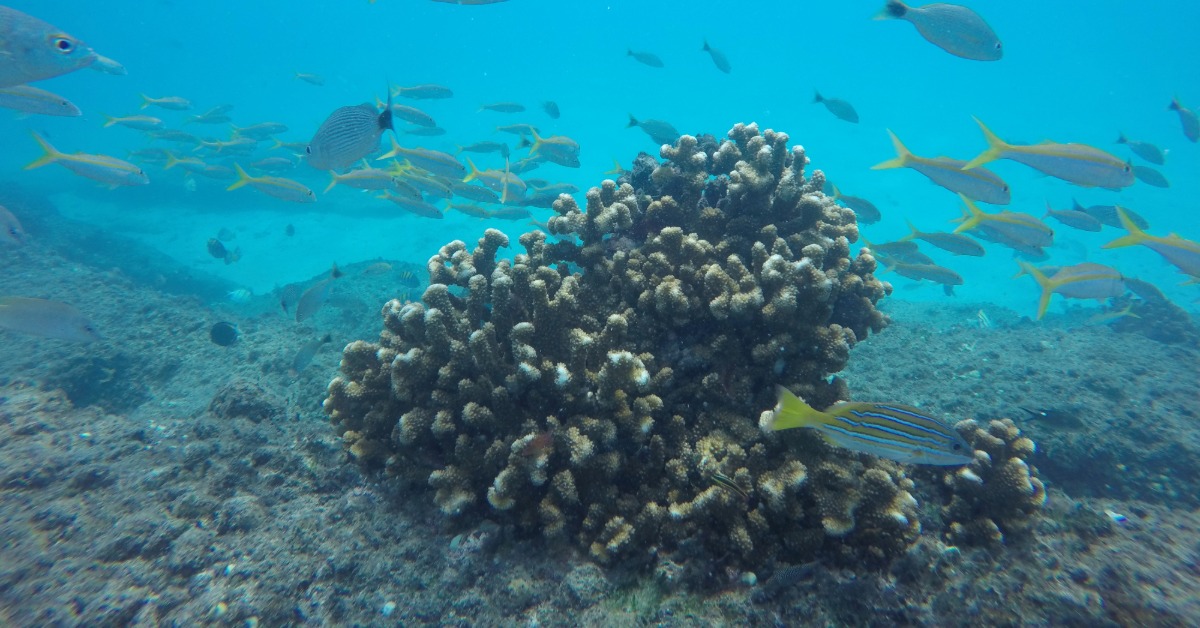
Puerto Vallarta, Jalisco, June 12, 2026 — A coral restoration project led by researchers from CUCosta and the Instituto Tecnológico de Bahía de Banderas has been recognized among the top 500 socio-environmental initiatives in the Premios Verdes ranking.
The project, Restauración coralina: conectando arrecifes con comunidades, focuses on degraded reefs in the Central Mexican Pacific. CUCosta announced the recognition on June 10, saying the initiative was selected from more than 2,000 projects submitted from 29 countries.
For people in Puerto Vallarta and Banderas Bay, the award brings new visibility to a long-running local scientific effort tied to reef health, coastal tourism, fisheries, and climate stress in the bay.
Local researchers behind the project
CUCosta identified the project leaders as Dr. Alma Paola Rodríguez and Dr. Amílcar Cupul Magaña, both from the Centro Universitario de la Costa, with Dr. Adolfo Tortolero Langarica of the Instituto Tecnológico de Bahía de Banderas.
The awards platform currently lists the broader ranking as its 2026 cycle, while CUCosta’s announcement described the local recognition as Premios Verdes 2025. PVDN found the project listed on the Premios Verdes ranking site under marine ecosystems for Mexico.
Premios Verdes describes its ranking as a way to identify and amplify social and environmental projects selected for impact, innovation, and sustainable development. Its current public materials list marine ecosystems as one of the official categories.
What the restoration work does
The project focuses on active reef restoration, a hands-on approach used when coral systems cannot recover quickly enough on their own. In practice, that can include collecting coral fragments that have broken naturally, growing them under controlled conditions, and later attaching them to reef areas where they can survive.
That method is already visible in related work by the same research network. In 2024, UdeG reported that scientists were using underwater nurseries on the south coast of Jalisco to grow Pocillopora corals before transplanting them to nearby reefs. Rodríguez said then that the team was giving corals “a greater opportunity” to attach and reproduce through a natural process.
The same university report said researchers were using fragments of opportunity, meaning pieces detached by waves, storms, or other natural forces, rather than breaking healthy adult colonies.
Banderas Bay reefs remain under pressure
The recognition comes after years of stress on reefs near Banderas Bay and the Central Mexican Pacific. A 2023 peer-reviewed study co-authored by Rodríguez, Tortolero and Cupul found that the 1997–1998 El Niño event sharply reduced live coral cover at Punta de Mita, but later restoration work showed measurable recovery.
The study in Revista de Biología Tropical reported that restored coral fragments nearly doubled in size after 50 weeks and tripled after about two years. It also warned that Punta de Mita reefs remain exposed to marine traffic, nearby development, and unregulated recreational activity.
In 2023, Cupul said in national reporting on Banderas Bay coral loss that sea warming tied to El Niño caused severe bleaching and mortality in shallow coral areas. PVDN has also followed the issue through earlier coverage of coral bleaching around the Marietas Islands and previous restoration work at Islas Marietas.
Visitor rules remain separate from the award
The Premios Verdes recognition is not a government designation. It does not create new restrictions for visitors or tour operators.
At Islas Marietas, visitor access remains under CONANP management. The current CONANP information page for Islas Marietas lists general park hours from Tuesday to Sunday, Playa del Amor hours from Wednesday to Sunday, and a conservation fee of 125 pesos per person per day. The same page reminds visitors to follow guide and ranger instructions, use life jackets in the water, avoid alcohol, avoid littering, and not remove or introduce animals.
The local value of the CUCosta project is that it keeps reef recovery in scientific hands while connecting that work to communities that depend on the bay. Coral areas help support fish habitat, marine life, coastal protection, and nature-based tourism. Those benefits are also why recovery work can be slow, monitored, and vulnerable to setbacks.
CUCosta’s announcement did not identify any new funding, new protected zones, or a public timeline directly tied to the Premios Verdes recognition. The next points to watch are whether the award leads to additional financing, wider use of coral nurseries, or stronger coordination with protected-area managers and tour operators in Banderas Bay.
For more local coverage of coastal protection, marine life, and environmental policy, follow PVDN’s Puerto Vallarta environment and wildlife updates.